
To know exactly how many grams of chicken you’re getting when cooked, weigh your chicken raw vs. Post-cooked. Post-cooked. For this test, get yourself some raw (uncooked) fresh, cold chicken breast. Why? Because if you have too much, you’ll waste food; too little and you will be hungry.
Put a plate on top of a digital scale and hit zero. Add your meat.
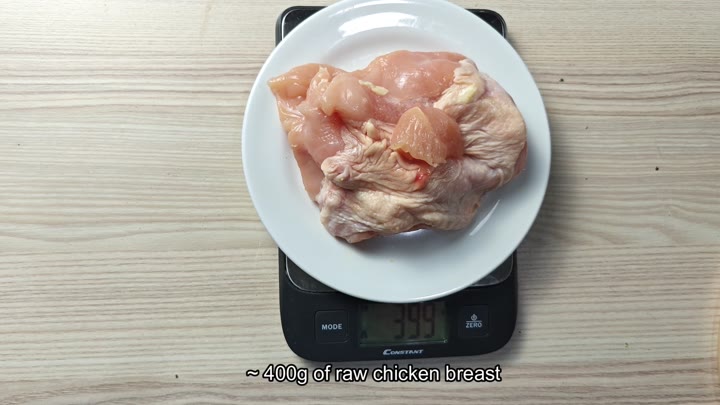
After all was said and done the scale land at 399 grams. That’s near four-hundred. Write it down. That’s your starting point.
Why Meat Shrinks When Cooked
What does it mean? Half of what you see with raw weight is irrelevent: cooking causes meat to shrink. Protein contracts. Water escapes. Volume diminishes. So when you cook something, how much will it lose?
Go to the stove with a pot of water that’s been brought to a boil. Put on a throwaway glove because you’re dealing with raw poultry and want to be hygienic. Submerge the chicken in the water. It go down right away. Wait until it cooks through. This makes it safe and ensures your weight loss calculation will be correct.
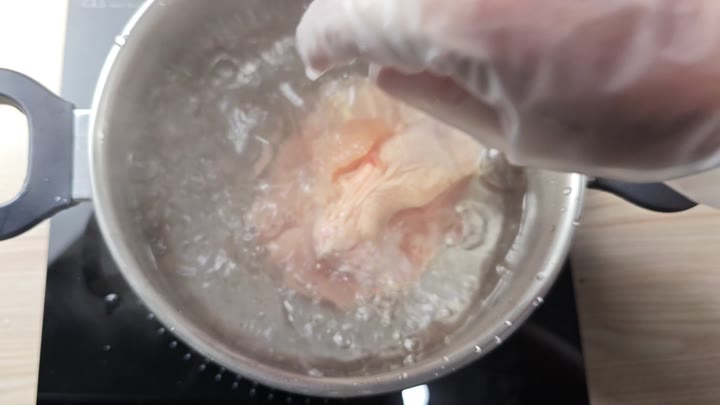
As the temperature rises you feel the chicken change in your hand. The fat melts out. Its mass decreases. Its texture changes. The water inside evaporate. It goes from pink to white, bubbling furiously all the while. But don’t pull it yet, it will read false if only partly cooked. Wait until it’s fully done.
After cooking the chicken, you remove it from the water, drain it, and allow it to cool for a bit. It’s hard to handle hot meat… It’ll shred unevenly. To get better results, transfer your cooked chicken to a clean plate and let it cool until it is at least warm.
Put that plate back onto the scale, then add the cooked chicken. It weighed 360 grams. While it made sense, it also seemed like something. You began with 400 grams of chicken and ended up with 360 grams. That’s a ten percent reduction. A loss of 40 grams.
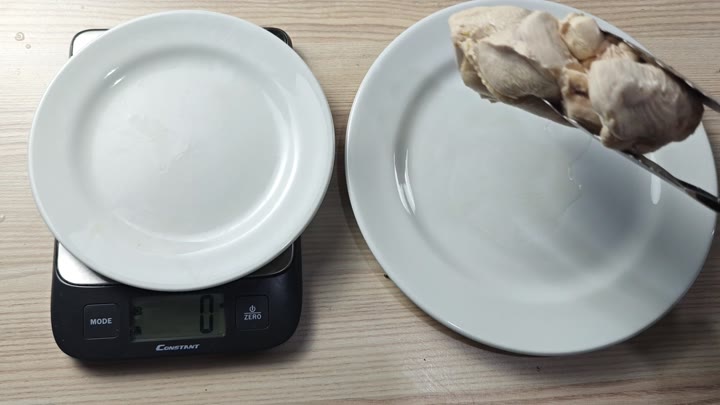
It is more than what you would expect. Normally, you guess about 5%. Turns out your guess was wrong, the experiment confirmed that moisture loss is not just real but also large.
So if you’re cooking ten breasts, that’s four hundred grams lost. That’s almost a pound of missing meat, which you can’t afford to ignore, in terms of both money and meal portion.
And then there’s shredded chicken. Pulled chicken appears to take up more space different than chunks. The pulled chicken is less dense, but has more volume. Some of it you use a fork for. And the tines part the fibers. They tear away into flakes. It is light and airy. That’s what gives the pulled chicken substance. It’s not as much about how heavy it is, it’s about how it feels in your mouth.
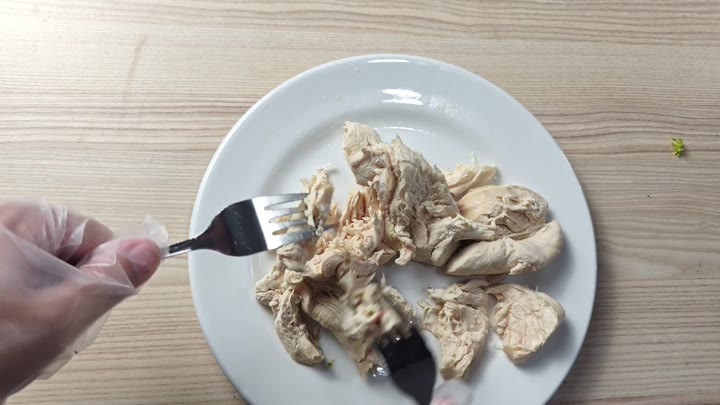
With gloves still on, you’re also using your hands. The manual work pull apart the tougher pieces, so you tear the chicken into smaller strips. That breaks down bigger chunks and fills up the plate visually too. Although the pile was high, the weight dropped. This is a visual trick that helps you serve bigger portions without needing as much meat.
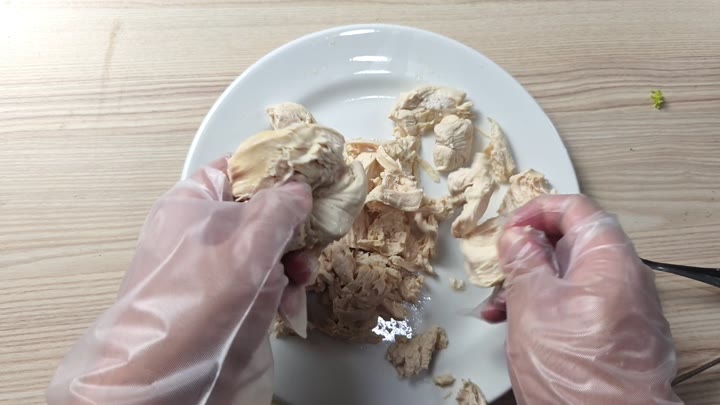
It’s a simple enough experiment, but the results are obvious: 400 grams of raw, and 360 grams cooked. It shrinks consistently. No fighting against physics here.
And there’s nothing to do about it except plan for it. So you purchase some additional meat, cook it down, shred it up, and add it to the final dish. It’s a lighter product at the end, sure, but it works fine.
Next time, you should of remember this ten percent reduction and plan accordingly. No guessing. Measuring. It prevents hunger, and it saves money.