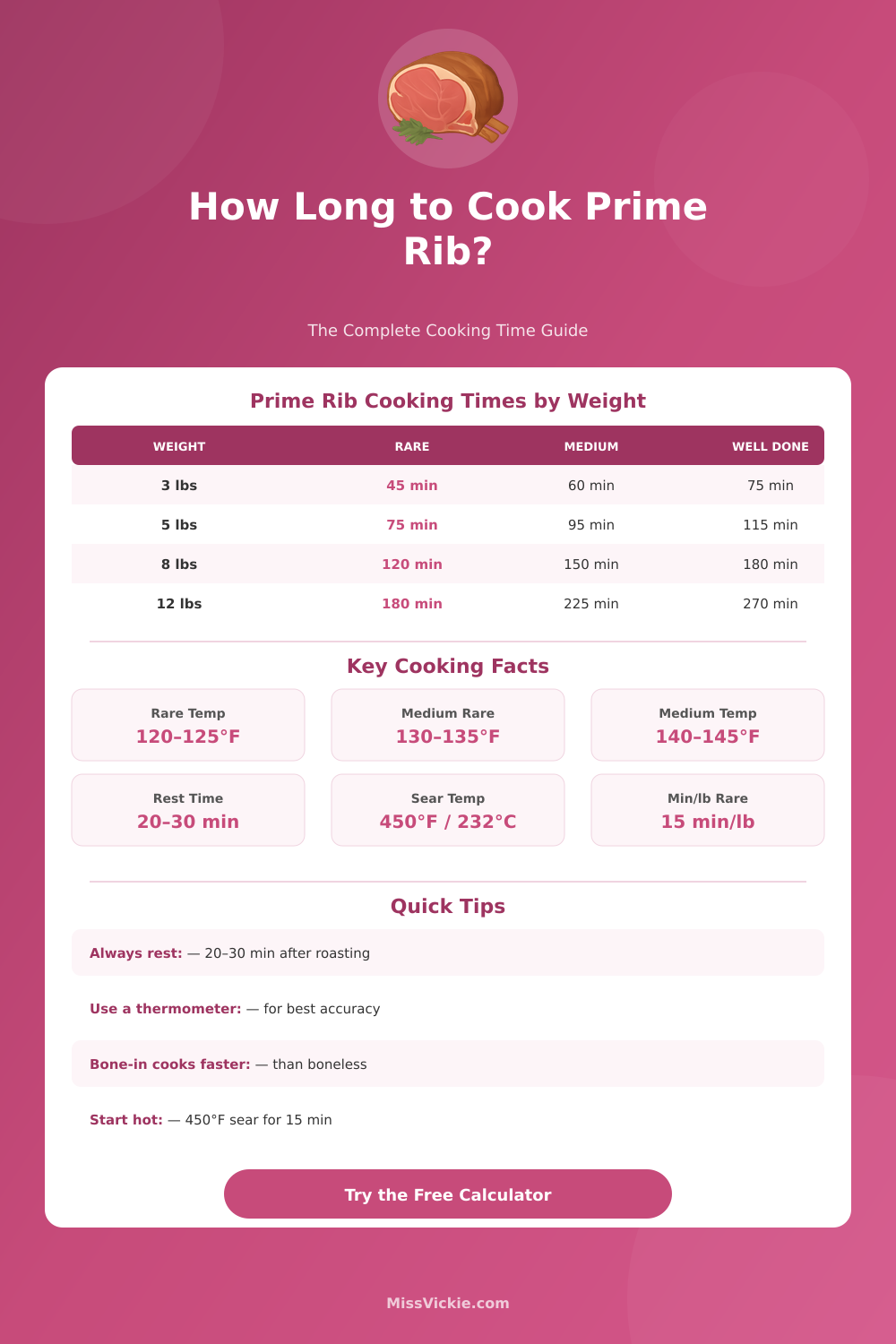
🍖 Prime Rib Cooking Time Calculator
Get precise roasting times based on weight, bone type & desired doneness
(49–52°C)
(54–57°C)
(60–63°C)
(66–68°C)
| Weight (lbs / kg) | Rare | Med-Rare | Medium | Well Done |
|---|---|---|---|---|
| 3 lbs / 1.4 kg | 45 min | 52 min | 60 min | 75 min |
| 4 lbs / 1.8 kg | 60 min | 68 min | 80 min | 100 min |
| 5 lbs / 2.3 kg | 75 min | 85 min | 100 min | 125 min |
| 6 lbs / 2.7 kg | 90 min | 102 min | 120 min | 150 min |
| 8 lbs / 3.6 kg | 120 min | 136 min | 160 min | 200 min |
| 10 lbs / 4.5 kg | 150 min | 170 min | 200 min | 250 min |
| 12 lbs / 5.4 kg | 180 min | 204 min | 240 min | 300 min |
| 15 lbs / 6.8 kg | 225 min | 255 min | 300 min | 375 min |
| Roast Size | No. of Bones | Serves (Main) | Cooked Yield |
|---|---|---|---|
| 3 lbs (1.4 kg) | 1–2 bones | 2–3 people | ~2.1 lbs (0.95 kg) |
| 5 lbs (2.3 kg) | 2–3 bones | 4–5 people | ~3.5 lbs (1.6 kg) |
| 7 lbs (3.2 kg) | 3 bones | 6–7 people | ~4.9 lbs (2.2 kg) |
| 9 lbs (4.1 kg) | 4 bones | 8–9 people | ~6.3 lbs (2.9 kg) |
| 12 lbs (5.4 kg) | 5–6 bones | 10–12 people | ~8.4 lbs (3.8 kg) |
| 15 lbs (6.8 kg) | 6–7 bones | 13–15 people | ~10.5 lbs (4.8 kg) |
| Doneness | Bone-In (min/lb) | Boneless (min/lb) | Target Pull Temp |
|---|---|---|---|
| Rare | 15 min/lb | 18 min/lb | 115–120°F (46–49°C) |
| Medium Rare | 17 min/lb | 20 min/lb | 125–130°F (52–54°C) |
| Medium | 20 min/lb | 23 min/lb | 135–140°F (57–60°C) |
| Medium Well | 23 min/lb | 26 min/lb | 145–150°F (63–66°C) |
| Well Done | 25 min/lb | 28 min/lb | 155°F+ (68°C+) |
The Prime Rib comes from the front part of the beef rib section, especially the half more close to the shoulders and the head. One roasts it in standing form… That is the fancy name for the Prime Rib, and one can choose two to seven ribs based on the size that one wants.
The whole rib part has six to twelve ribs, but what makes the Prime Rib special is the rich layer of fat spread through it. Because the whole section can weigh up to 30 pounds one usually cooks at home only a piece with two or three ribs at once.
How to Cook and Serve Prime Rib
Here is something that commonly confuses folks: the word “prime” does not really mean that the roast is of USDA Prime grade. It is mostly just a nickname that restaurants added to that cut, and it stayed used. The USDA grading, Select, Choice and Prime, measures really only the marbling, those nice strips of fat inside the meat.
More marbling gives rihcer flavor and higher grade. By the way, the Prime Rib is also from the same animal as the rib steak, only that it stays whole instead of being cut in individual steak.
When one cooks the whole roast slowly and at low temperature, the meat gets a different texture than if one would fry steak. Not necessarily better, only different. The fat in the Prime Rib is so rich that it best works when it melts and mingles with the surrounding muscle.
So medium-rare cooks are the ideal for that cut, rare does not give the fat enough time too dry it well. Here however the catch: if one only salts the surface, many bites will end without a lot of salt except at the edges. In my experience, the roast should get rubbed with coarse kosher salt and black pepper about 24 to 36 hours before laying it in the oven.
There are several good ways to cook Prime Rib. One method starts with warm searing, burn it at high temperature, later lower the heat. Another way uses a simple trick: one takes the weight of the roast, multiplies by five for the minutes at 500 degrees, later closes the oven and leaves it stand two hours.
Smoking is another option, if one has time… It lasts longer, but the flavor rewards it truly. Or one can use the Dutch oven, that means to cook in it slowly above vegetables and herbs, later turn those wet juices into gravy.
Do not forget the resting step after the cook. That matters more than folks believe. If one cuts the warm roast right away, all juices spill right on the knife.
When the meat rests correctly, it keeps those juices inside, where they belong, inside the meat itself.
For portions, roast with bones works well for one rib per two people. Boneless slices need around eight to twelve ounces per person, based on hunger. The most restaurants give portions of eight to sixteen ounces.
Leftovers of Prime Ribs shine on crusty bread, ciabatta, sourdough bread or Italian rolls work well. Horseradish sauce, its own juice andgravy are the classic sides.