🍕 Pizza Dough Calculator
Calculate exact flour, water, yeast & salt quantities for any pizza style, size & serving count
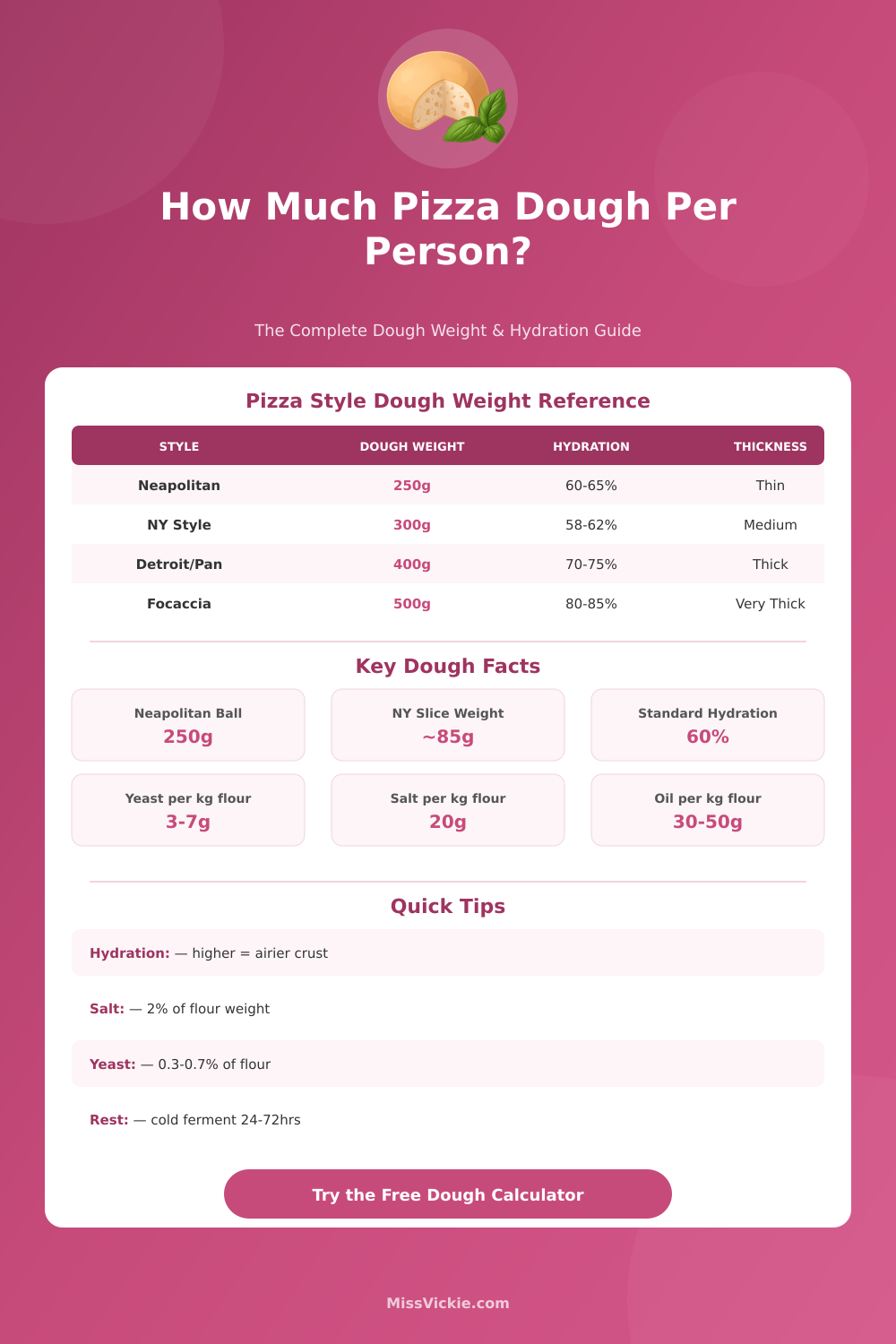
| Pizza Style | Dough Ball | Hydration | Salt % | Oil % | Thickness |
|---|---|---|---|---|---|
| Neapolitan (VPN) | 250g / 8.8oz | 60–65% | 2.5–3% | 0% | Very Thin |
| NY Style | 300–340g / 10.6–12oz | 58–63% | 2–2.5% | 1–3% | Medium-Thin |
| Thin & Crispy | 200–230g / 7–8oz | 50–58% | 2% | 2–4% | Very Thin |
| Detroit Pan | 380–420g / 13.4–14.8oz | 68–75% | 2% | 3–5% | Thick |
| Sicilian / Grandma | 350–400g / 12.3–14.1oz | 65–72% | 2% | 3–5% | Thick |
| Roman Al Taglio | 650g / 22.9oz (tray) | 75–85% | 2–2.5% | 2–3% | Medium-Thick |
| Focaccia | 800–1000g / 28–35oz (tray) | 80–90% | 2–2.5% | 4–8% | Very Thick |
| Sourdough | 270–300g / 9.5–10.6oz | 65–72% | 2.5% | 0–2% | Medium |
| Instant Yeast | Active Dry Yeast | Fresh Yeast | Sourdough Starter |
|---|---|---|---|
| 1g | 1.25g | 3g | — |
| 2g | 2.5g | 6g | — |
| 5g | 6.25g | 15g | — |
| 7g (1 packet) | 8.75g | 21g | ~140g (20% of flour) |
| 10g | 12.5g | 30g | ~200g (20% of flour) |
| Flour Weight | Cups (US) | Tablespoons | Notes |
|---|---|---|---|
| 100g / 3.5oz | ~0.8 cups | ~12.8 tbsp | 1 cup = ~125g |
| 250g / 8.8oz | ~2 cups | ~32 tbsp | Standard dough ball |
| 500g / 17.6oz | ~4 cups | ~64 tbsp | 4 Neapolitan pizzas |
| 1000g / 35.3oz | ~8 cups | ~128 tbsp | Bulk / party batch |
| 1500g / 52.9oz | ~12 cups | ~192 tbsp | Large event batch |
pizza dough is one of those things that seems more complicated than they really are. For a good recipe you only need six basic ingredients and no need to use fancy kinds of flour. It needs simply water, yeast, flour, olive oil, a bit of sugar and salt.
No special gear is needed. Just some bowls and a wooden spoon. The pizza dough must simply rise one time, which keeps everything easy.
How to Make Pizza Dough
Start the yeast from the first step. That means to mix together warm water with sugar and yeast, then leave it rest for around five minutes, until it becomes bubbly and foamy. The water should be warm, but not too warm.
Seriously follow these steps, because if the pizza dough does not rise correctly, then there can be troubles with the structure of the bread.
Kneading the pizza dough must not last a lot of time. Some recipes even need almost no kneading. A home stand blender works well, although it is not required.
In such blender, mix for four to five minutes, then pause for five, and then mix yet two to three minutes. That is a good method. The pizza dough should be fairly soft, so that it does not stick on the bottom and sides of the bowl, but stay quite flexible.
After the blending, rub oil on the dough balls, cover them with plastic wrap and leave them rest at room temperature for around two hours. They will expand and will become light and easy to work with.
There is also a method without kneading. It relies on the natural enzymes, that over time unrolls the gluten net, so one gets airy bred without the effort of usual kneading.
For the sizes, a 10-inch pizza needs around 180 grams of pizza dough. A 12-inch one uses around 260 grams, while a 14-inch one needs about 350 grams. That weight helps to reach the write proportion between thickness and chew.
One 12-inch pizza gives around eight slices and is enough for three to four people. The dough balls can last in the freezer and stay usable for at least one month. To use old ones, simply move them to the fridge the night before you bake.
pizza dough made on the same day never has the same taste as good. Pizza dough should be prepared at least two days before and kept in the fridge. Cold fermentation here almost always improves the result.
Even so, if one leaves the pizza dough to rest too long, the gluten can break down to the point that the pizza dough simply tears and flows.
A pizza stone helps a lot to reach high heat and a more crispy crust. Put semolina or flour on the peel before laying the pizza dough, so that it slides easily. The water level seriously affects the final structure of the crust.
The kind of flour also matters, normal everyday flour works, but pizza flour is a good choice. Adding a bit of whole wheat or spelt flour can change the texture in a fun way. The crust is the hardest part to perfect, butwith the right method, homemade pizza can really compete with that from a store.