🥩 Picanha Per Person Calculator
Calculate exactly how much picanha you need for your BBQ, dinner, or event
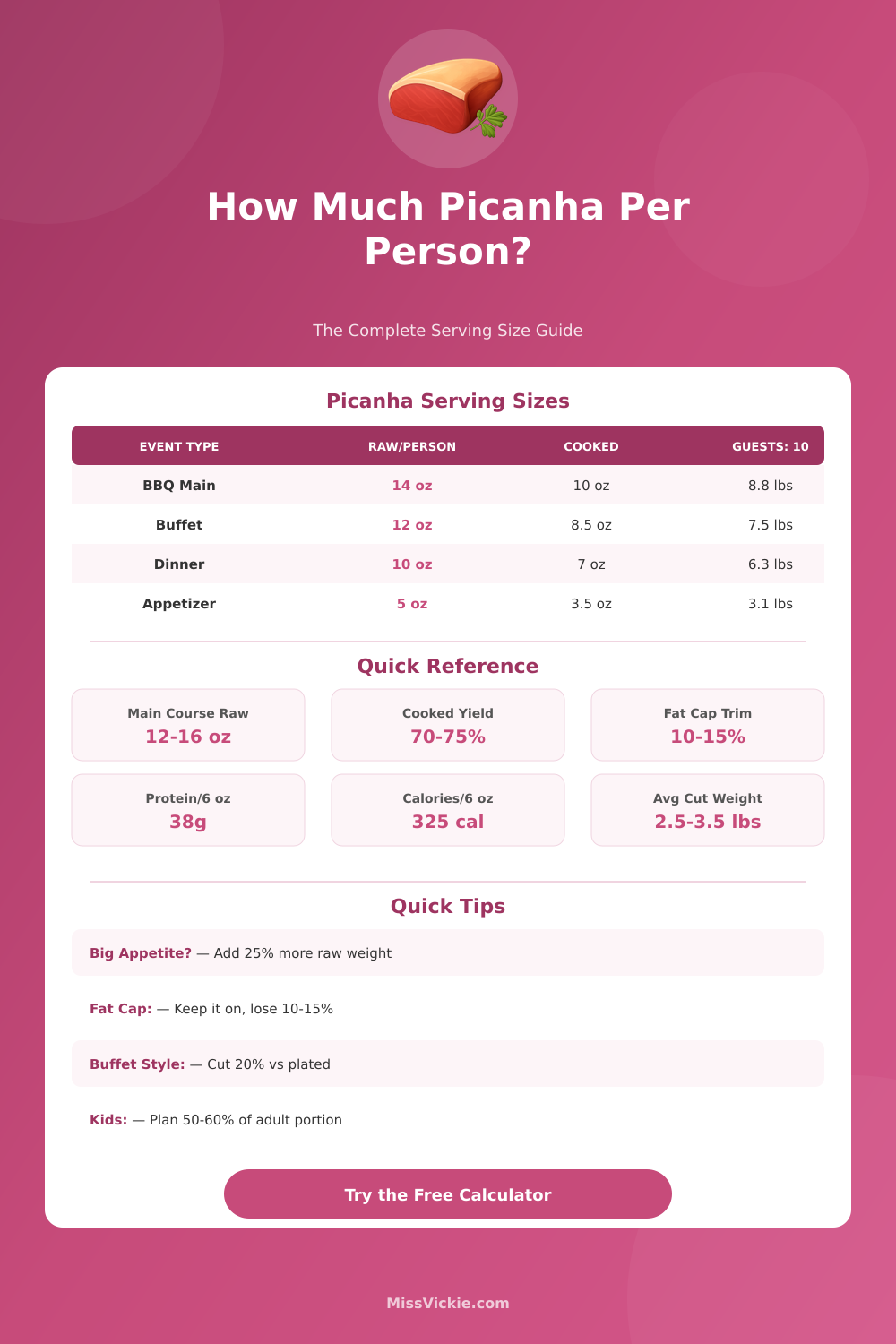
| Serving Style | Raw oz/Person | Raw g/Person | Cooked Yield |
|---|---|---|---|
| BBQ / Churrasco (Main) | 12–16 oz | 340–454 g | 8.5–11 oz |
| Plated Dinner (Main) | 10–12 oz | 283–340 g | 7–8.5 oz |
| Buffet Style | 8–12 oz | 227–340 g | 5.5–8.5 oz |
| Appetizer / Starter | 4–6 oz | 113–170 g | 3–4 oz |
| Guests | BBQ Main (lbs) | Dinner (lbs) | Buffet (lbs) |
|---|---|---|---|
| 5 | 4.4 | 3.4 | 3.1 |
| 10 | 8.8 | 6.9 | 6.3 |
| 15 | 13.1 | 10.3 | 9.4 |
| 20 | 17.5 | 13.8 | 12.5 |
| 25 | 21.9 | 17.2 | 15.6 |
| 50 | 43.8 | 34.4 | 31.3 |
| 100 | 87.5 | 68.8 | 62.5 |
| Factor | Percentage | Notes |
|---|---|---|
| Raw to Cooked Yield | 70–75% | Moisture and fat rendering loss |
| Fat Cap Trim Loss | 10–15% | If trimming before serving |
| Bone-in Adjustment | +20–25% | Rare for picanha, but if bone-in |
| Big Appetite Multiplier | +25% | Hungry crowd adjustment |
| Light Eaters Reduction | -20% | Smaller portions expected |
| Kids (under 12) | 50–60% | Of adult portion |
| Multiple Meats Factor | -25 to -40% | When other proteins are served |
| Imperial | Metric | Imperial | Metric |
|---|---|---|---|
| 1 oz | 28.35 g | 1 lb | 453.6 g |
| 4 oz | 113 g | 2 lbs | 907 g |
| 8 oz | 227 g | 5 lbs | 2.27 kg |
| 12 oz | 340 g | 10 lbs | 4.54 kg |
| 16 oz (1 lb) | 454 g | 25 lbs | 11.34 kg |
Picanha comes from Brazil, where it is a very popular cut of meat, before it reached Portugal and other lands. One says it pee-KAHN-yah. This meat comes from the rump part of the cow, especially the back end of the top muscle.
It has several other names depending on the store where you buy; cap of sirloin, upper cap of sirloin, rump cap or rump is all the same. In the United States, those other names are used more commonly than Picanha itself.
What is Picanha?
What truly sets this cut apart are simple but key things: the thick fat cap. Rather than being removed, this thick fat stays here where it must be, close to the meat during the cook. It bastes everything when it flows down, keeping everything surprisingly moist and tender.
Truly, that fat cap is the secret of everything. When you end the cook, it adds rich taste to the meal. The meat itself forms a clear triangular shape.
Thin red fiber under thick, buttery deposit of fat that becomes almost liquid gold after cooking.
In Brazil, Picanha is the top steak for grilling, that comes first. Walk into a churrascaria, that is the Brazilian style of steakhouse, and Picanha is the star. One serves it on skewers and directly at the table, a custom that existed in Brazil and later turned into the fancy dining that we know today.
Can you find it in your usual supermarket? It is harder then it seems. Special butcher shops are the best option for getting this cut.
A full Picanha weighs usually around two to two and a half pounds. Because from one animal come only two, the supply stays quite limited. But here is the thing…
It is actually cheap, and one piece feeds easily eight people, which makes it great for big groups.
There is no lack of ways to prepare this cut. Grilling stays the best method. The classic way is to cut it in thick steaks, coat them with rough sea salt or rock salt, put them on skewers, and then cook quickly and hot over open flame.
Important point: cut against the grain for the steaks. Sauce like chimichurri goes well with it. Also pan-searing works well, it keeps everything juicy, protecting the fat cap.
You can smoke it with hickory and finish with searing, if you want. Roast in a 400-degree oven with beef broth for eight to twelve minutes also works.
A standard serving is around 3.5 ounces and gives about 250 calories. The marbling and the rich beef taste are like sirloin, but the extra fat cap makes it even more tender. It is a relative of the tri-tip steak, although many think that Picanha is thebest of them.