🍵 Caffeine in Oolong Tea Calculator
Estimate the caffeine content in your oolong tea based on type, leaf amount, brew time & serving size
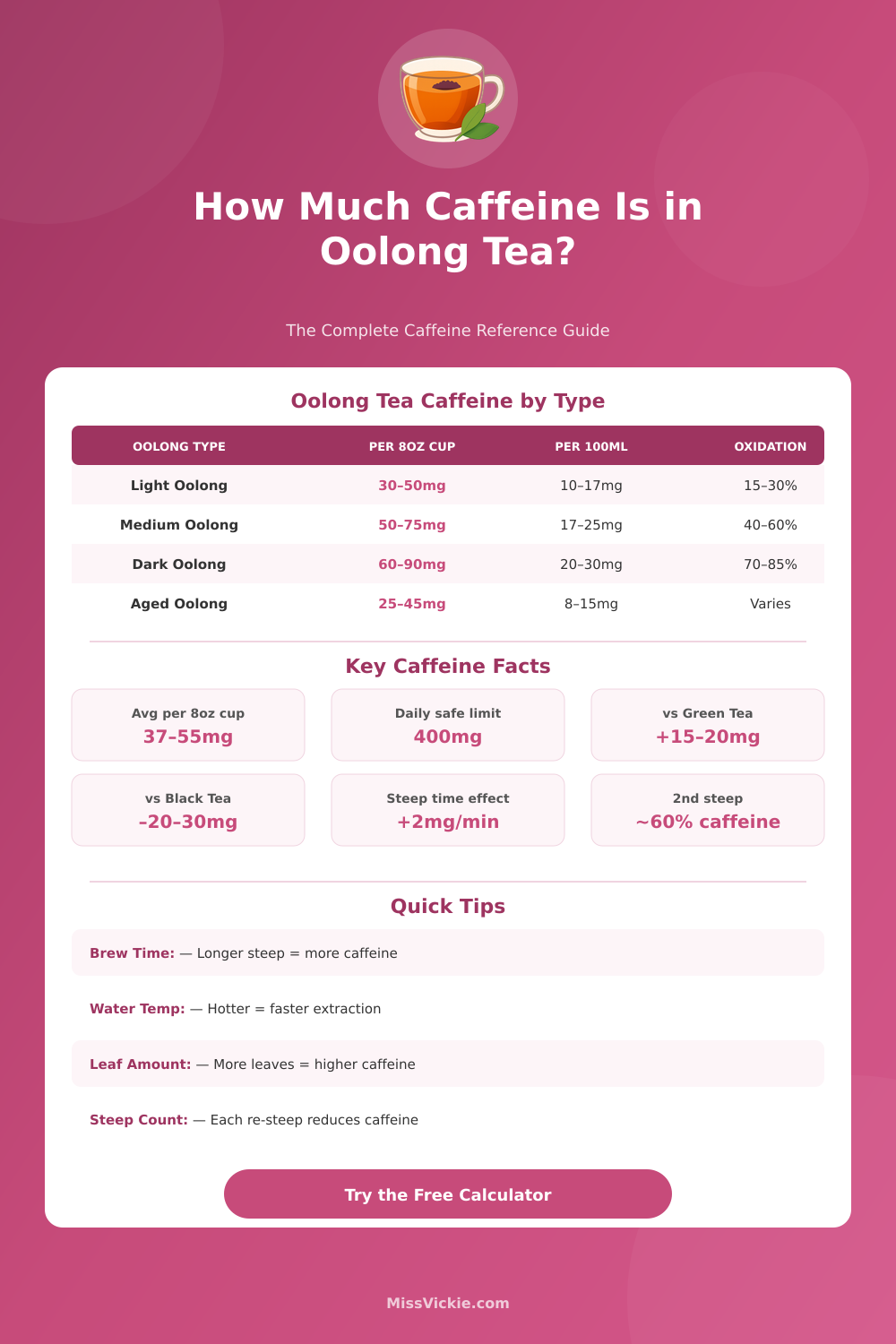
| Oolong Type | Oxidation | Caffeine per 8 fl oz | Caffeine per 100ml | Typical Leaf (g/cup) |
|---|---|---|---|---|
| Light Green Oolong | 15–30% | 30–50 mg | 10–17 mg | 2–3g |
| Tie Guan Yin | 20–40% | 35–60 mg | 12–20 mg | 3–4g |
| Medium Oolong | 40–60% | 50–75 mg | 17–25 mg | 3g |
| High Mountain (Gaoshan) | 20–45% | 40–70 mg | 13–23 mg | 3–4g |
| Dan Cong | 60–80% | 55–80 mg | 18–27 mg | 3–5g |
| Dark Oolong | 70–85% | 60–90 mg | 20–30 mg | 3–4g |
| Aged / Roasted Oolong | Varies | 25–45 mg | 8–15 mg | 2–4g |
| Steep Number | Caffeine Retained | Example (60mg base) | Recommended Steep Time |
|---|---|---|---|
| 1st Steep | 100% (baseline) | ~60 mg | 2–4 min |
| 2nd Steep | ~55–65% | ~33–39 mg | 3–5 min |
| 3rd Steep | ~30–45% | ~18–27 mg | 4–6 min |
| 4th Steep+ | ~10–25% | ~6–15 mg | 5–8 min |
| Beverage | Serving Size | Caffeine (mg) | vs Oolong |
|---|---|---|---|
| Oolong Tea (avg) | 8 fl oz | 37–55 mg | — Baseline |
| Green Tea | 8 fl oz | 20–45 mg | −10–20 mg |
| Black Tea | 8 fl oz | 47–90 mg | +10–35 mg |
| White Tea | 8 fl oz | 15–30 mg | −20–30 mg |
| Coffee (drip) | 8 fl oz | 95–200 mg | +60–145 mg |
| Espresso | 1 fl oz | 63–75 mg | Comparable |
| Matcha | 8 fl oz | 38–88 mg | Similar |
| Herbal Tea | 8 fl oz | 0 mg | −37–55 mg |
| Measurement | Grams (g) | Approx. Leaves | For Water Volume |
|---|---|---|---|
| 1 teaspoon loose leaf | ~2–2.5g | Rolled: ~15 pellets | 6–8 fl oz (180–240ml) |
| 1 tablespoon loose leaf | ~5–6g | Rolled: ~40–50 pellets | 12–16 fl oz (360–480ml) |
| Standard tea bag | ~2–2.5g | N/A (fannings) | 8 fl oz (240ml) |
| Gong Fu ratio | ~5–8g | Fills ~40% gaiwan | 100–150ml per steep |
Oolong Tea is a famous Chinese tea, prepared from leaves of the plant Camellia sinensis. From that same plant one does also green and black tea. The main difference lies in the way one treats the leaves.
Oolong Tea is partially oxidized so it stands between the unoxidized green tea and the fully oxidized black tea. The word “oolong” comes from a Chinese expression for “black dragon”, what hints to the long, twisted shapes of the leaves.
What is Oolong Tea and How to Make It
Oolong Tea belongs to its own kind between the teas. It does not match with green or with black. The grade of oxidation ranges between around 12 and 80 percent.
Even tea with 20 percent or 80 percent oxidation counts as Oolong Tea. That broad range shows why Oolong Tea belongs to the most varied tea kinds.
The taste of Oolong Tea depends much on the oxidation and the roasting. Green oolongs taste more like green tea, because they oxidized only a little. More black oolongs, at 40 to 80 percent oxidized, have more rich flavor.
Some oolongs one also roasts, what adds a charcoal nuance. During the roasting gets stonger, the color changes from light yellow to red brown, and the smells pass from fresh flower to nutty or caramel. The bitterness drops, when the taste becomes richer and rounder.
Oolong Tea started in Taiwan and southeast China. One prepares the best oolong by oxidizing the tea leaves under direct sunshine, until they give off nice scent between apples, orchids and peaches. The goodness of Oolong Tea measures the skill of the folk that prepare it.
There are four main kinds of Oolong Tea. Anxi-oolong, especially Tieguanyin, is known for its perfumed quality. Wuyi-rock-oolong is more oxidized and dark with unique mineral tone.
Taiwanese mountain oolongs stay green and bare sweet marmalade aroma. Dancong-oolongs are rare, expensive and unique in their perfume.
Oolong Tea holds much less Caffeine than coffee. One cup usually has between 30 and 55 milligrams per serving, while coffee reaches 95 to 200 milligrams. It holds nutrients like flavonoids and polyphenols, that the body uses as antioxidants.
That helps to keep healthy change and heart circulation.
To brew it, take around 2 grams of loose tea leaves for 200 milliliters of warm water. For rolled oolong one spoon for 180 milliliters is enough, but for big twisted leaves maybe you need two spoons. The water temperature works best at close to 100°C for most oolongs, but for softer and young kinds better use water cooled to 85; 90°C. Direct boiling of the leaves can destroy the tender flowery notes that mark oolongs.
The brew time ranges between two and five minutes. One can re-soak theoolong leaves many times.