🍜 Miso Soup Protein Calculator
Calculate exact protein content by ingredients, serving size & miso type
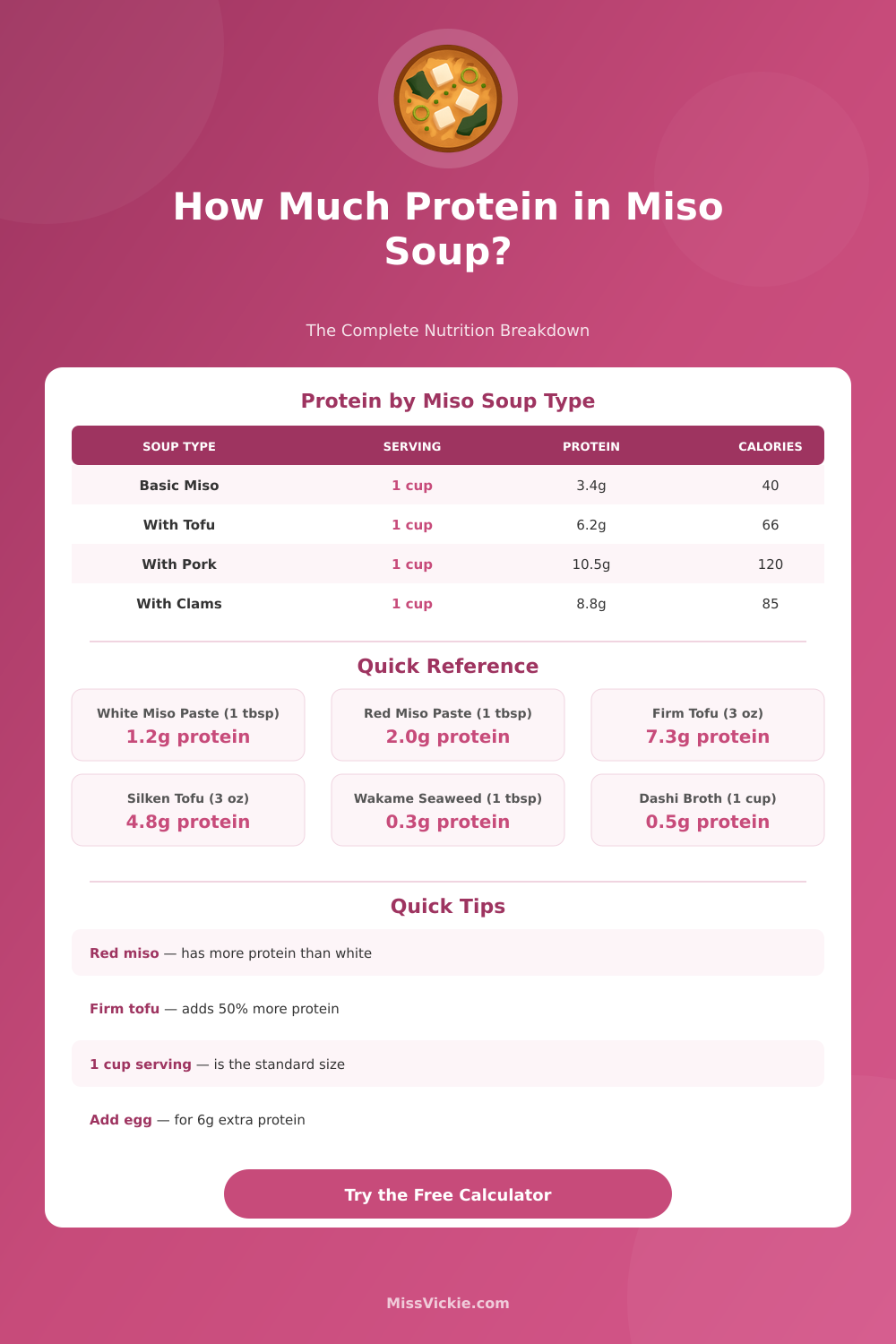
| Miso Type | Protein / 1 tbsp (18g) | Protein / 100g | Sodium / tbsp |
|---|---|---|---|
| White (Shiro) | 1.2g | 6.6g | 634mg |
| Yellow (Shinshu) | 1.8g | 10.0g | 690mg |
| Red (Aka) | 2.0g | 11.1g | 860mg |
| Awase (Mixed) | 1.6g | 8.9g | 740mg |
| Barley (Mugi) | 1.5g | 8.3g | 680mg |
| Ingredient | Typical Amount | Protein | Calories |
|---|---|---|---|
| Firm tofu | 2 oz (56g) | 4.6g | 41 kcal |
| Firm tofu | 3 oz (85g) | 7.3g | 63 kcal |
| Silken tofu | 2 oz (56g) | 2.7g | 29 kcal |
| Silken tofu | 3 oz (85g) | 4.1g | 44 kcal |
| Wakame seaweed | 1 tbsp dried (2g) | 0.3g | 3 kcal |
| Nori sheet | 1 sheet (3g) | 1.5g | 9 kcal |
| Whole egg | 1 large (50g) | 6.3g | 72 kcal |
| Shrimp | 3 pcs (45g) | 9.0g | 42 kcal |
| Clams | 4 small (60g) | 7.3g | 44 kcal |
| Pork belly | 2 oz (56g) | 5.4g | 145 kcal |
| Chicken breast | 2 oz (56g) | 11.0g | 55 kcal |
| Salmon | 2 oz (56g) | 11.4g | 104 kcal |
| Dashi broth | 1 cup (245ml) | 0.5g | 10 kcal |
| Green onion | 1 tbsp chopped | 0.1g | 2 kcal |
| Soup Variation | Protein | Calories | Fat |
|---|---|---|---|
| Plain miso broth only | 3.4g | 40 kcal | 1.1g |
| Miso + silken tofu + wakame | 5.8g | 66 kcal | 1.8g |
| Miso + firm tofu + wakame | 8.0g | 84 kcal | 2.6g |
| Tonjiru (pork & vegetables) | 10.5g | 120 kcal | 4.2g |
| Clam miso (asari) | 8.8g | 85 kcal | 1.5g |
| Egg drop miso | 9.2g | 108 kcal | 3.8g |
| Shrimp miso | 11.5g | 82 kcal | 1.3g |
| Mushroom miso (enoki + shiitake) | 4.2g | 48 kcal | 1.2g |
| Instant packet (reconstituted) | 2.5g | 35 kcal | 0.8g |
| Restaurant-style large bowl | 9.6g | 112 kcal | 3.1g |
| Serving Description | Volume (ml) | Volume (fl oz) | Weight (g) |
|---|---|---|---|
| Instant packet | 150 ml | 5 fl oz | 155g |
| Small bowl / side | 180 ml | 6 fl oz | 186g |
| Standard cup serving | 245 ml | 8.3 fl oz | 253g |
| Large bowl | 350 ml | 12 fl oz | 362g |
| 2-cup serving | 490 ml | 16.6 fl oz | 506g |
Miso soup is a classic Japanese dish, prepared by mixing miso paste in dashi, that forms the basic Japanese broth. It ranks among the main parts of the Japanese kitchen. For many Japanese, especially the older or those that care about traditions, lunch can not end without a rice serving and Miso soup.
Besides sushi, this soup is the first thing that comes to the mind of folks when they want to taste something Japanese.
How to Make Miso Soup
Miso soup usually appears in a meal called ichiju-sansai, what means “one broth, three plates”. That setup is made up of rice, soup and three side foods. In average home Japanese dinners one serves together rice, Miso soup, some sides pickles and tea.
One means it as a modest side broth, usually in a bowl a bit more small than that for rice. The standard serving has around 150 to 250 milliliters.
Dashi may be the most key part in Japanese cooking. It forms the base for Miso soup, sauces and cooking liquids for stew. One can think of it as an infusion, close to tea or similar to broth base.
If one sees dashi and miso as a common soup base, similar to chicken or pork stock, then it makes senes as a good start for meals.
Miso itself is fermented soy paste. It belongs to the same group of fermented foods as cheeses or yoghurts. It helps gut health and works for soups or sauces, like broth concentrate.
There are many types of miso. White, red or yellow types all work well. A typical mix in the style of Tokyo is almost equal part red miso and sweet white miso.
Brighter miso is good for summer soups, that must be fresh, while more dark adds richness during the winter. Mixing them creates more layered flavor. One avoids miso with big lumps.
Making Miso soup is really simple. In a pot mix powdered hondashi with water and add the vegetables that one wants. When they soften, add tofu, wakame seaweed or fried tofu and leave to sit a bit of time.
Later turn off the heat and enter the miso paste. To mix well, press the paste threw a screen with fine holes, what removes lumps and helps it dissolve in the broth. After adding miso the soup must not boil.
Simply warm it until clear.
Common extras are silk tofu, green onions, seaweeds, mushrooms and potatoes. Cubed salmon pieces, tilapia, shirataki noodles, carrots or dried shiitake mushrooms can make it a full meal. For a lighter version use white miso with tofu, green onions and mushrooms.
A fullerversion with red miso, potato and onion works as a good Protein rich breakfast.