🍜 Miso Soup Calorie Calculator
Calculate exact calories and nutrition for your miso soup by type, serving size, and add-ins
| Miso Type | Calories | Protein | Carbs | Fat | Sodium |
|---|---|---|---|---|---|
| White (Shiro) | 33 kcal | 2.0g | 4.3g | 1.0g | 634mg |
| Yellow (Shinshu) | 35 kcal | 2.2g | 4.0g | 1.1g | 680mg |
| Red (Aka) | 36 kcal | 2.4g | 3.6g | 1.1g | 920mg |
| Mixed (Awase) | 34 kcal | 2.1g | 3.8g | 1.0g | 780mg |
| Barley (Mugi) | 35 kcal | 2.0g | 4.5g | 1.0g | 650mg |
| Ingredient | Portion | Weight | Calories | Protein |
|---|---|---|---|---|
| Firm Tofu (cubed) | 2 oz | 56g | 44 kcal | 4.8g |
| Silken Tofu | 2 oz | 56g | 30 kcal | 2.8g |
| Wakame Seaweed | 1 tbsp dry | 5g | 5 kcal | 0.5g |
| Green Onion | 1 tbsp sliced | 6g | 2 kcal | 0.1g |
| Shiitake Mushroom | 2 medium | 30g | 10 kcal | 0.7g |
| Clams (Asari) | small handful | 50g | 37 kcal | 6.4g |
| Poached Egg | 1 whole | 50g | 72 kcal | 6.3g |
| Pork Belly (thin) | 2 slices | 30g | 155 kcal | 4.5g |
| Aburaage (fried tofu) | 1 piece | 15g | 47 kcal | 3.3g |
| Daikon Radish | 3 slices | 40g | 7 kcal | 0.2g |
| Dashi Type | Calories | Protein | Sodium | Notes |
|---|---|---|---|---|
| Bonito (Katsuo) | 10 kcal | 1.5g | 180mg | Most common base |
| Kombu (Kelp) | 5 kcal | 0.3g | 120mg | Vegetarian/vegan |
| Iriko (Sardine) | 12 kcal | 2.0g | 200mg | Stronger umami |
| Shiitake | 4 kcal | 0.2g | 10mg | Lowest sodium |
| Plain Water | 0 kcal | 0g | 0mg | No base flavor |
| Instant Granules | 10 kcal | 1.0g | 390mg | Higher sodium |
| Context | Fl Oz | Milliliters | Cups | Typical Calories |
|---|---|---|---|---|
| Small side (Japanese set meal) | 6 fl oz | 180 ml | 0.75 cup | 35–45 kcal |
| Standard side bowl | 8 fl oz | 240 ml | 1 cup | 45–65 kcal |
| Restaurant appetizer | 10–12 fl oz | 300–355 ml | 1.25–1.5 cups | 60–90 kcal |
| Large/main bowl | 16 fl oz | 475 ml | 2 cups | 90–130 kcal |
| Kids portion | 4 fl oz | 120 ml | 0.5 cup | 22–35 kcal |
| Instant packet (reconstituted) | 6–8 fl oz | 180–240 ml | 0.75–1 cup | 30–40 kcal |
**fast note:** The content of this article bases on real experiences and general knowledge about Miso Soup.
Miso Soup is a traditional Japanese soup, prepared by blending miso paste in dashi, which is a Japanese broth base. It ranks between the main parts of Japanese cooking. For many Japanese that favor old or traditional custom, lunch can not end without a rice serving and Miso Soup.
What is Miso Soup and How to Make It
Except sushi, it is the first thing that comes to mind of folks when they want something from Japanese cooking.
Dashi is the most important basic ingredient in Japanese cooking. It is a kind of brew, close to tea, and most fairly compares with stock. Dashi forms the base for Miso Soup, sauces and cooking liquids for dishes.
Good dashi truly changes the quality of the final product. If you use more bonito flakes, those scented pools from bonito, than one assumes, that really helps to improve the taste of the soup.
Miso Soup usually appears as a part of ichiju-sansai, which means “one soup, three plates”. This usual Japanese meal stores rice, soup and side foods. In average home Japanese dinners, one served together rice, Miso Soup or clear soup, around three side plates, pickles and tea.
The soup is meant to serve as a small side dish. It uses a bowl a bit more small than that for rice, with a standard serving between 150 and 250 milliliters.
Preparing Miso Soup is quite simple. In a pot, mix powdered dashi with water and any vegetables, if you want. When the vegetables soften, add tofu, wakame or fried tofu and leave to settle for a moment.
Later, turn off the fire and add the miso. Use a small strainer and spoon to well mix the paste with the soup. Pass the miso paste through the strainer with gentle care, to avoid lumps and quickly dissolve it in the broth.
The hole thing is ready in around 15 to 20 minutes.
The miso paste itself do not boil. It is enough to add around one spoon of miso for one cup of broth. Lower the heat and stir to dissolve the paste, then leave only to settle.
Miso is a classic Japanese product from beans. It is fermented soy paste, used similarly as broth in soups or sauces. It belongs to the same group of fermented products as cheese and yoghurt, and it helps the health of the bowels.
Various kinds of miso are worth trying. White, red or yellow, each works. Typical blends combine almost equal parts of red miso and sweet white miso.
During summer, a lighter soup, based mostly on yellow miso, works well. A bit of darker miso adds extra richness. In winter, one can change the ratio to mostly dark miso with a touch of lightness.
For light soup, white miso with tofu, green onions and sometimes mushrooms form a good mix. A fuller soup with red miso, potato and onion gives the feel of a good breakfast. Usually, choose miso without visible lumps.
Common additions are tofu, seaweed, green onions and vegetables. Silken tofu, cut in cubes, fits perfectly in the mix. Some dark misos already store mixed bonito dashi, which simplifies the process.
Dried wakame is a great addition. Fried tofu, cut small, goes well together with turnip or other vegetables.
When you understand dashi and miso as a universal soup base, similar to chicken broth or pork stock, it becomes basic for a whole meal. Add cubed salmon, tilapia or tofu as protein, together with shirataki noodles and starchy vegetables like potato, carrot or dried shiitake mushrooms. Like this a simple side soup turns into afull meal.
Miso Soup offers a rich, savory taste. The broth has umami, mostly from the miso paste, with bits of seaweed and tofu inside. It is nutty, savory and truly soothing.
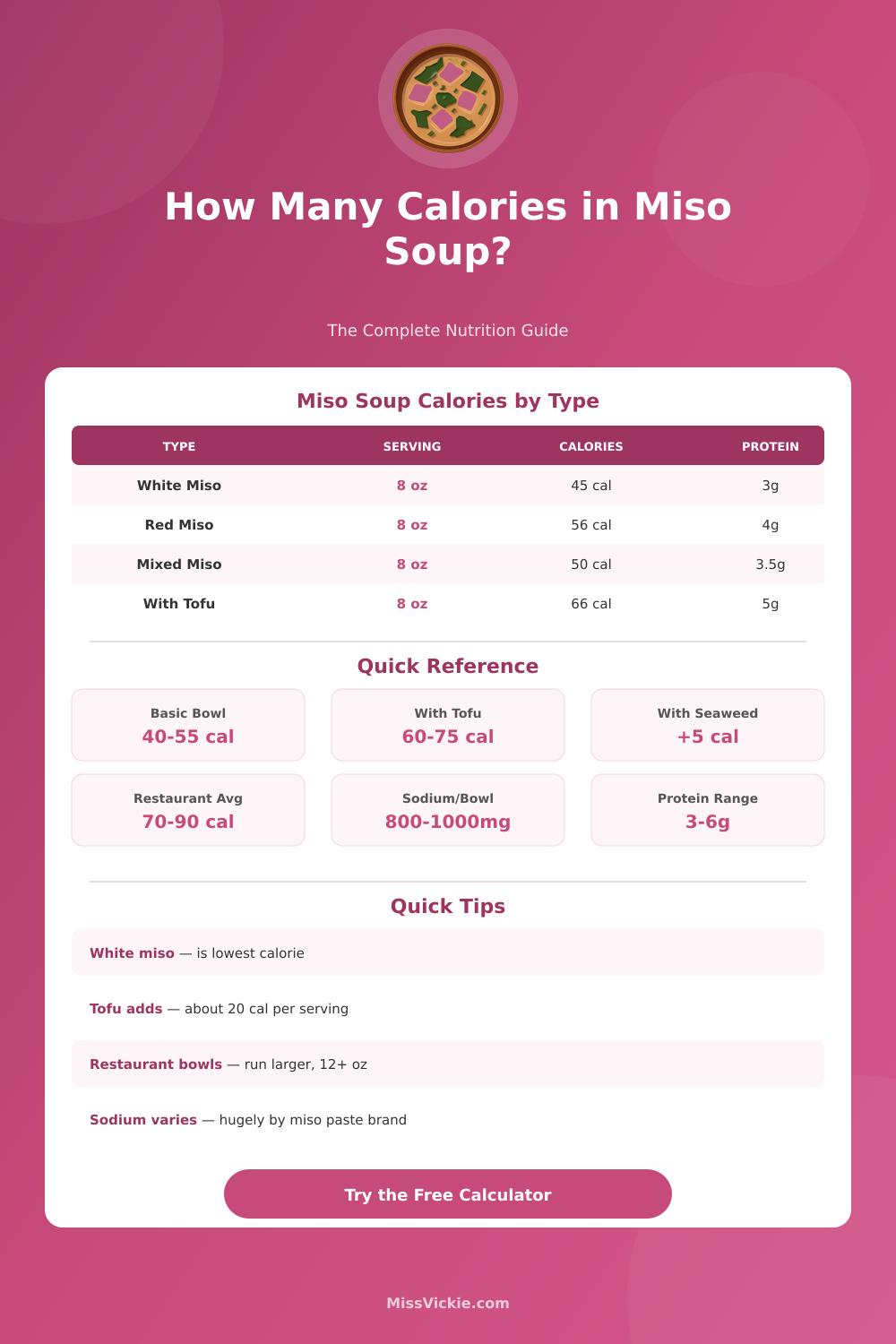
In one cup of Miso Soup there are around 84 Calories, but the nutritional value depends on the included ingredients.