🍵 Matcha Latte Caffeine Calculator
Calculate exactly how much caffeine is in your matcha latte based on serving size, matcha grade, and number of scoops
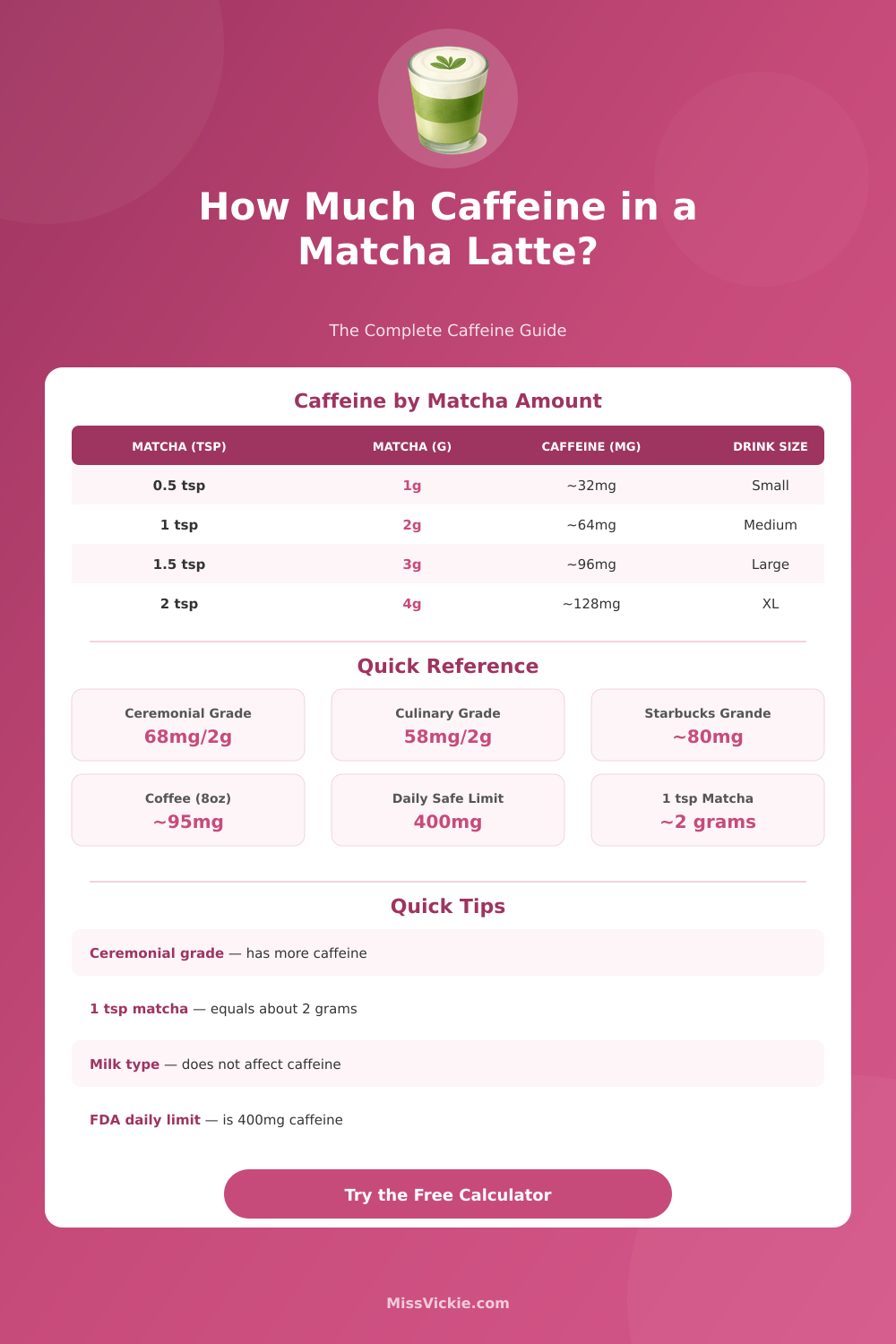
| Matcha Amount | Ceremonial | Premium | Culinary |
|---|---|---|---|
| 0.5 tsp (1g) | 34 mg | 30 mg | 29 mg |
| 1 tsp (2g) | 68 mg | 60 mg | 58 mg |
| 1.5 tsp (3g) | 102 mg | 90 mg | 87 mg |
| 2 tsp (4g) | 136 mg | 120 mg | 116 mg |
| 3 tsp (6g) | 204 mg | 180 mg | 174 mg |
| Beverage | Serving Size | Caffeine (mg) | L-Theanine |
|---|---|---|---|
| Matcha Latte (1 tsp) | 12 fl oz (355 ml) | 64–68 | Yes (39mg) |
| Brewed Coffee | 8 fl oz (237 ml) | 95 | No |
| Espresso (single) | 1 fl oz (30 ml) | 63 | No |
| Green Tea (steeped) | 8 fl oz (237 ml) | 28 | Yes (8mg) |
| Black Tea | 8 fl oz (237 ml) | 47 | Yes (14mg) |
| Coca-Cola | 12 fl oz (355 ml) | 34 | No |
| Red Bull | 8.4 fl oz (250 ml) | 80 | No |
| Starbucks Matcha Latte | 16 fl oz Grande | 80 | Yes |
| Drink Size | Volume | Typical Matcha | Caffeine Range |
|---|---|---|---|
| Small / Short | 8 fl oz (237 ml) | 0.5–1 tsp (1–2g) | 29–68 mg |
| Medium / Tall | 12 fl oz (355 ml) | 1–1.5 tsp (2–3g) | 58–102 mg |
| Large / Grande | 16 fl oz (473 ml) | 1.5–2 tsp (3–4g) | 87–136 mg |
| XL / Venti | 20 fl oz (591 ml) | 2–3 tsp (4–6g) | 116–204 mg |
| Milk Type | Calories (10 oz milk) | Protein | Fat |
|---|---|---|---|
| Whole Milk | 183 | 9.8g | 11.9g |
| Skim Milk | 102 | 10.0g | 0.6g |
| Oat Milk | 150 | 4.0g | 6.3g |
| Almond Milk | 46 | 1.3g | 3.4g |
| Coconut Milk | 56 | 0.5g | 5.6g |
| Soy Milk | 102 | 8.4g | 5.0g |
| No Milk (Water) | 0 | 0g | 0g |
| Group | Max Daily Caffeine | Matcha Lattes (1 tsp ea.) | Notes |
|---|---|---|---|
| Adults (healthy) | 400 mg | 5–6 lattes | FDA recommendation |
| Pregnant Women | 200 mg | 2–3 lattes | ACOG guideline |
| Teens (12–18) | 100 mg | 1–1.5 lattes | AAP suggestion |
| Children (<12) | Not recommended | — | Avoid caffeine |
One spoon of matcha weighs around 2 grams, and the ceremonial grade stores about 34 mg of Caffeine for every gram… So one serving brings you roughly 68 mg. Here less than 8 ounces of filter coffee with 95 mg although honest, it feels smoother.
The L-theanine, that is 39 mg for 2-gram serving, explains this. Cooking grades weigh around 29 mg per gram, so that same serving delivers only 58 mg.
Matcha Latte: How Much Caffeine and How to Make It
Starbucks heavy Matcha Latte uses around 3 servings of their sweetened mix (about 80 mg of Caffeine entirely). Homemade 16-ounce version with 2 spoons of ceremonial powder has 136 mg. That is a big differnece.
The FDA limits healthy adult folks to 400 mg daily, what means that you would need around 6 single-serving lattes to reach the maximum. Pregnant women should stay under 200 mg, so 2 to 3 lattes is the top.
The information below does not come from any calculator or converter. It builds on actual using experience, forum chats and cooking groups found everywhere on the net.
Matcha Latte is a warm drink prepared by foaming Japanese green tea powder with warm water, later mixing with steamed milk for a creamy finish. Matcha is made up of finely ground powder from shade grown green tea leaves. Rather than average green teas wear leaves simply soak, in matcha one consumes the whole leaf.
Because of this, matcha carries around ten times more nutrients than usual green tea.
The taste of matcha is grassy, vegetal and a bit bitter. It tastes like crushed leaves dissolved in water. When one turns it into a latte with milk and a bit of sugar, those grassy notes still show, but ease.
Good Matcha Latte balances sweetness with the savory taste of matcha. Two secret tips help to reach this balance: well mix the matcha by means of strong foam and do not add more than 150 ml of milk.
Sifting the powder before mixing is key. If matcha seems clumpy, screening removes clumps. Weighing in grams instead of spoons gives safer results.
For warm latte, 1.5 to 2 grams of matcha with 1.5 to 2 ounces of water and 5 to 6 ounces of milk work well. Typical serving of matcha is one spoon. For lattes, so, 2 grams of powder per cup is a good starting point.
The more bright green the color, the better is the quality. Even so for lattes, the most expensive matcha is not needed, because it mixes with milk. Matcha in the 30 to 50 dollar price range works surprisingly.
Whole milk masks bitterness well, and high-quality matcha is more savory than bitter. Ceremonial class matcha does make a clear difference in the taste even for lattes.
For the cold version, matcha mixes with fresh milk and is served over ice. It is smooth, refreshing and easy to drink. Starbucks uses pre-sweetened matcha, and their model carries much more matcha than typical homemade.
Standard cold matcha here uses around 10 ounces of milk and three spoons of matcha.
Matcha lattes can be made also with oat milk for a creamy feel. Commonly one adds honey, maple syrup, vanilla syrup or simple syrup. Fruity syrup in the bottom of the glass gives a fruity touch.
Matcha is rich in antioxidants and is useful for theimmune system. Among the benefits are polyphenols, riboflavin and manganese, although the whole health effect depends on the used milk and sweetener.