
The next time you’re at the supermarket and wondering whether those two nearly identical-looking lemons will have roughly equal amounts of juice, put them to the test. They probably won’t be equal unless you know how much juice each size of lemon holds, so the best way to find out is to try different sizes yourself. A sample of three different size demonstrates actual variation in output.
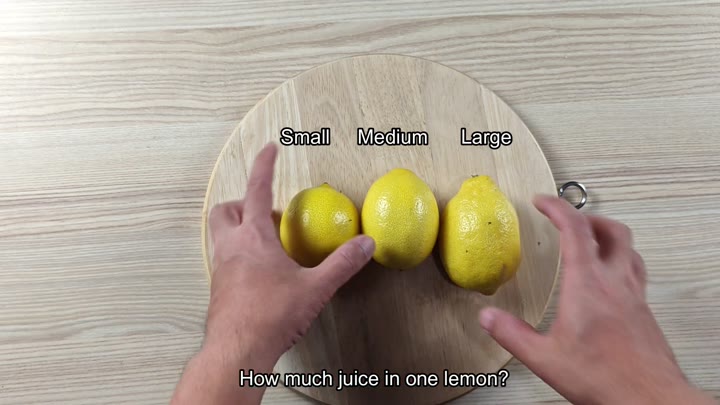
Place a small, medium and large lemon next to each other on your cutting board. Now grab them. You’ll see slight variation in size, but that doesn’t account for the amount of liquid they contain. And you’re after raw extraction; you don’t need to guess.
Practical Application In Cooking
Cut the lemons in half. Squeeze them really well into a little glass bowl. It’s harder to extract from the rinds then you might expect; be thorough! Press hard and let the juice drip into your vessel of choice.
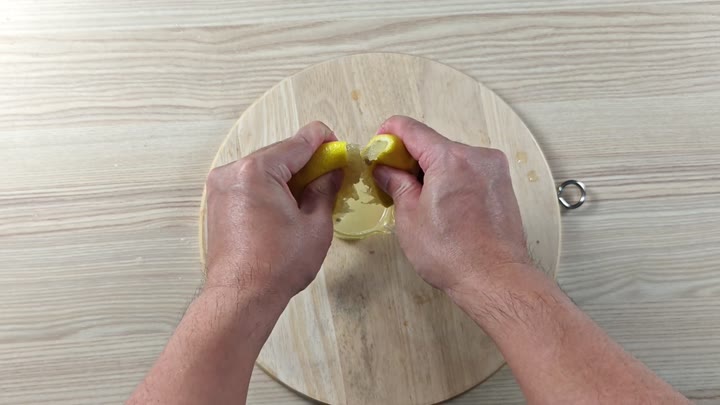
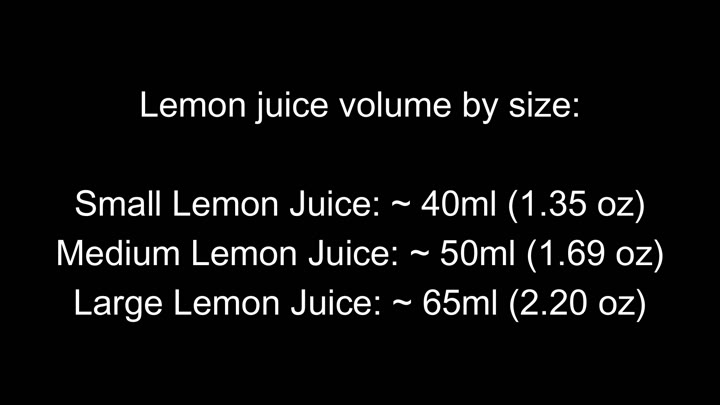
Pouring it out of the small lemon and into your glass measuring cup, you’re being precise about how you measure results. When it sets, it’s clear about where line should fall: At roughly 40ml, or about 1.35 ounces, it’s not bad for the tiniest of fruits.
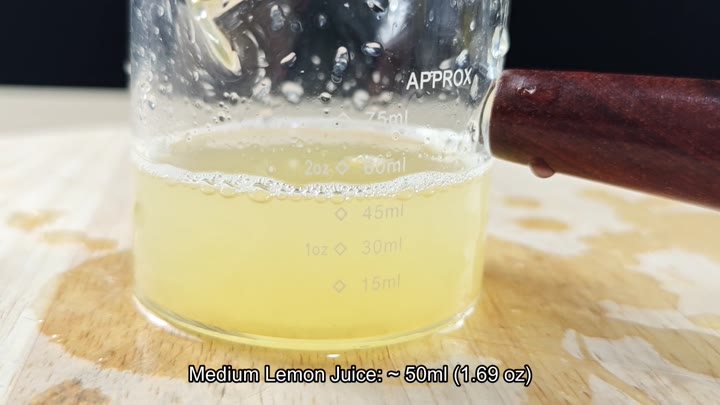
So that’s what you do with the medium lemon too, and sure enough, more comes out. This time when you tip it into the measuring cup, it stops at the 50ml line, which is about 1.69 ounces of juice. It are a respectable upgrade on its smaller cousin.
The big lemon is the best of them all. You’ll be squeezing it just as hard but you get a lot more juice. It’s about 65ml or so (about 2.20 ounces), which is quite a bit more then the other lemons. There is a big difference.
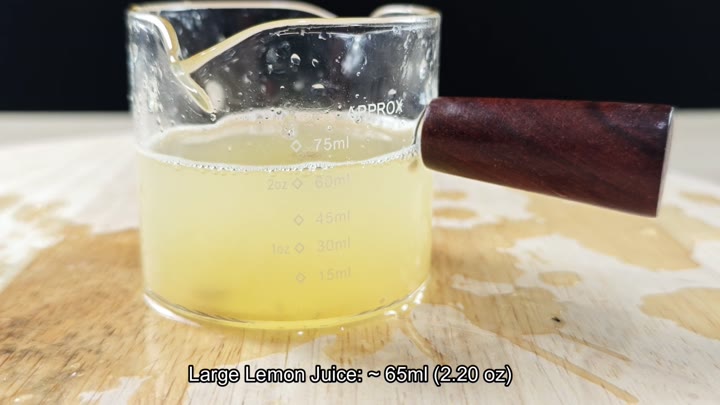
Check your math with grand totals. The tiny lemon yields 40ml (1.35 oz). Its larger sibling spits out 50ml (1.69 oz). The big guy produce 65ml (2.20 oz). Not theory, mind you; this is real world data.
Lemon size matters. You can’t substitute a large lemon for a small one in your recipe and simply expect everything else to balance out as well. If you don’t compensate somehow, the larger lemon will throw off the acid level, and guess what? As it turns out, that is its advantage: more juice for less work.
That’s what all this testing does for you. No more guessing about how many lemons to use? You will not be confused anymore. You check size, right? Then do you make a guess about the yield? Yes. You won’t have dry cake anymore. Watery sauce. It saves time in the kitchen.
All lemons are NOT created equal. And size does matter. The larger ones has more juice, which means less waste. Now you’ll definitely purchase them because they’re worth more money to you.
It’s simple: You don’t use any high-tech equipment to make it. No mechanical juicers is required. All you’ll need is a few basic items: a cup, a bowl and a knife. It’s also hand-made (your hands will be fine), though it can get a little messy (the juice sprays all over the place).
Well, the answer is obvious. While the little lemon produces the smallest amount, the big one produce the biggest. And the medium… well, the medium produced exactly in the middle. You did this test a second time with similar results.
Now that you have this tool, you’ll be able to better plan out your recipes. For example, if a recipe calls for half a cup of lemon juice, you’ll know that equals about four large lemons, five medium ones, or six small ones. It’s easy math.
You used to throw out dry lemons because they felt like a waste, but now you know what to expect! Now you reach for the largest one and it simplifies things for you. You will have no more disappointment, only consistent results.
And the difference is real. It’s not all in your head. You can see with your own eyes that variation exists. 40ml vs 65ml is quite a leap. That’s a nearly 50% jump. That’s significant.
That’s enough of a change that it will influence your shopping habits. You didn’t think there’d be such a clear trend. You expected minimal differences. But there aren’t, and man…that huge lemon is something else. Who knew so much juice could be lurking within?!
Big lemons are the way to go, a no brainer. They offer more juice and you get more bang for your buck when it’s time to squeeze. Your cooking gets better. The flavor balance is improved. You’ll stick with the big ones from now on. This basic test does that. It makes you think twice about what you buy, changing habits.
Why? Because you’re paying attention to what you buy now. Big lemons tend to be heavier, which means there tends to be more juice. You pay attention at the store. You check weight, you check size. And it pays off.
The medium is fine, but the small one just isn’t worth it. Too much effort, too little return. Unless you don’t have a choice, then you avoid them. But the large gives you the goods and so the large is where its at.
I have taught you something new today. And it wasn’t a huge experiment either. It is small, but the impact is big. So you won’t of do the same thing again. You have the experience, the measurements, and the facts. It is all right here. There is no fluff. It is just clear and concise. Now you know what to expect and you’re ready.