🕒 Meat Per Person Kabobs Calculator
Calculate exactly how much meat you need for the perfect kabob cookout
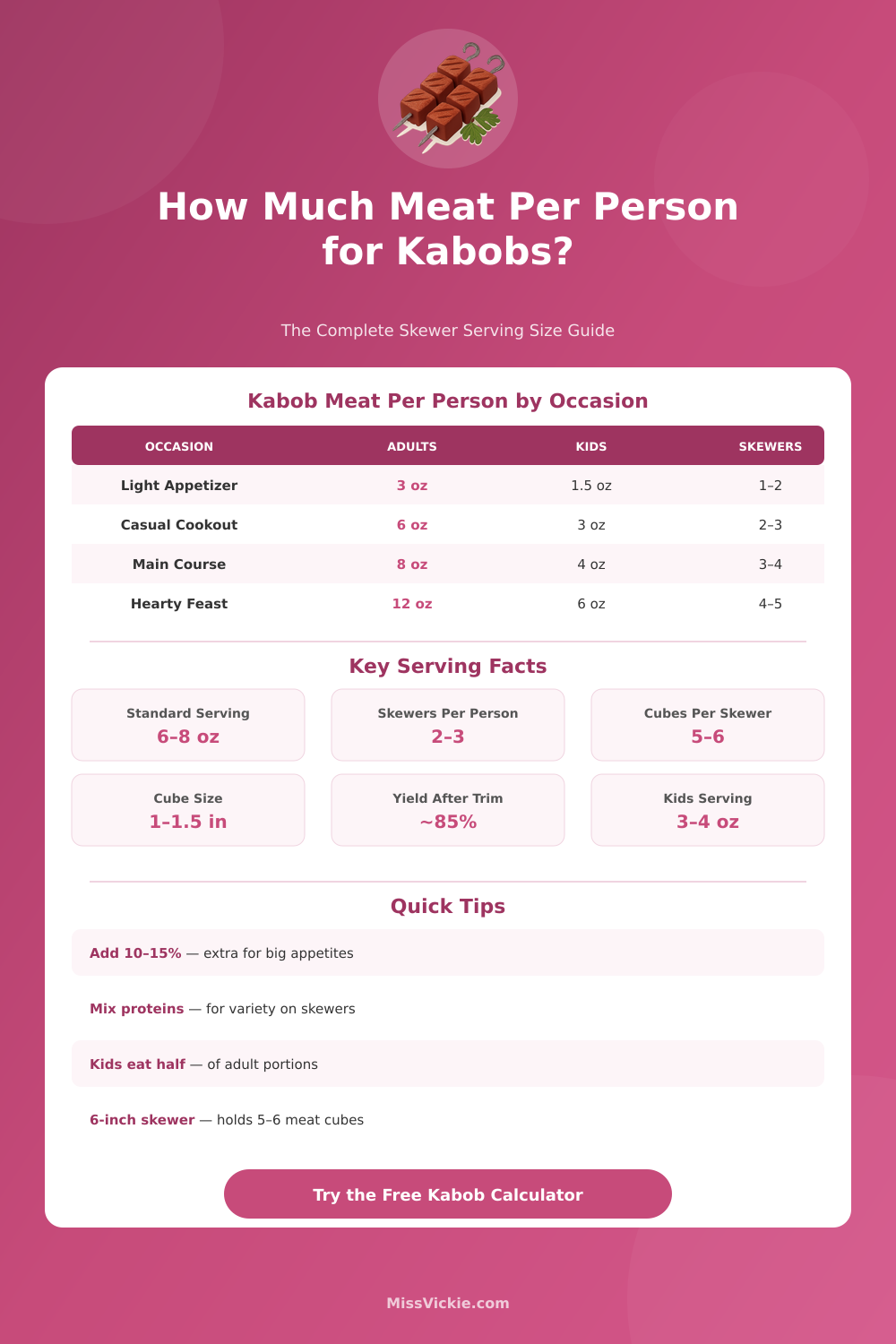
| Occasion | Adults (oz) | Adults (g) | Kids (oz) | Kids (g) | Skewers / Person |
|---|---|---|---|---|---|
| Light Appetizer | 3–4 oz | 85–113 g | 1.5–2 oz | 43–57 g | 1–2 |
| Main Course (few sides) | 6–8 oz | 170–227 g | 3–4 oz | 85–113 g | 2–3 |
| Main Course (no sides) | 8–10 oz | 227–284 g | 4–5 oz | 113–142 g | 3–4 |
| Hearty / Big Eaters | 10–12 oz | 284–340 g | 5–6 oz | 142–170 g | 4–5 |
| Meat Type | Raw Yield After Trim | Cubes Per Skewer (12") | Oz Per Cube | Recommended Cut |
|---|---|---|---|---|
| Beef | 85% | 5–6 | 1–1.2 oz | Sirloin, Tenderloin |
| Chicken Breast | 88% | 5–7 | 0.8–1 oz | Boneless breast |
| Lamb | 82% | 5–6 | 1–1.2 oz | Leg of lamb |
| Pork | 86% | 5–7 | 0.9–1.1 oz | Pork loin / shoulder |
| Shrimp | 78% | 4–6 | 0.5–0.8 oz | Large / Jumbo (16–20) |
| Mixed Meats | 84% | 5–6 | 1–1.1 oz | Combo of above |
| Skewer Size | Best For | Meat Cubes | Meat Per Skewer (oz) | Meat Per Skewer (g) |
|---|---|---|---|---|
| 6-inch | Appetizers & kids | 2–3 | 2–3 oz | 57–85 g |
| 12-inch | Standard main course | 5–6 | 4–6 oz | 113–170 g |
| 18-inch | Hearty eaters & feasts | 7–9 | 7–9 oz | 198–255 g |
kabobs are made up of bits of meat and vegetables put on a stick and roasted on a grill. In the United States kabobs commonly refer to something on a stick. The term “kabobs” comes from the Middle East and means meat on a skewer, that grills over open fire.
The word “kabobs” is more used here, while “kebab” stays the Persian original. They both mean the same food. Nations like Armenia and Iran favor the form “kabobs”, and one finds it also in Turkish and Urdu.
Kabobs: What They Are and How to Make Them
kabobs differ from foods like shawarma or gyros. Shawarma has cooked meat in pita bread together with falafel, while gyros lack the falafel. They are held by means of a skewer, not by means of pita bread.
Many ways exist for making kabobs. One can grill kabobs with cubes of steak, chicken, bell peppers, onions and mushrooms in sauce of honey and teriyaki. Polish kabobs soaked in honey with soy sauce grill on skewers with colorful vegetables, until they become wet, juicy and rich in flavor.
Shish kabobs can use homemade spice blends and a sauce from red wine. Beef and pork kabobs work well, soaked in broth of beef with onions and dill, later served with soaked onions, tomatoes and cucumbers. There are also special beef tortilla kabobs wrapped in butter with garlic.
Fruit kabobs also are popular. Simply put one piece from each of four or five different fruits on wooden or bamboo skewers, for instance strawberries, cherries, balls of watermelon and more.
When dealing with vegetables, bell peppers of any color, zucchini, yellow squash, mushrooms and onions all hold their form on skewers. Red onions, yellow onions and shallots all work. A smart method is too lay all same bits on one skewer.
One skewer for onions, another for mushrooms, and meat on its own. Because different meats and vegetables cook at different speeds, one removes every skewer from the grill, when it is ready.
Sirloin works well as a cut of beef for kabobs. Pork shoulder has strong taste, but needs a lot of work to remove tissue and fat. Even after all that work, it sometimes stays a bit tough.
Cooking the beef before adding meat to skewers with vegetables is worth noting, because vegetables can overcook a lot before the meat cubes are ready.
For serving sizes, one-quarter to a third of a pound of meat for kabobs each person is a good amount. For veggie kabobs, one-quarter to one-half of a pound for one person works. Serving size for Polish kabobs usually means two per person.
Only the freshest, best ingredients go inthe making of truly great kabobs.