
At this point, you may be asking yourself why there are two options for steaming on an espresso machine (Hot Milk vs. Dedicated Cappuccino mode) if it’s all just hot milk anyway? It doesn’t seem like redundant engineering.
Experiment with the Cappuccino mode versus the Hot Milk mode to see how it affects amount of foam and texture.
Comparing the two milk modes
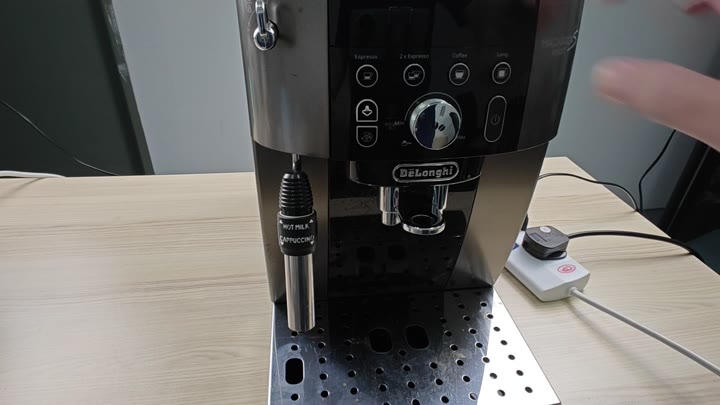
It’s simple enough. A stainless steel machine that offers up a button for Coffee, Lungo, and Espresso, along with a clear control panel. In the middle of it all is a dial to adjust your grind settings.
But really, the focus is entirely on the steam wand. On the lever where you’d pull down to get some steam going, there are easy-to-read labels for CAPPUCCINO and hot milk. Just make sure you have machine warmed up and running before you touch any milk.
To make a cappuccino, start here to get that airy, foamy consistency in your milk. In this setting, the machine add quite a bit of air to the milk while heating it. You can see how fast the milk changes when its inside the stainless steel pitcher.
Out comes a frothy mixture with a dense head of foam on top. For a classic macchiato or even just a cappuccino, having a lot of foam like this is ideal. Compared to just steamed milk, it has a lighter, airier quality.
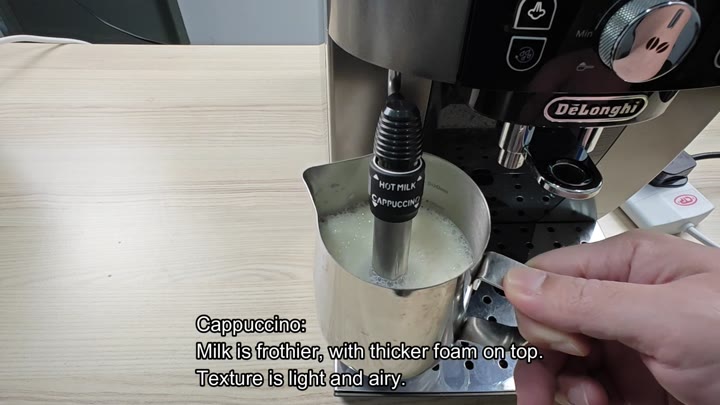
It is interesting to watch this happen. Instead of focusing solely on rapid heat, the machine focus primarily on aerating. It does this by producing a familiar dome of bubbles atop the coffee.
This isn’t merely a warmed-up milk product, it’s a building block of the beverage. It is combined with the wand which has no trouble whipping the liquid into something softer and fluffier then clouds.
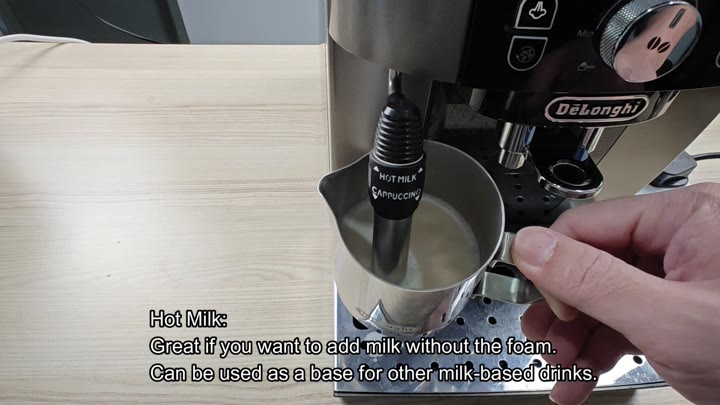
Then there’s the Hot Milk mode. Here they go all out on a different approach. Instead of frothing the milk, this one just warms and swishes the milk around using more steam.
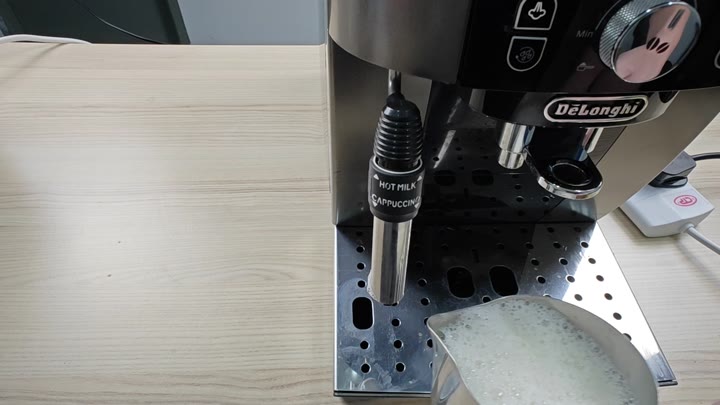
Basically you want it nice and creamy with very little (if any) foam. When you use the wand, you can see the milk swirling around inside the pitcher. And it does get hot, which is good. But it stays liquid and dense. No airy top layer here.
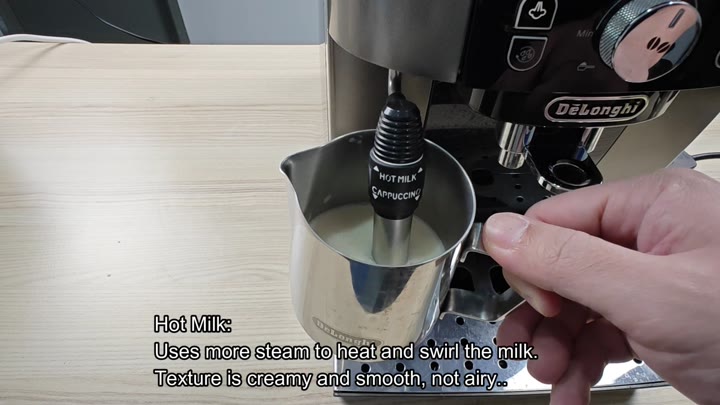
It’s great for coffee beverages where you don’t want any foam. Hot chocolate? Check. Latte? Check. A nice steaming mug of milk? Check.
For all these items, it adds the same kind of velvety feel to your milk and mixes perfectly well with the shot of espresso. There are no stiff peaks of foam like you get from a cappuccino. It leaves just a nice, level, creamy bottom. The trick here: keep the pitcher still while pouring so everything heat evenly.
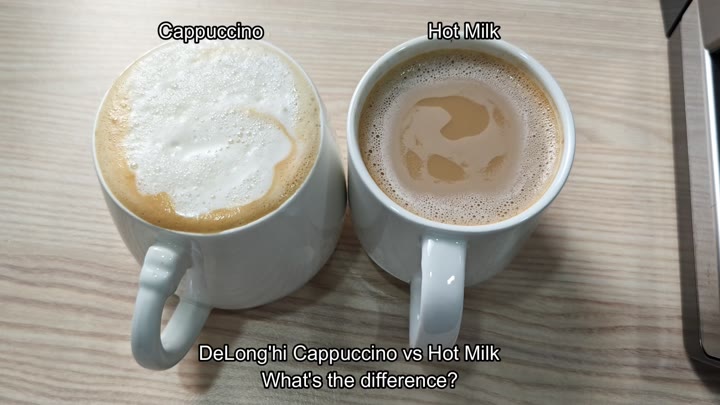
To demonstrate how this works in real life, I poured hot milk brewed with the Hot Milk setting over some black coffee in a cup. It blended right in and turned the coffee into a type of latte. Because there is no foam, it just have an even consistency throughout.
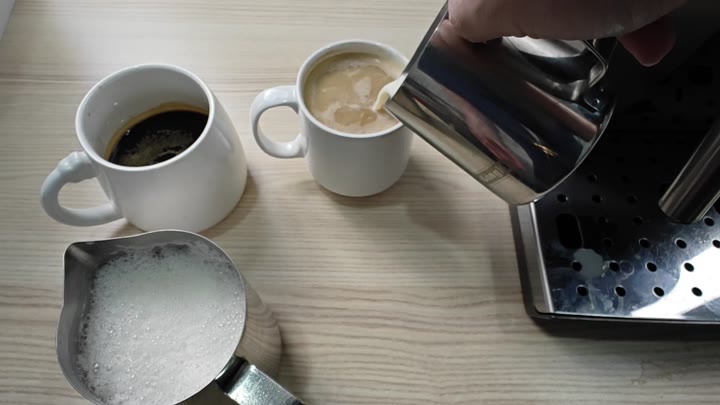
Then with the Cappuccino mode, you get milk that sits atop the coffee, forming separate layers. You have one cup that looks like a normal cappuccino with a thick layer of froth, and another that looks like a plain, creamy coffee.
The difference is stark when you look at the two mugs side by side.
If you compare the two side-by-side, it’s striking. While the Hot Milk mug shows the swirl of milk mixing into the coffee, the Cappuccino mug has a large crown of froth.
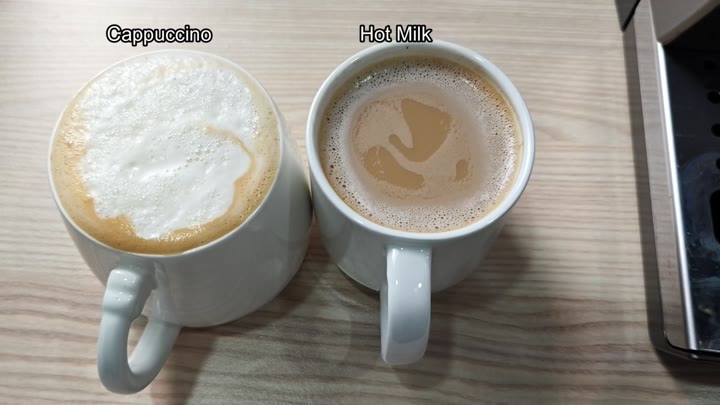
It’s a very literal illustration of the impact of injecting air. In the Cappuccino mode, it’s all about air and volume. In the Hot Milk mode, it’s all about creaminess and temperature.
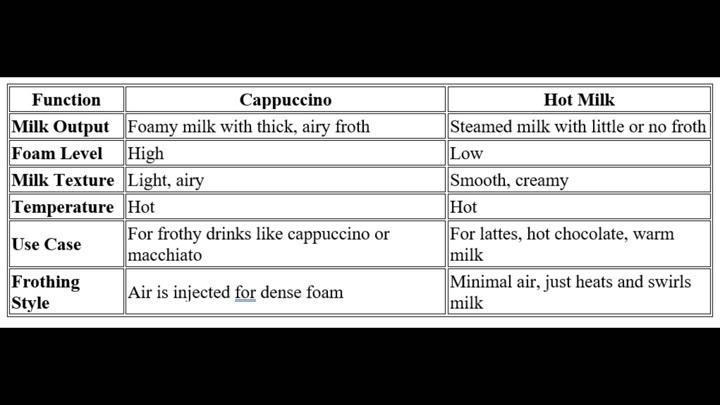
You can break down the differences into a few key categories.
The differences come down to a few categories: In Cappuccino mode, the output is frothy, foaming, thicker, airier milk. In Hot Milk mode, it’s steamed milk with little or no froth.
It follows that the feel of each would be different, one dense and smooth, the other more light and aerated. How do you get there? Well, they both reach the same temperature but how you use them determines which is correct. Use cappuccino when you’re making something that needs the structure of foam.
Is your base blending into the background? Time to go Hot Milk.
The real distinction here is in the froth. The Hot Milk setting heats up and churns using steam, while the Cappuccino setting build volume by injecting some air into it. Neither one is necessarily superior; each is just what is needed for the beverage being made.
For a creamy and wet blend, you’ll go with the Hot Milk setting. Wanting something more foamy on top with less moisture? That’d be a Cappuccino. Either way, as long as you pick the proper mode, the machine is up for it. Big difference there.