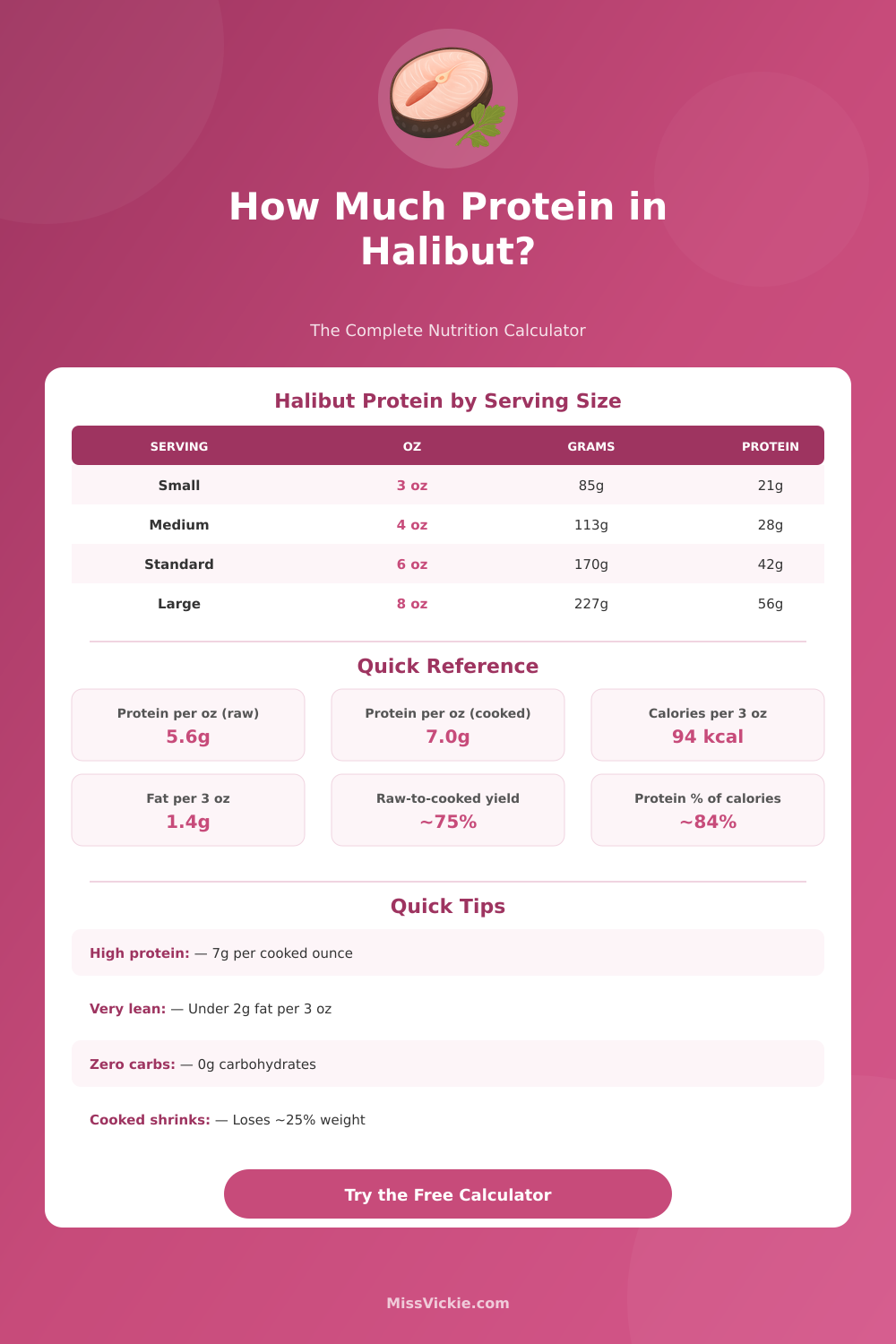
🐟 Halibut Protein Calculator
Calculate the exact protein content in your halibut serving
| Serving Size | Raw Protein | Cooked Protein | Calories (Cooked) |
|---|---|---|---|
| 3 oz / 85g | 15.8g | 19.7g | 94 kcal |
| 4 oz / 113g | 21.0g | 26.2g | 125 kcal |
| 5 oz / 142g | 26.4g | 33.0g | 157 kcal |
| 6 oz / 170g | 31.6g | 39.4g | 188 kcal |
| 8 oz / 227g | 42.2g | 52.7g | 251 kcal |
| 10 oz / 284g | 52.8g | 65.9g | 314 kcal |
| 12 oz / 340g | 63.2g | 78.9g | 376 kcal |
| 1 lb / 454g | 84.4g | 105.5g | 502 kcal |
| Fish (3 oz Cooked) | Protein | Calories | Fat |
|---|---|---|---|
| Halibut | 21g | 94 kcal | 1.4g |
| Salmon (Atlantic) | 19g | 175 kcal | 10.5g |
| Cod | 19g | 89 kcal | 0.7g |
| Tilapia | 21g | 109 kcal | 2.3g |
| Tuna (Yellowfin) | 25g | 118 kcal | 1.0g |
| Shrimp | 20g | 84 kcal | 0.2g |
| Mahi Mahi | 20g | 93 kcal | 0.8g |
| Swordfish | 22g | 132 kcal | 4.4g |
| Raw Weight | Cooked Weight (approx) | Raw Protein | Cooked Protein |
|---|---|---|---|
| 4 oz / 113g | 3 oz / 85g | 21.0g | 19.7g |
| 6 oz / 170g | 4.5 oz / 128g | 31.6g | 29.7g |
| 8 oz / 227g | 6 oz / 170g | 42.2g | 39.4g |
| 10 oz / 284g | 7.5 oz / 213g | 52.8g | 49.4g |
| 12 oz / 340g | 9 oz / 255g | 63.2g | 59.2g |
| 16 oz / 454g | 12 oz / 340g | 84.4g | 78.9g |
| Daily Goal | 3 oz Cooked Halibut | 6 oz Cooked Halibut | 8 oz Cooked Halibut |
|---|---|---|---|
| 50g (sedentary adult) | 42% of daily goal | 79% of daily goal | 105% of daily goal |
| 80g (active adult) | 26% of daily goal | 49% of daily goal | 66% of daily goal |
| 120g (athlete / lifter) | 18% of daily goal | 33% of daily goal | 44% of daily goal |
| 150g (high-protein diet) | 14% of daily goal | 26% of daily goal | 35% of daily goal |
A 3 oz cooked halibut fillet delivers about 21g of protein at only 94 calories. Thats roughly 42% of a 50g daily target from one small piece. I found the fat content shockingly low at 1.4g per serving.
Cooked halibut packs around 6.6g protein per ounce, which beats salmon by a solid margin.
Halibut: Protein, Types and How to Cook
The info below do not come from a computer or a translator. It is based on actual user experiences, forum talks and online groups from the whole net.
Halibut is the common name for three species of flatfish from the family of right-eyed flounders. The term comes from the middle English words “haly”, that means saint, and “butte” that points to flat fish. One gave it that name, because it served as traditional food for Catholic holidays and festivals.
In some places, one calls Halibut also other big flatfish, for example the Californian Halibut, that actually belongs to the family of left-eyed flounders.
The Pacific Halibut ranks among the biggest flatfish. It lives in the North of the Pacific Ocean, where fishermen, whether commercial, fun or for life; seize it. One sometimes calls the big Pacific Halibut “big gate”.
The Atlantic Halibut is the largest flatifsh globally, where samples reach up to 15 feet long and live up to 50 years. Halibut and other flatfish have flat profiles, swimming with one side below and the other up. They start life with eyes on both sides, but the left eye moves to the right side, when the fish is still very tiny.
The record of the biggest Halibut changes often. In 2004 one caught Atlantic Halibut of 419 pounds. Later, in 2019, a German fisherman pulled out Halibut long at 8.6 feet in Norwegian seas near Kjollefjord.
Halibut of 244 pounds, that passed two metres, one also took in Saguenay.
Rounds of Halibut have sweet, gentle flavor with texture firm, yet loose. The flesh is boneless, white with gentle taste, sometimes with pink shades along the center line. That texture is quite unique, so hardly copied buy means of other fish.
If you only want a base for sauce, even so, many plain white fish can serve well.
One can cook Halibut in many ways. Burn in pan works well (dry the bits), salt and pepper them, heat oil until it shines, and lay the rounds in for some minutes, to get brown crust. Sauce from lemon, garlic and butter goes surprisingly with burned Halibut.
Roasting at 400 degrees Fahrenheit in an oven-safe plate forms another way. Grilling and cooking in liquid both work, if one avoids to overdo. Too long soaking in acids, like vinegar, can dry out the fish to soft and shapeless.
Simple mix from lemon juice, olive oil, basil, salt and pepper, with fast searing of around three minutes per side, gives also good results.
Halibut commonly costs a lot, around 60 dollars per pound in some fish markets. Half a round cooked gives more than 100 percent of daily nutritious needs. One serving of three units stores 16 grams of Protein.
Eating fish like Halibut at least twice per week helps toimprove daily health.