🍏 Granny Smith Apple Fiber Calculator
Calculate the exact fiber content based on apple size, weight, and quantity
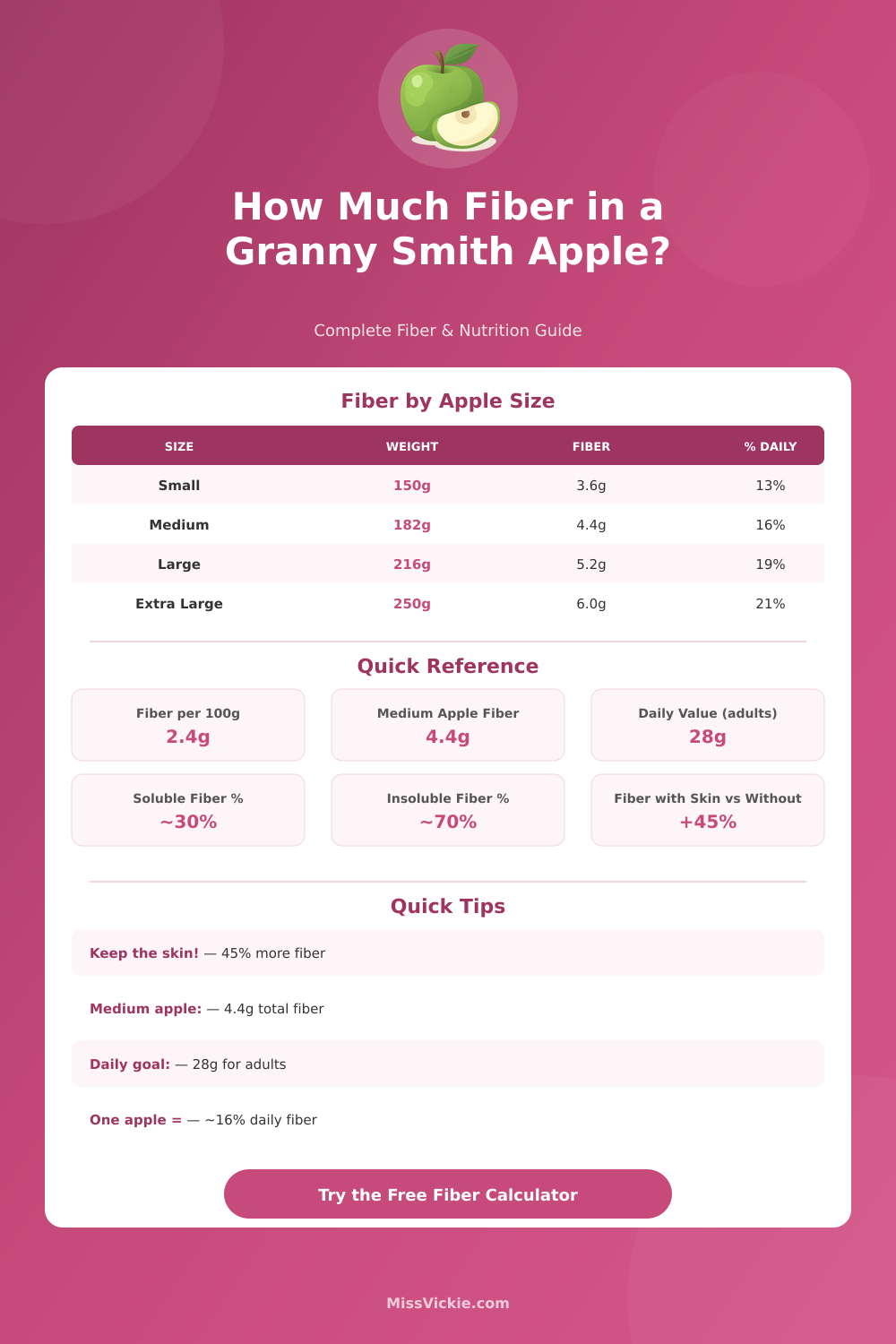
| Apple Size | Weight | Total Fiber | % Daily Value (28g) |
|---|---|---|---|
| Small (2.75″ dia) | 150g / 5.3 oz | 3.6g | 13% |
| Medium (3″ dia) | 182g / 6.4 oz | 4.4g | 16% |
| Large (3.25″ dia) | 216g / 7.6 oz | 5.2g | 19% |
| Extra Large (3.5″+ dia) | 250g / 8.8 oz | 6.0g | 21% |
| 1 Cup Sliced | 109g / 3.8 oz | 2.6g | 9% |
| Preparation | Fiber per 100g | Medium Apple Fiber | Difference |
|---|---|---|---|
| With Skin (whole) | 2.4g | 4.4g | — |
| Without Skin (peeled) | 1.3g | 2.1g | -52% |
| Skin Only (per 100g of skin) | 4.5g | — | — |
| Apple Variety | Weight (medium) | Total Fiber | Fiber per 100g |
|---|---|---|---|
| Granny Smith | 182g / 6.4 oz | 4.4g | 2.4g |
| Gala | 182g / 6.4 oz | 4.3g | 2.4g |
| Fuji | 182g / 6.4 oz | 4.4g | 2.4g |
| Red Delicious | 182g / 6.4 oz | 4.4g | 2.4g |
| Honeycrisp | 182g / 6.4 oz | 4.2g | 2.3g |
| Pink Lady | 182g / 6.4 oz | 4.4g | 2.4g |
| Fiber Type | Per 100g | Per Medium Apple | % of Total Fiber |
|---|---|---|---|
| Soluble Fiber (pectin) | 0.7g | 1.3g | ~30% |
| Insoluble Fiber (cellulose) | 1.7g | 3.1g | ~70% |
| Total Dietary Fiber | 2.4g | 4.4g | 100% |
| Group | Recommended Fiber | Medium Apples to Meet Goal | % per Apple |
|---|---|---|---|
| FDA Daily Value | 28g | 6.4 apples | 16% |
| Women (19–50) | 25g | 5.7 apples | 18% |
| Men (19–50) | 38g | 8.6 apples | 12% |
| Children (4–8) | 25g | 5.7 apples | 18% |
| Children (9–13) | 26–31g | 5.9–7.0 apples | 14–17% |
| Adults 50+ | 21–30g | 4.8–6.8 apples | 15–21% |
The Granny Smith Apple is one of the most known green types everywhere. It was found in 1868 in Australia, when Maria Ann Smith saw a random plant growing beside a brook. The plant came probably from thrown out French crab apples.
Smith found that the fruit works for cooking and eating, and she helped with its spread. In a clear marketing step, she gave it the name Granny Smith.
About the Granny Smith Apple
They have a size of small to medium, about five to seven centimetres wide. The form can be round, oval or a bit pointed. The skin is smooth, solid, firm and thick.
Maturing, it stays bright green, sometimes with pale green tones and red marks. When too mature, the apple changes from green to yellow. The inside flesh is white.
The Granny Smith Apple has a tart tatse. They are not sweet, but also not bitter. The flavor is described as fresh and juicy, with a tart-sweet balance that ends quite nicely.
It is more tart than the most common types in the supermarket. The core is small, so almost the whole fruit can be eaten. They are like slightly sweeter cooking apples.
The thick flesh and skin stays firm and does not break easily.
The Granny Smith Apple works well for cooking. They do not get wet and do not get too sweet while roasting, so they work great in cakes. In those, they keep there form, which gives nice bits in the inside.
One can add sugar during the process. Their bitterness helps in recipes, because it allows you to control the sweetness. They work in apple crisps, in apple puree and as a side fried with butter and sugar for cheesy meals like fried meat or pulled pork.
Also for fresh eating and sauces they work great.
An interesting thing about the Granny Smith Apple is that its seeds do not grow fruits the same in look or taste. That counts for all apple types. Seedlings do not give exact copies, just as children are not clones of parents.
Each today sold Granny Smith is the same in genes as the first tree, thanks to grafting. The Granny Smith Apple has less sugar in the fruit than many other apples. It is considered hard to digest, which actually is good for the belly.
The type ranks as the third most popular apple. They make healthy and tasty food during thewhole year, whether alone or with peanut butter or candy. Fiber is found in good amounts in every Granny Smith Apple.