🍇 Fruit Per Person Calculator
Plan the perfect fruit platter for any party or event
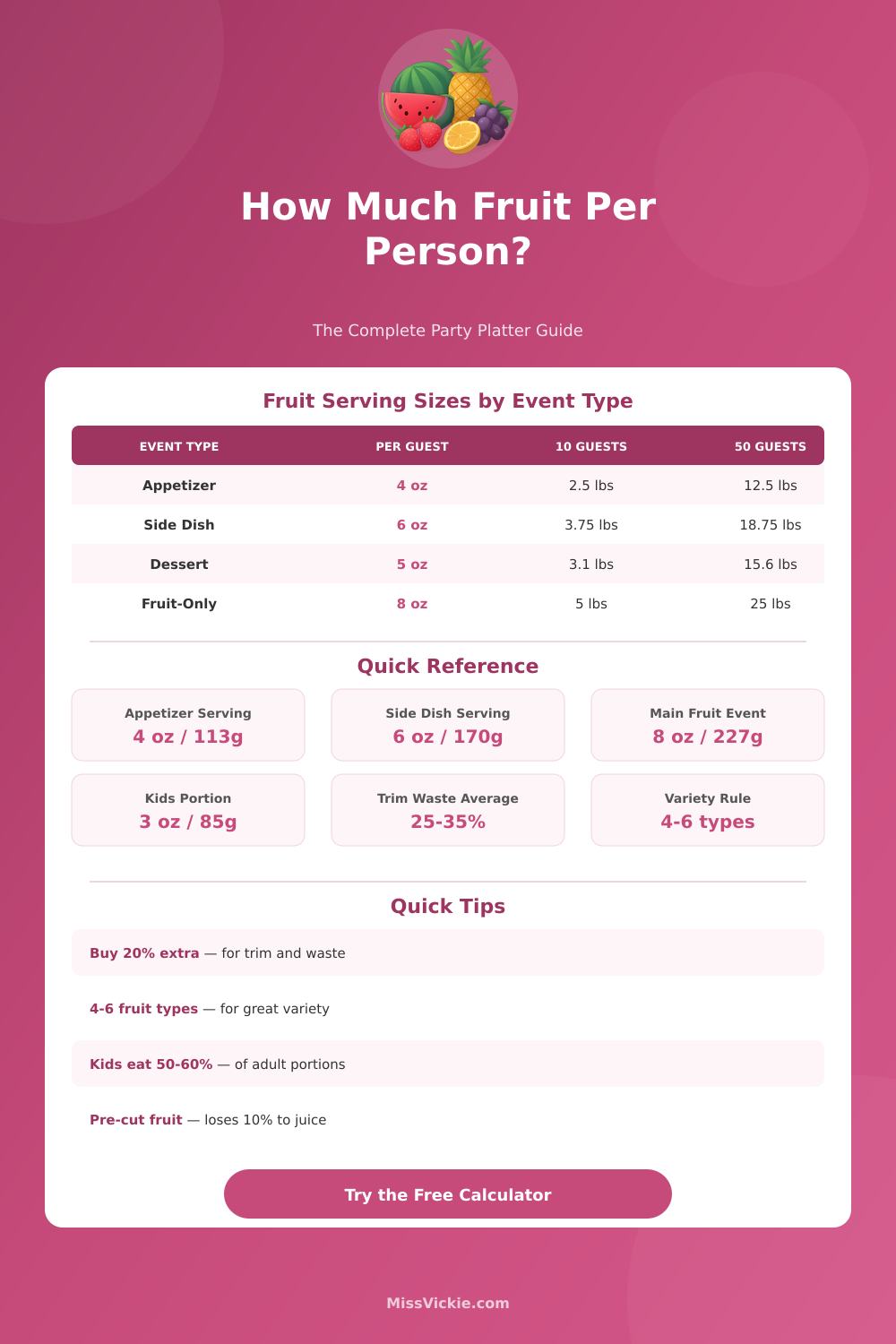
| Event Type | Per Person (oz) | Per Person (g) | 10 Guests (lbs) |
|---|---|---|---|
| Appetizer / Snack | 4 oz | 113 g | 2.5 lbs |
| Side Dish | 6 oz | 170 g | 3.75 lbs |
| Dessert Course | 5 oz | 142 g | 3.1 lbs |
| Fruit-Only Spread | 8 oz | 227 g | 5 lbs |
| Fruit Salad Bowl | 6 – 8 oz | 170 – 227 g | 3.75 – 5 lbs |
| Catered Reception | 3 – 4 oz | 85 – 113 g | 1.9 – 2.5 lbs |
| Fruit | Waste % | Edible Yield % | Buy per 1 lb Served |
|---|---|---|---|
| Strawberries | 6% | 94% | 1.06 lbs |
| Grapes | 4% | 96% | 1.04 lbs |
| Watermelon (whole) | 46% | 54% | 1.85 lbs |
| Cantaloupe (whole) | 38% | 62% | 1.61 lbs |
| Pineapple (whole) | 35% | 65% | 1.54 lbs |
| Mangoes | 31% | 69% | 1.45 lbs |
| Oranges (sliced) | 27% | 73% | 1.37 lbs |
| Blueberries | 3% | 97% | 1.03 lbs |
| Kiwi | 14% | 86% | 1.16 lbs |
| Peaches | 12% | 88% | 1.14 lbs |
| Bananas (peeled) | 36% | 64% | 1.56 lbs |
| Apples (sliced) | 10% | 90% | 1.11 lbs |
| Guests | Appetizer | Side Dish | Dessert | Fruit-Only |
|---|---|---|---|---|
| 10 | 2.5 lbs | 3.75 lbs | 3.1 lbs | 5 lbs |
| 15 | 3.75 lbs | 5.6 lbs | 4.7 lbs | 7.5 lbs |
| 20 | 5 lbs | 7.5 lbs | 6.25 lbs | 10 lbs |
| 25 | 6.25 lbs | 9.4 lbs | 7.8 lbs | 12.5 lbs |
| 50 | 12.5 lbs | 18.75 lbs | 15.6 lbs | 25 lbs |
| 75 | 18.75 lbs | 28.1 lbs | 23.4 lbs | 37.5 lbs |
| 100 | 25 lbs | 37.5 lbs | 31.25 lbs | 50 lbs |
| Platter Theme | Fruits Included | Avg Waste | Buy Extra |
|---|---|---|---|
| Classic Mixed | Strawberries, Grapes, Melon, Pineapple, Blueberries | 18% | +22% |
| Berry Deluxe | Strawberries, Blueberries, Raspberries, Blackberries | 6% | +10% |
| Tropical Paradise | Mango, Pineapple, Kiwi, Papaya, Starfruit | 28% | +35% |
| Melon Medley | Watermelon, Cantaloupe, Honeydew | 40% | +45% |
| Stone Fruit | Peaches, Plums, Nectarines, Cherries | 14% | +18% |
| Kid-Friendly | Grapes, Strawberries, Bananas, Apple Slices | 13% | +16% |
Fruit usually means the sweet or slightly sour parts of plants, that is edible. Typical samples are apples, bananas, grapes lemons, oranges and strawberries. From a botanical viewpoint, fruit is made up of the mature ovary of a flowering plant, that covers seeds.
Its main role is to guard and spread those seeds, although some seedless species evolved during centuries.
What Fruit Is and How to Use It
The group of fruits in MyPlate form one from the five main food groups. Every fruit or juice from 100-percent fruits count as part of this group. One can use fresh, preserved, frozen or dried fruits.
They can be whole, cut, mashed or even cooked. One should receive at least half of the advised amount from whole fruits, picking them over juice.
Frozen fruits are practical for usage. Buying big packages of frozen tropical fruits, cherries, blueberries or mixes of berries, one makes the fruits more lasting than fresh packages, that commonly end the same day when they arrive home.
Berries are rich in some of the most useful nutrients among all fruits. Raspberries, blueberries, kiwis and gooseberries all show this well. Pawpaw form the big edible fruit native too North America, that belongs to the same family as custard-apple, that carries soursop, sweetsop, cherimoya and alike.
Mangoes genuinely shine when they are well ripened and are fresh from a local store beside the place where they grew. The green, too early samples in many stores simply do not match the real mango. Pomegranates form another remarkable fruit, although one must spend time to open them and remove the seeds.
Watermelon many consider one from the most enjoyed fruits to eat whole.
Cantaloupe goes well with chocolate, when it reaches the ideal softness. Banana dipped in chocolate form another classic pair. Passion fruit goes well with raspberries, dark sweet chocolate, white chocolate or almonds.
Fruits also work for salty dishes, even if that surprises some folks. Citrus with various foods, lemon salad with mango and apple in Waldorf-salad all count as good ideas. At their best ripeness, fruits are naturally sweet, and cooking only strengthens that.
One can eat cooked fruits in compotes alone, with yoghurt or Greek yoghurt, or on grilled foods and breads. A bit of sugar or honey is added to improve the taste.
To grow fruits at home, citrus trees, cherry trees and apple trees are most commonly chosen. Blueberry plants, strawberry plants, raspberry plants and blackberry plants are widely found for home gardens. The preference for different fruit trees changes according to season and climate zone.
For most fruits, one serving matches around one cup. The advised amount is two servings of fruits daily, and one should aim for atleast five servings of fruits and vegetables together every day.