☕ Green Coffee Bean Extract Caffeine Calculator
Calculate exact caffeine content based on your extract dose, strength, and caffeine percentage
| Extract Type | CGA % | Caffeine % | Caffeine per 400mg Dose |
|---|---|---|---|
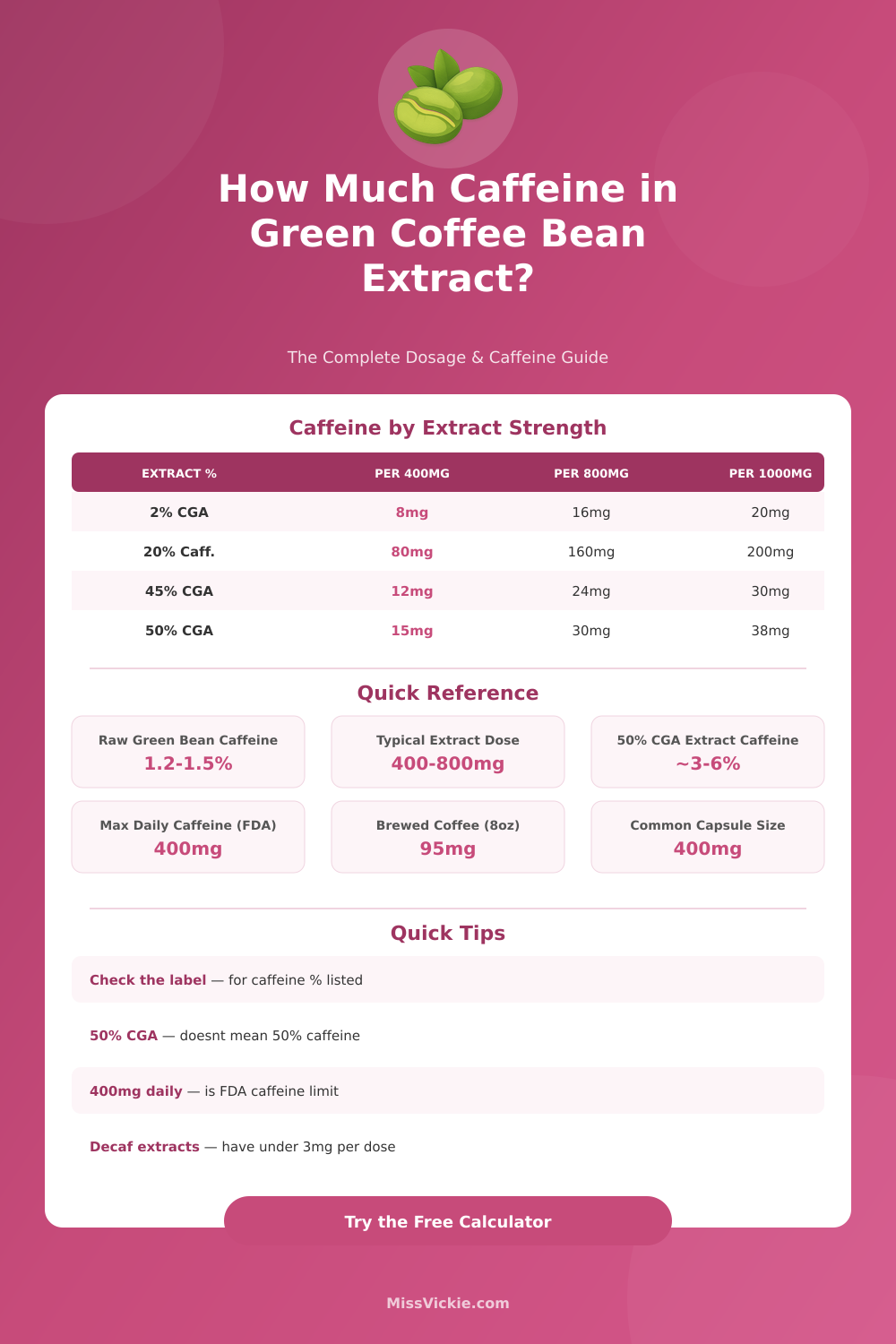
| Standard (50% CGA) | 50% | 2–6% | 8–24 mg |
| High CGA (60% CGA) | 60% | 1–4% | 4–16 mg |
| Low CGA (20–30%) | 20–30% | 8–20% | 32–80 mg |
| High Caffeine Extract | 10–20% | 15–25% | 60–100 mg |
| Decaffeinated Extract | 45–50% | <0.5% | <2 mg |
| Raw Green Bean (ground) | 5–12% | 1.2–1.5% | 4.8–6 mg |
| Source | Serving Size | Caffeine (mg) | Caffeine per oz |
|---|---|---|---|
| Green Coffee Extract (50% CGA) | 400 mg capsule | 8–24 | N/A |
| Green Coffee Extract (50% CGA) | 800 mg capsule | 16–48 | N/A |
| Brewed Coffee | 8 fl oz (240 ml) | 95 | ~12 |
| Espresso | 1 fl oz (30 ml) | 63 | 63 |
| Green Tea | 8 fl oz (240 ml) | 28 | ~3.5 |
| Black Tea | 8 fl oz (240 ml) | 47 | ~5.9 |
| Cola Soda | 12 fl oz (355 ml) | 34 | ~2.8 |
| Energy Drink | 8 fl oz (240 ml) | 70–100 | ~9–12.5 |
| Dose (mg) | Grams | Grains | Typical Use |
|---|---|---|---|
| 200 mg | 0.2 g | 3.1 gr | Half dose / sensitive users |
| 400 mg | 0.4 g | 6.2 gr | Standard single capsule |
| 500 mg | 0.5 g | 7.7 gr | Common capsule size |
| 600 mg | 0.6 g | 9.3 gr | Mid-range dose |
| 800 mg | 0.8 g | 12.3 gr | High dose / 2 capsules |
| 1000 mg | 1.0 g | 15.4 gr | Maximum studied dose |
| Group | Max Daily Caffeine | Equiv. Cups Coffee | Equiv. 400mg GCBE Caps* |
|---|---|---|---|
| Healthy Adults | 400 mg | ~4 cups | ~13–50 |
| Pregnant Women | 200 mg | ~2 cups | ~7–25 |
| Adolescents (12–18) | 100 mg | ~1 cup | ~3–12 |
| Children (4–12) | 45–85 mg | <1 cup | ~2–10 |
| From | To | Multiply By | Example |
|---|---|---|---|
| Milligrams (mg) | Grams (g) | 0.001 | 400 mg = 0.4 g |
| Grams (g) | Milligrams (mg) | 1000 | 1 g = 1000 mg |
| Milligrams (mg) | Grains (gr) | 0.01543 | 400 mg = 6.2 gr |
| Ounces (oz) | Grams (g) | 28.3495 | 1 oz = 28.35 g |
| Teaspoon (powder) | Milligrams | ~2000–3000 | 1 tsp ≈ 2.5 g |
Capsule of 400 milligrams green coffee beans extract with 50 percent chlorogenic acid? Well, that sounds nice. From my tests, those products usually hold between 8 and 24 milligrams of caffeine, much less than a normal cup of coffee with 95 milligrams for 240 milliliters.
The unroasted beans themselves have around 1.2 to 1.5 percent of caffeine, so the extract method does strengthen it. If you double the amount to 800 milligrams, that gives 16 to 48 milligrams which stays under the half of one espresso serving.
Green Coffee Bean Extract: Caffeine, Benefits and Risks
Do recall that caffeine-free extract has below 2 milligrams for one serving. Here there is no real stimulating activity. Although I noticed, that some versions with less chlorogenic acid, marked as 20 percent caffeine, reach even 80 milligrams in 400 milligram capsules, that does change the math a bit.
Even so, even with big doses of extracts, you rarely pass the 400 milligram daily limit of caffeine according to FDA for healthy adults.
Green coffee beans are the unroasted form of that famous roasted kind, that all of us know and like. Because of the absence of roasting, they keep more of those natural useful parts, like chlorogenic acid, that features in green coffee bean extract. The roasting destroys a lot of those substances.
Green coffee bean extract became a famous supplement for losing wait, because the chlorogenic acid apparently strengthens the metabolism by means of growth of the basic metabolic rate, that is, the calories, that the body burns simply existing. However the studies about its real benefit for weight loss stay very limited. The opinions still split, whether it truly helps.
But be careful with the caffeine amounts. Too much green coffee can cause various bad side effects, like nervousness, heart racing and headaches. The caffeine is there, but in smaller levels than in usual roasted coffee.
The roasting releases more caffeine and eases its extraction during making of a drink.
Interesting detail: green coffee beans also provide antioxidants and support stable level of blood sugar and blood pressure. Because of that they work as a good addition to a routine for good health, with that milder stimulant that can improve focus and clarity.
About supplements, I found servings of 800 milligrams with 50 percent chlorogenic acid, or equal to 8000 milligrams of regular beans in 10:1 extract ratio, which delivers 400 milligrams of chlorogenic acid. There are no firm guidelines for doses, but some research tests applied up to 400 milligrams twice daily without problems.
Home making the extract takes effort. If you soak the beans too long, you get a truly bitter, very caffeine-rich drink. You must find the right moment.
Crush the beans, soak them quickly and then boil during 30 minutes works well. Pass through a sieve, and it is ready.
Many supplements before training and energy drinks now include green coffee bean extract, in powder or capsule form. From my experience, most of them are vegan and without GMO. I did not find many negative sideeffects, but certainly ask your doctor about the best dose for you.