To cook brown rice, be sure to wash it first. It has a powdery coating on grains that you want washed off.
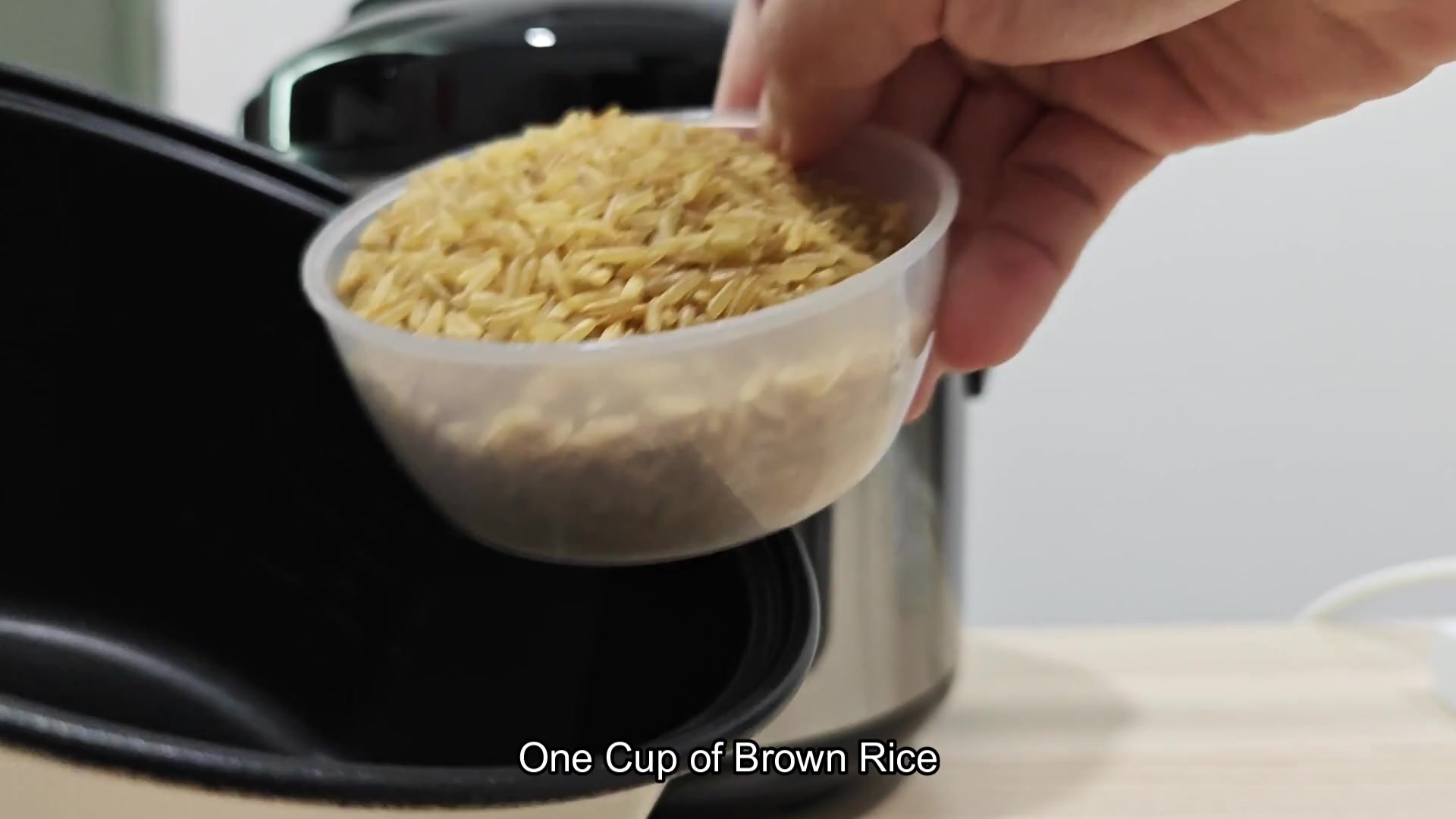
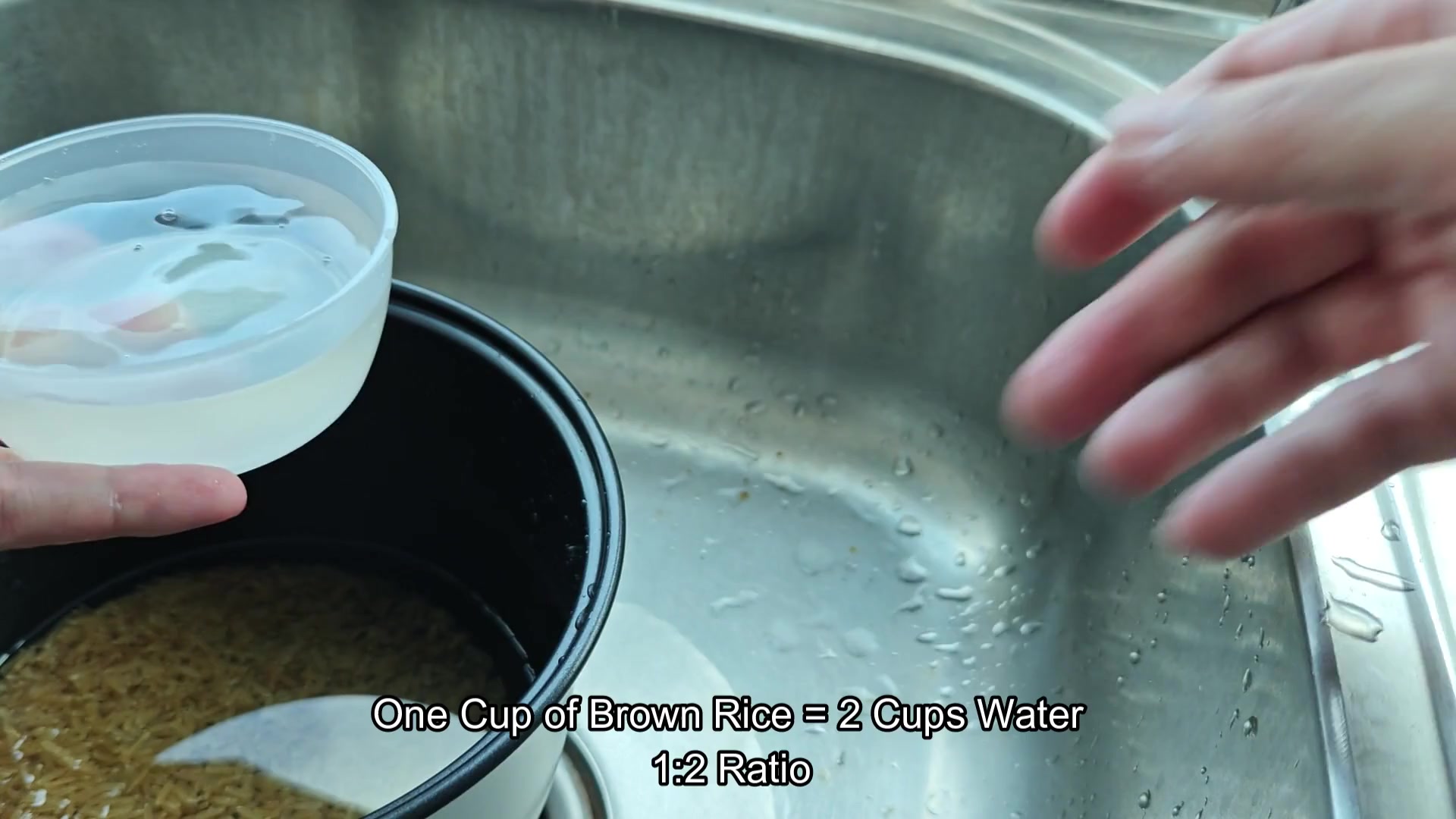
Add 1 cup of dry rice grain to your inner pot. Pour water over the seeds and continue pouring until water is no longer cloudy. An additional minute preparing the grain here lead to better finished texture. The amount of water isn’t as obvious as it may seem. If you don’t add enough, your rice will burn. Add too much and you’ll have a gunky disaster glued to the pan base.
Using The Aroma Rice Cooker
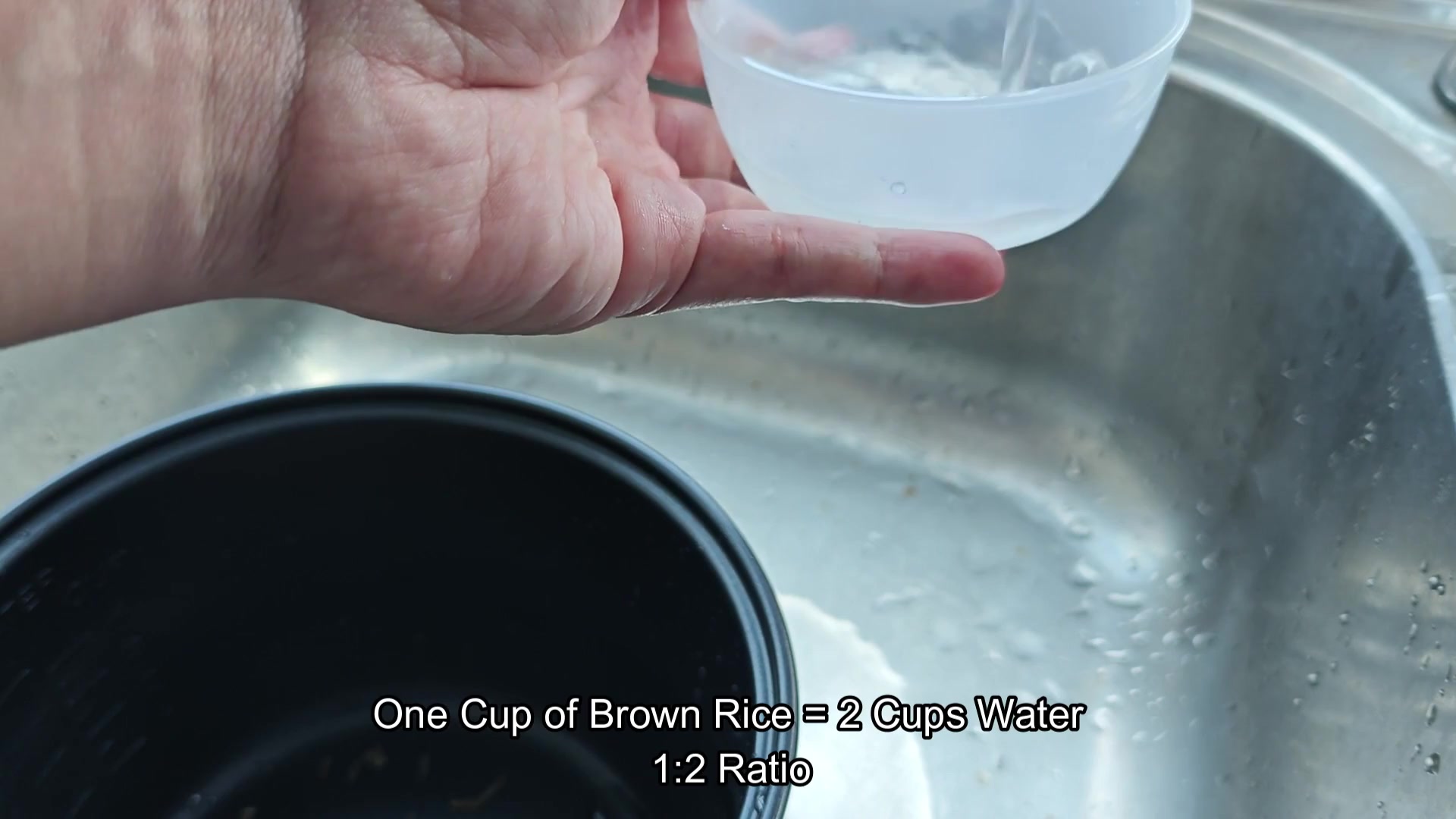
To cook brown rice properly, the math is easy but exacting: one cup of rice require exactly two cups of water. This 2:1 relationship ensures it is the same throughout. It takes a steady hand to pour the water. Carefully you tip the measuring cup so nothing overflows its rim. Water spread over the rice grains, covering every one.
There is a shallow pool of water, ready for boiling. Steam hasn’t appeared because this is all cold water and dry grain resting together inside black plastic.
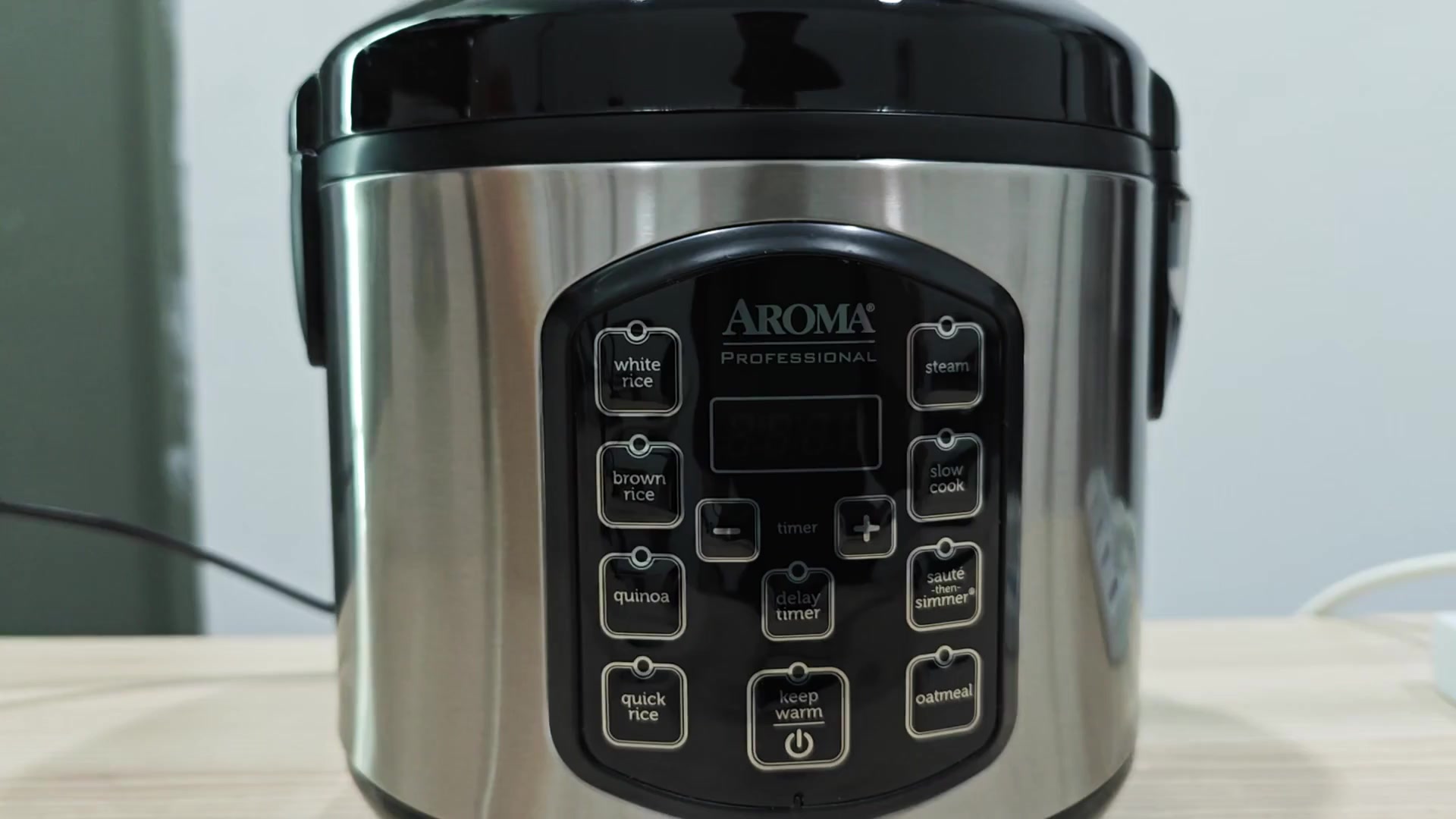
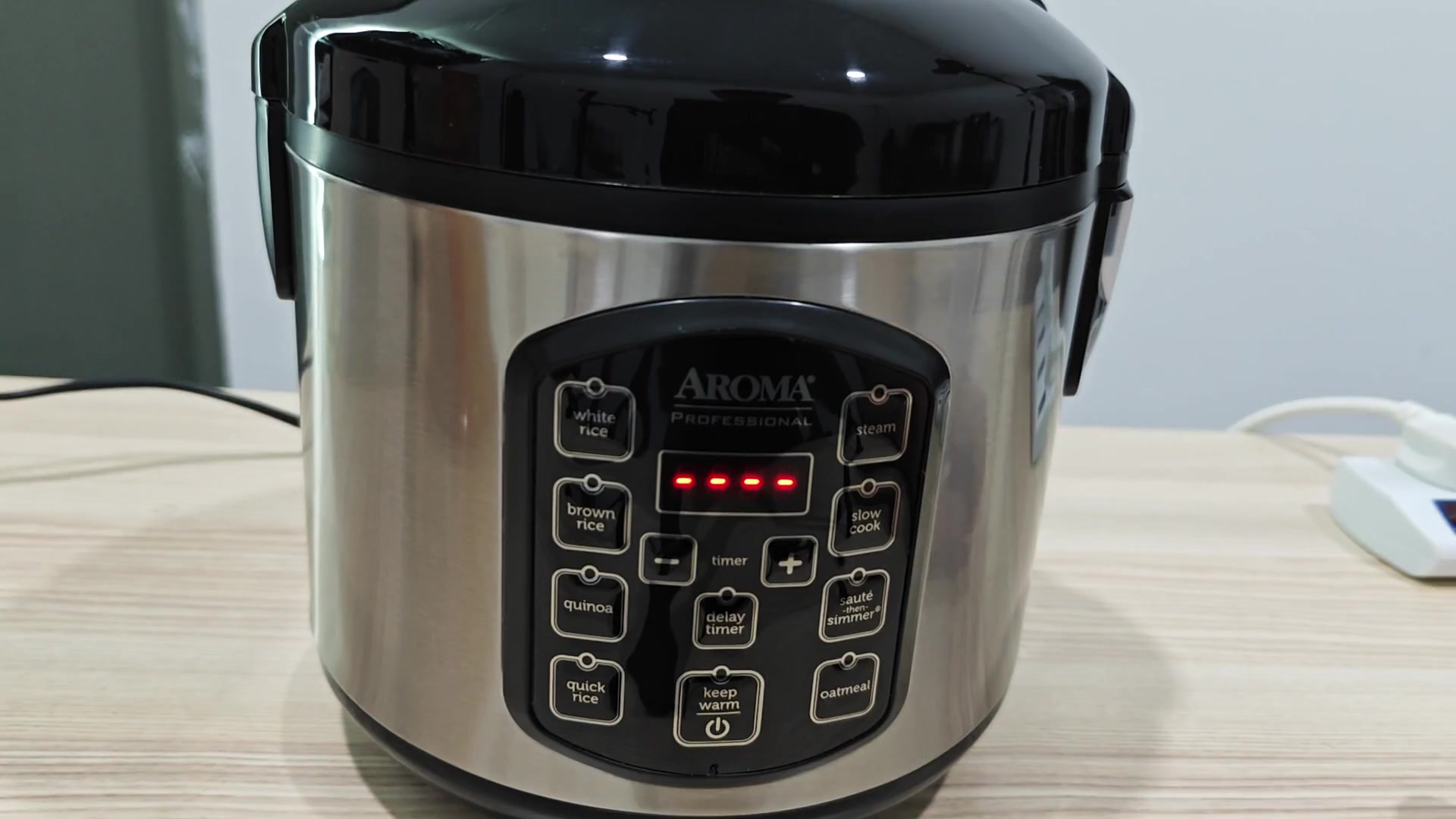
Your Aroma cooker has a lot of options in its control panel. It include buttons for white rice, slow cook, quick cook and more. That’s fine, you don’t care about any of that here.
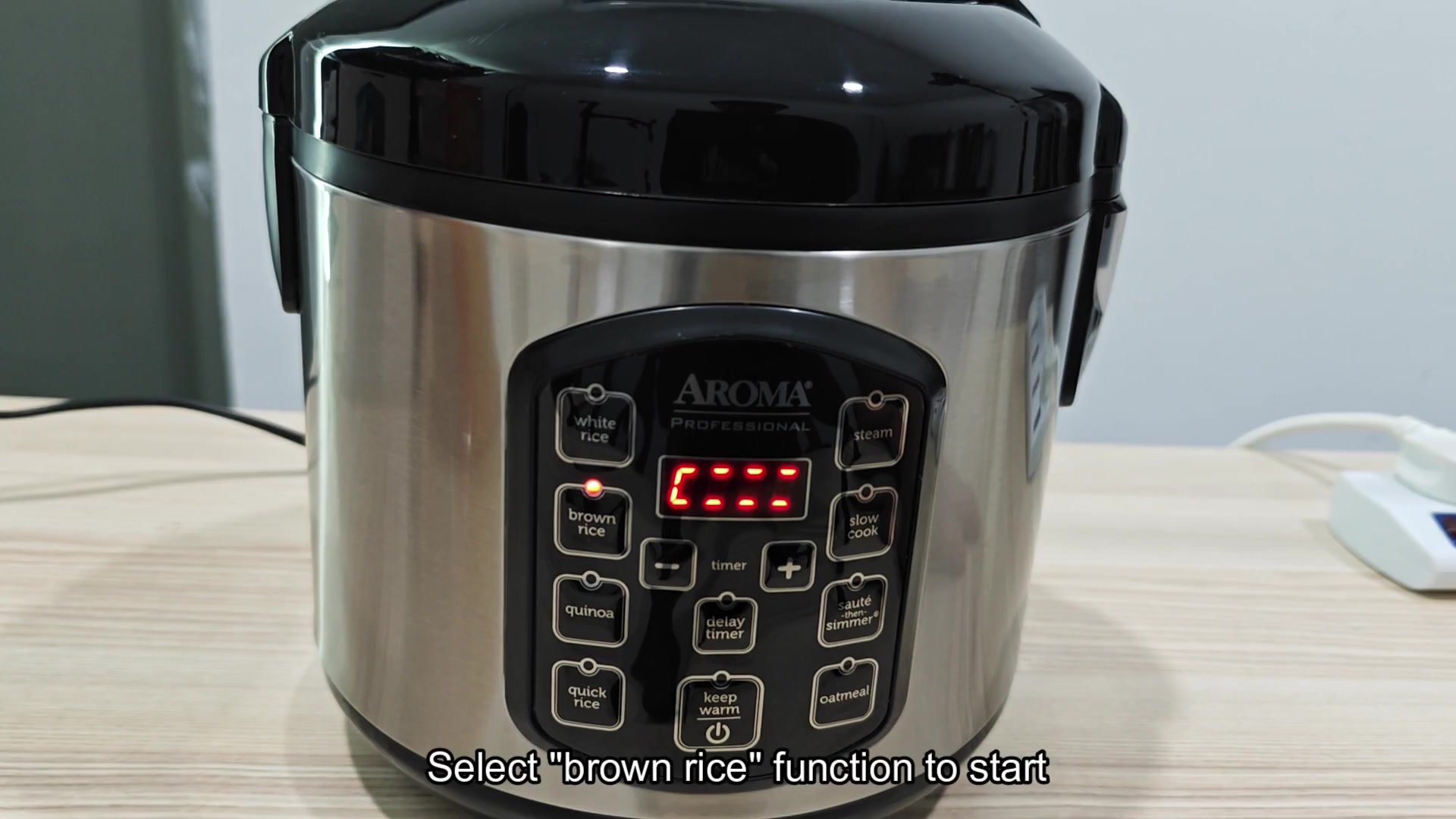
Instead, it’s right into the brown rice button with your finger. It’s located somewhere around the middle of the interface, and when you press it, it’s responsive and solid underneath your thumb. Once selected, the display will light up and show red sections in no time at all. From there on out, the machine regulates its own temperatures and gets straight to cooking; with no need for you to do anything else.
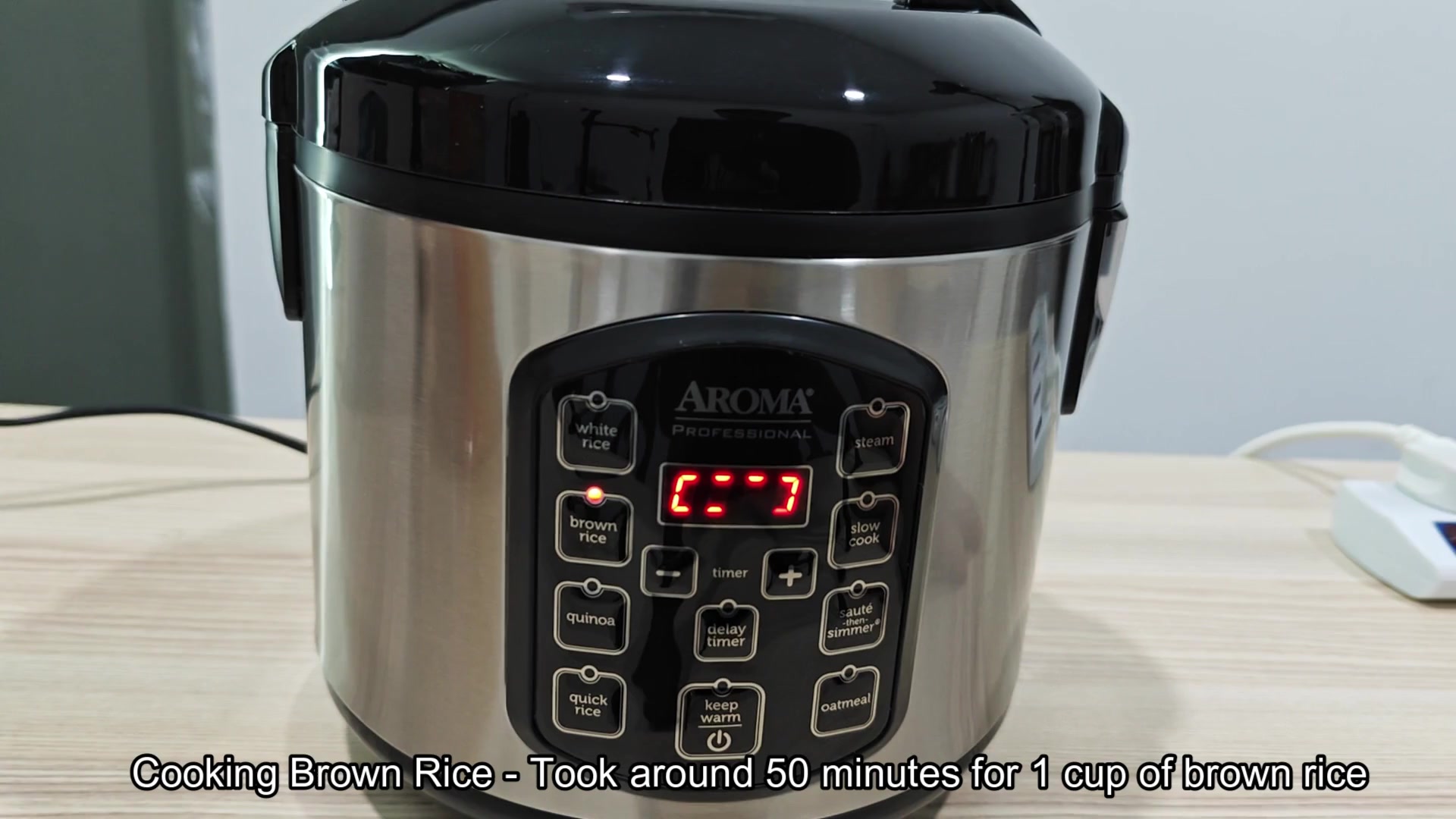
Walk away from the counter and let it do its thing. Patience is the primary ingredient, as brown rice requires more time to break down different than white rice does. Then it hums along quietly for 50 minutes. This isn’t a “lunch in a hurry” cooker. The digital display shows the countdown timer ticking away silently.
Every few minutes you peek in again to watch those little progress bars inch across the display…then nothing happens and they’re all stuck at zero. The active cooking part are over. The machine does its work, and when it’s finished there’s a beep, which sounds pretty loud in an otherwise quiet kitchen. On the screen, it change from the countdown to a keep-warm mode indicator.
This way, if you’re running late, the rice doesn’t dry out. The machine stay just warm enough to keep things hot without burning the bottom. When you open the lid, a puff of steam escapes immediately. It smells earthy and warm, like nutty brown rice filling up a small space. Cautiously, you raise the handle, not wanting any hot steam to hit your face.
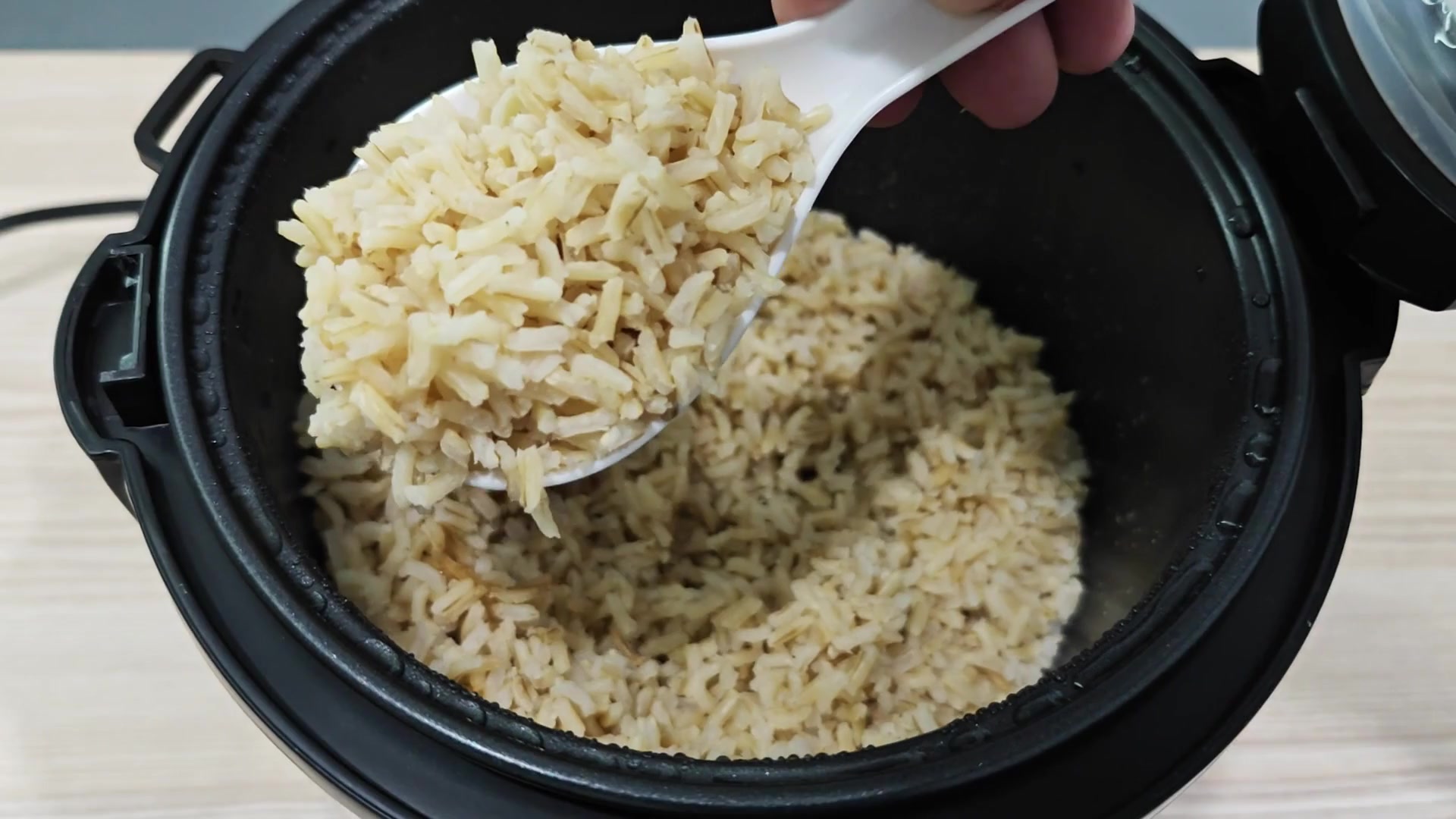
Inside is the inner pot, with grains that are fully hydrated and ready to be served on a plate. Separate and plump, they appears as if they’re waiting for someone to come along and eat them. There’s one very important part to this: fluffing the rice. Take the white plastic paddle that was included with your rice cooker. Use it to stir lightly, breaking up any lumps that may of formed while cooking.
The heat of the cooked rice cools down when you introduce air, which cause the steam to dissapear. Instead of being heavy and compacted, the rice becomes airy and light, a much better mouthfeel. To check out the texture, you take a hefty helping. Fluff it, and each grain keep its shape well.
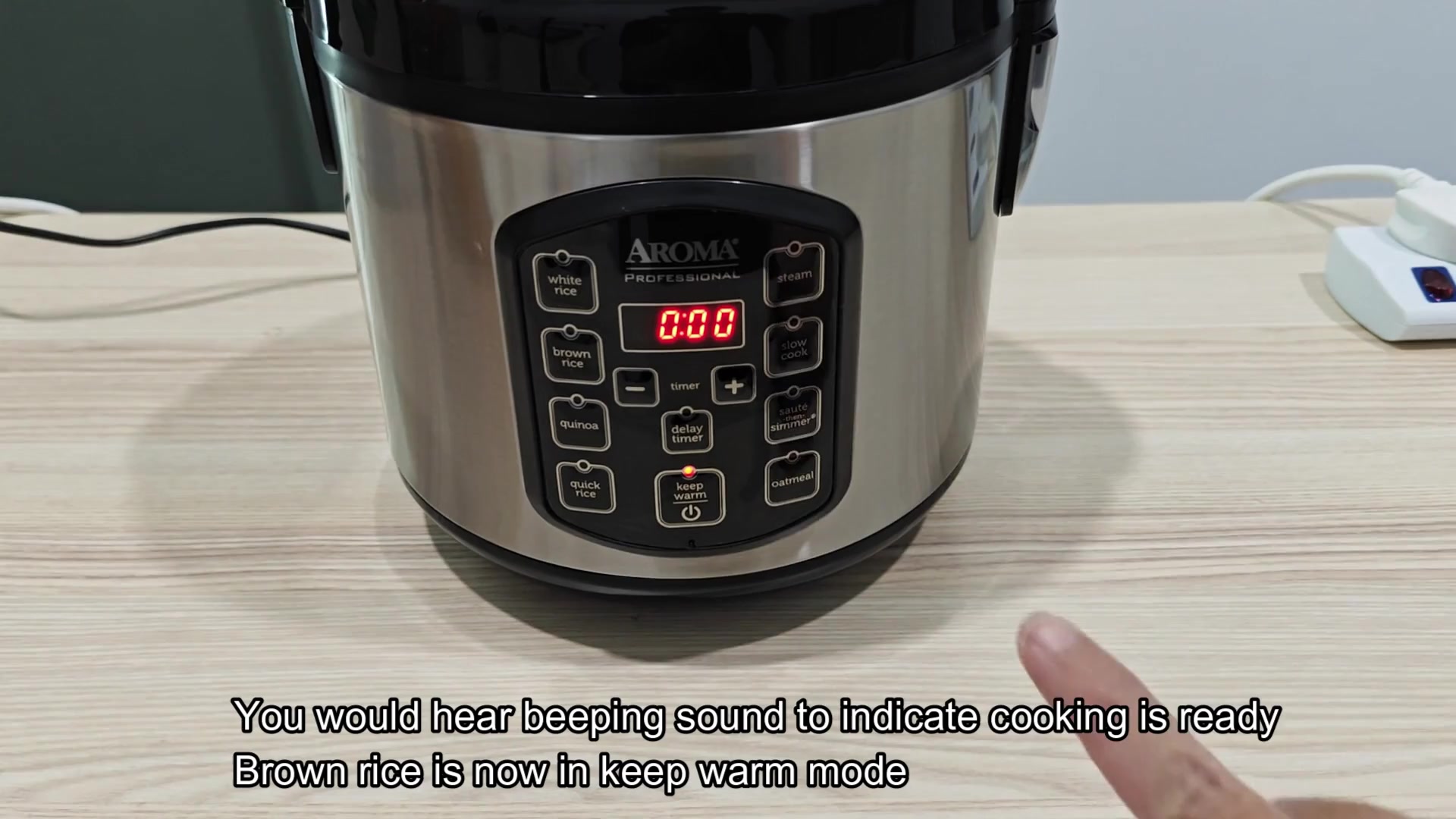
There’s no sticky-gluey white-rice stickiness: The bran around the outside has remained in place and contributes some chew. It’s heavy on your tongue, heavier than polished grains are. And that is exactly how it should be.
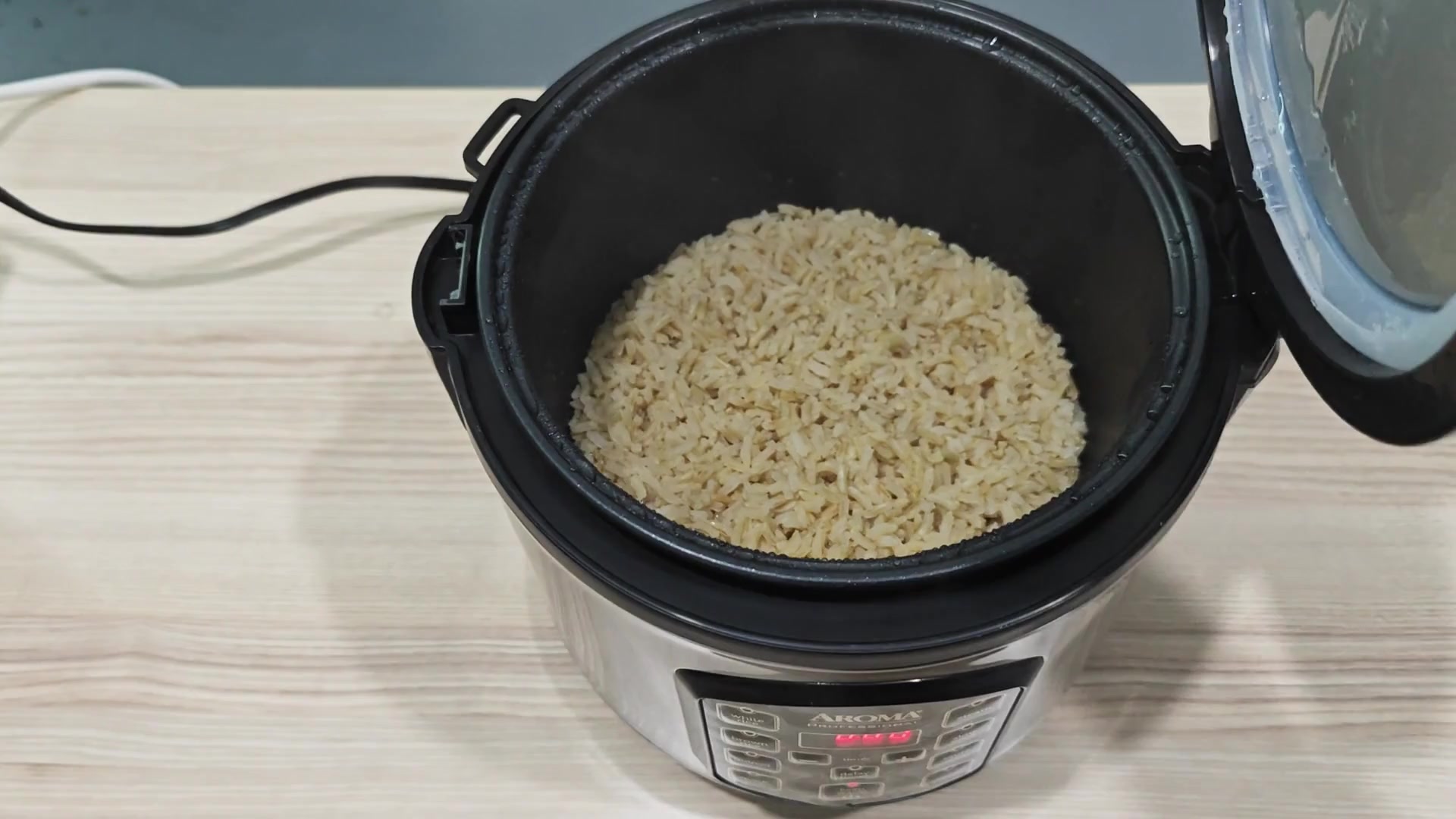
Please provide the text contained in .
Take a closer look at the pile of rice. You can see the details of each grain now. Its reddish-brown color also contrasts nicely with the black inside of the pot.
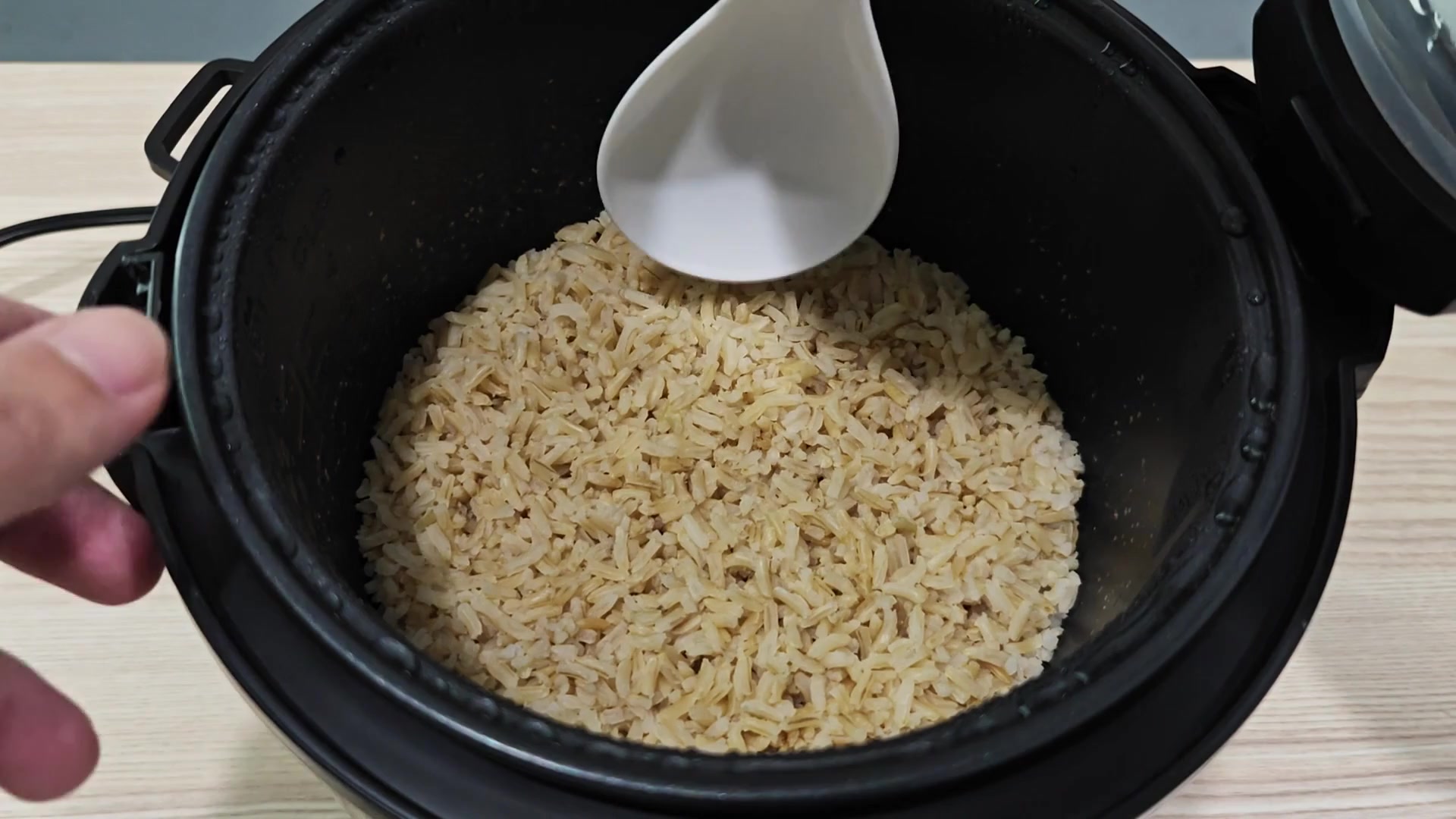
There are no hard, uncooked grains in the middle. Each grain has soaked up all the water during the long cooking time. It’s consistent throughout: even at the top and bottom of the heap. After waiting for this batch it feels good to be serving it. All the rinsing and measuring was worth it!
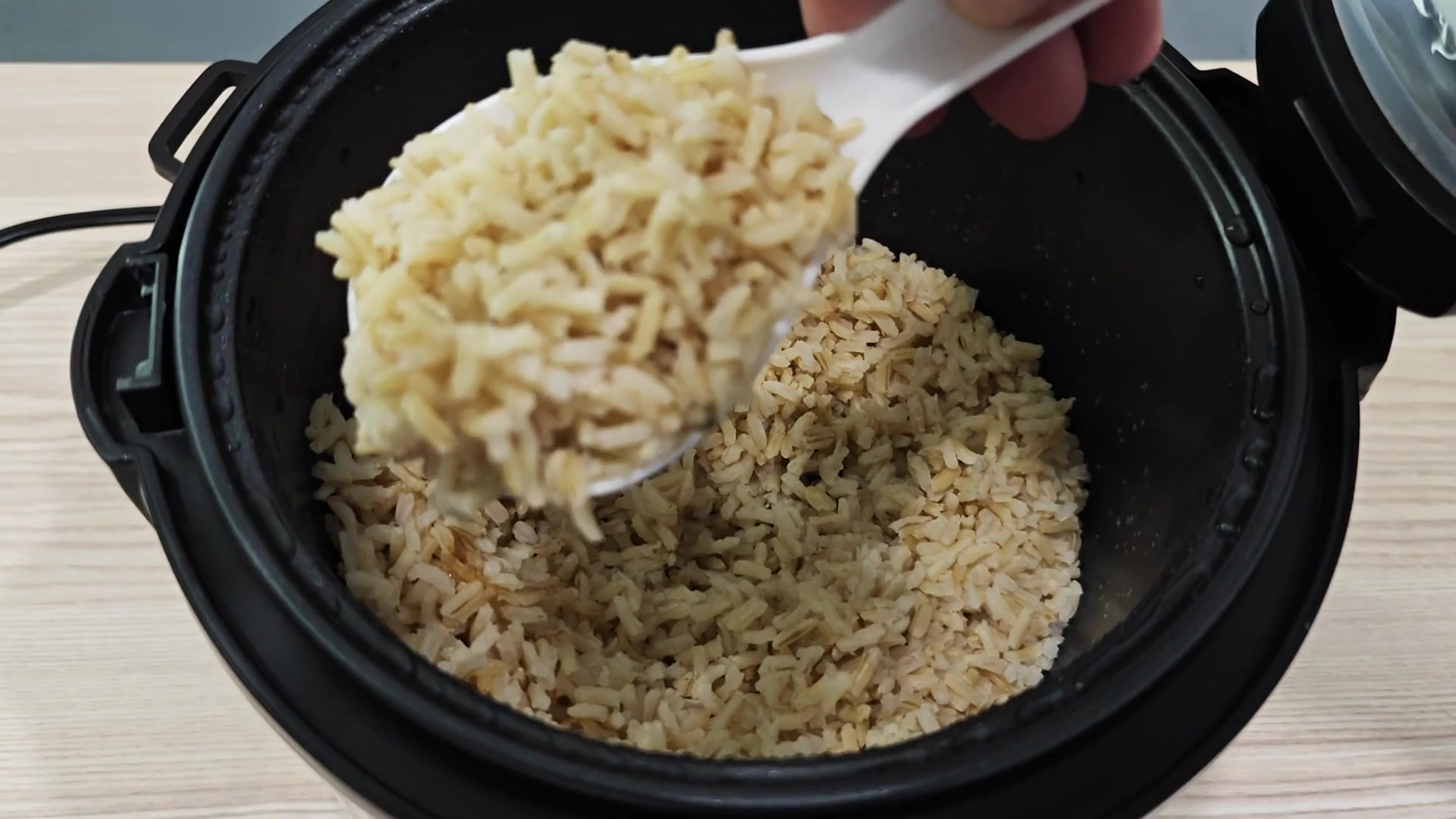
It’s brown rice, which has even more fiber than white rice. If you’re using an automatic cooker like I do, then it takes away all of the guessing work. No need to wonder if your pot is about to boil over again.