🍞 Bread Dough Calculator
Baker's percentage tool — calculate exact flour, water, salt & yeast ratios for any loaf
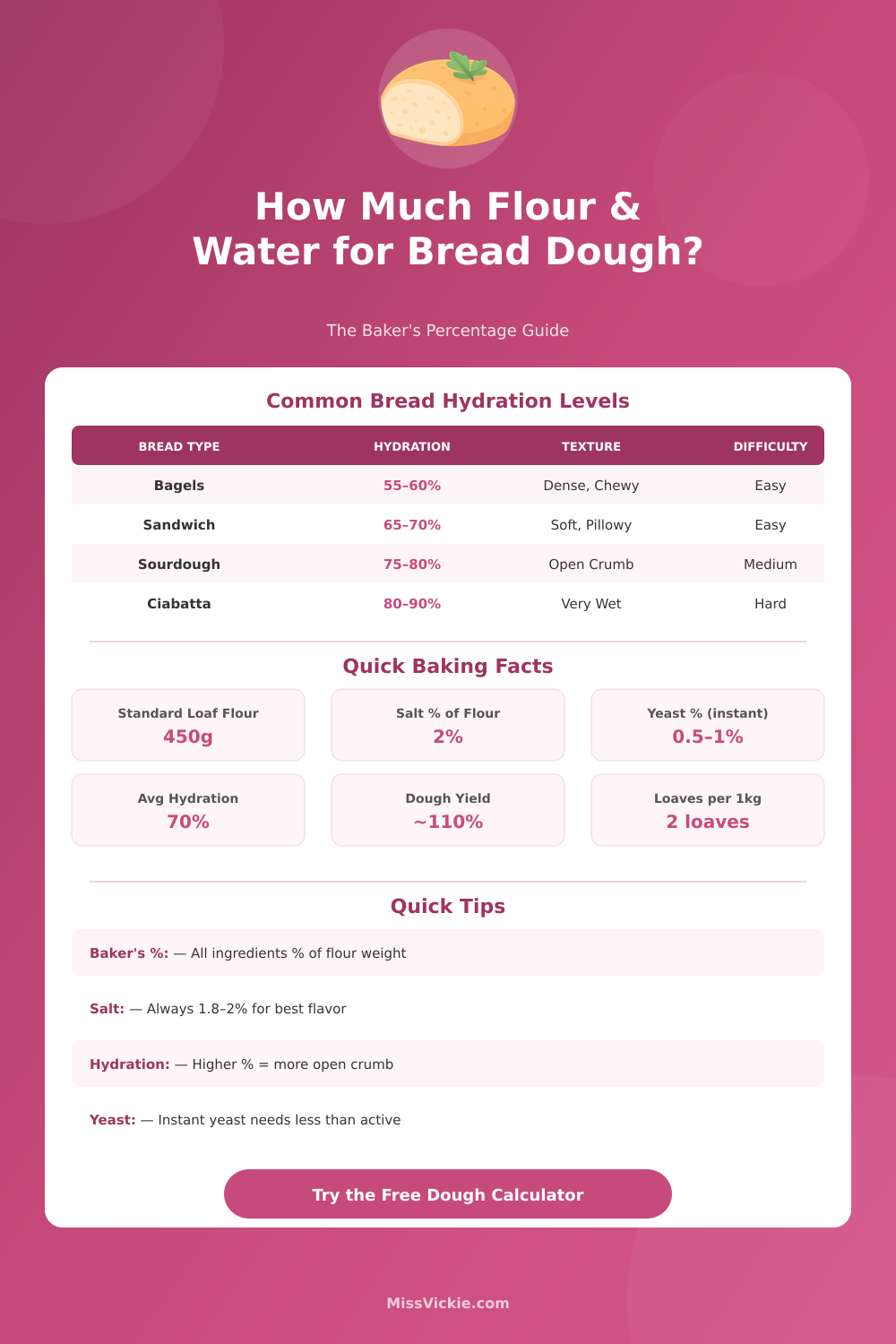
| Bread Type | Hydration % | Dough Feel | Crumb Style | Skill Level |
|---|---|---|---|---|
| Bagels | 55–60% | Stiff, smooth | Dense, chewy | Easy |
| Brioche | 55–60% | Rich, soft | Tender, pillowy | Medium |
| Pizza Dough | 58–65% | Firm, elastic | Chewy, crisp | Easy |
| Sandwich Bread | 65–70% | Smooth, pliable | Soft, even | Easy |
| Baguette | 65–70% | Moderate sticky | Open, crisp crust | Medium |
| Whole Wheat | 70–75% | Tacky | Dense, hearty | Easy |
| Country Loaf | 72–78% | Sticky | Open crumb | Medium |
| Sourdough | 75–85% | Very sticky | Large holes | Medium–Hard |
| Focaccia | 80–85% | Wet, spreadable | Airy, bubbly | Easy |
| Ciabatta | 80–90% | Extremely wet | Very open holes | Hard |
| Instant Yeast | Active Dry Yeast | Fresh Yeast | Sourdough Starter |
|---|---|---|---|
| 1 g | 1.25 g | 3 g | 20 g |
| 2 g | 2.5 g | 6 g | 40 g |
| 3 g (1 tsp) | 3.75 g | 9 g | 60 g |
| 5 g | 6.25 g | 15 g | 100 g |
| 7 g (2.25 tsp) | 8.75 g | 21 g | 140 g |
| 10 g | 12.5 g | 30 g | 200 g |
| Flour Type | 1 Cup (g) | 1 Cup (oz) | Protein % | Best For |
|---|---|---|---|---|
| All-Purpose | 125 g | 4.4 oz | 10–12% | General baking |
| Bread Flour | 127 g | 4.5 oz | 12–14% | Chewy loaves |
| Whole Wheat | 120 g | 4.2 oz | 13–14% | Hearty bread |
| Rye Flour | 102 g | 3.6 oz | 8–9% | Rye loaves |
| Spelt Flour | 118 g | 4.2 oz | 12–13% | Ancient grain |
| 00 Flour | 120 g | 4.2 oz | 11–12% | Pizza, pasta |
Do bread really depend on four main ingredients: flour, water, yeast and salt. Some recipes fully drop the salt, and one not always requires bought yeast from store (wild yeast works well also). The main point is this: flour and water forms the base.
Without water stay only clouds of dry powder in the tin that no push can turn into real bread dough.
Bread Basics: Flour, Water, Yeast and Salt
Whole wheat flour and white bread-flour both give great bread dough. The exact amount, that you must use, depend on your location, height and humidity causes more trouble than many folks imagine. The most important cause is the feeling.
You want bread dough, that is smooth and pulls itself easily from the bowl sides. Whole wheat flour acts a bit oddly, because it soaks more liquid a bit of time and less other times. The best advice?
Fix the water as needed, instead of sticking to recipe.
The role of water in bread is huge. Add a bit more than planned, and you receive something, what looks more to ciabatta than to sandwich bread. Different kinds of bread require entirely different levels of wetness.
Baguettes, focaccia and ciabatta base on wet bread dough. Sandwich bread favours less moisture. Bagels and pretzels want even drier.
The range between water and flour has quite a big spread for what works.
Salt needs attention really. Balancing salt against yeast matters more then one believes. If you spare on salt, your bread rises too quickly.
For the taste, rough sea salt beats the average. About yeast, more of it boosts the process, while less will extend it, and that slow rhythm indeed helps to grow the taste. From little bit until big amount, it will do its task.
Technically, bread dough do not require two rises. Even so, do it twice repay by means of better structure and those pleasing, equal air pockets. During the first rise, yeast spreads and cover the whole batch.
Fold the bread dough during the step strengthen the gluten net without too much mix, what gives perfect balance between dense and light. Kneading play big role here, too many or too few moves, and your bread will not rise correctly.
Freezing bread dough is really a game changer. The cold slows the yeast, almost putting it to sleep. Leave the bread dough in the fridge for some days, and you win wonderful, sour, complex taste, that are hard to reach other way.
You can also keep it until three months after the first rise. Only press it down and wrap it flat. Baked breads last well also.
Rich bread dough holds fats in the mix: oil in focaccia, butter in brioche, yoghurt in nan. Preheated fluffy pans trap steam during the bake, what helps to create nice golden crust. One common mistake?
Hurry after the last rise before bake. That is the moment, when yeast makes all the carbon dioxide, that blowsthrough your gluten net, so cutting here waste everything, what you already did.