🍚 Basmati Rice Water Calculator
Calculate the perfect water-to-rice ratio for fluffy basmati every time
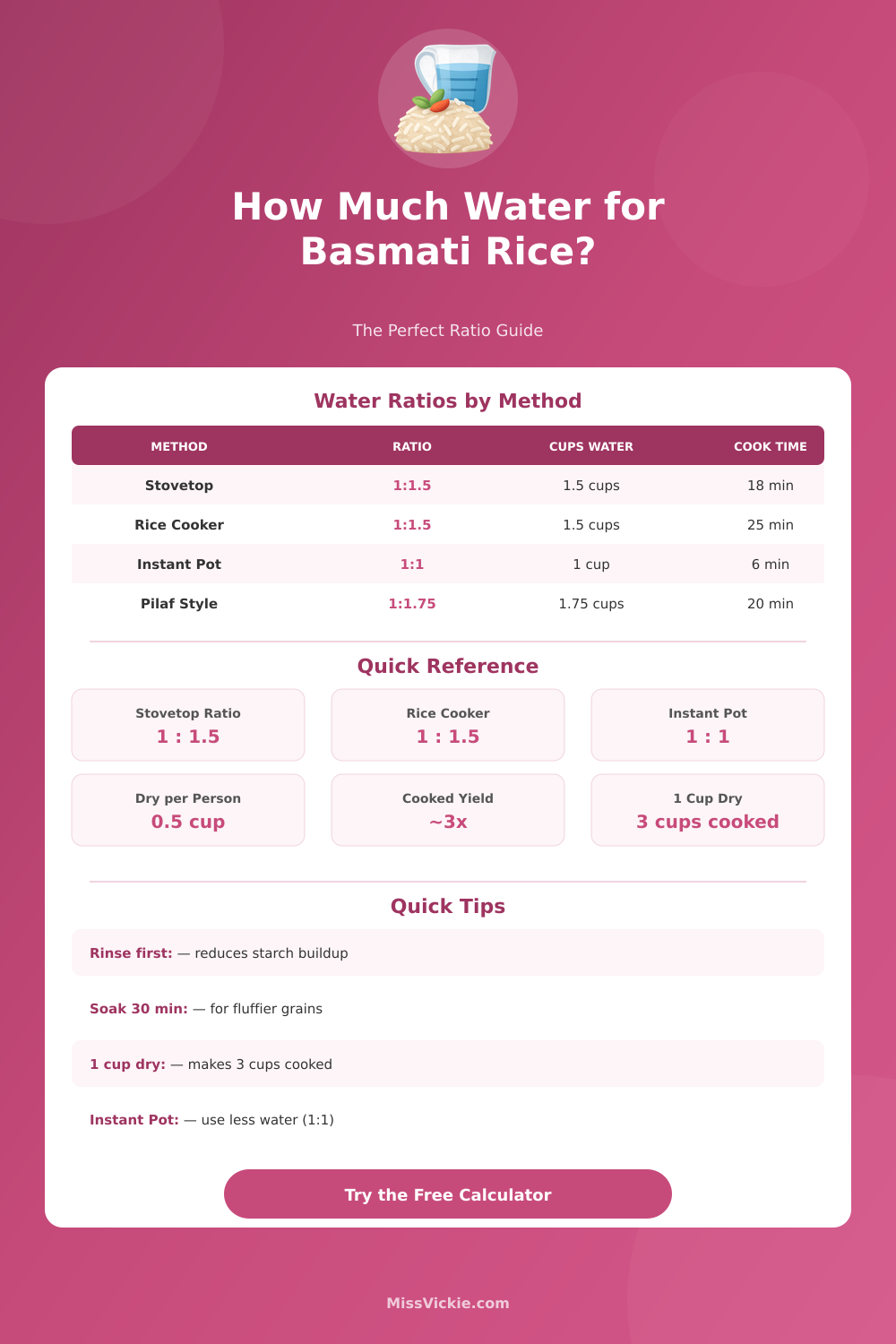
| Cooking Method | Ratio (Rice:Water) | Soaked Ratio | Notes |
|---|---|---|---|
| Stovetop | 1 : 1.5 | 1 : 1.25 | Most common method |
| Rice Cooker | 1 : 1.5 | 1 : 1.25 | Use white rice setting |
| Instant Pot | 1 : 1 | 1 : 0.85 | 6 min high pressure |
| Pilaf Style | 1 : 1.75 | 1 : 1.5 | Sauté rice first in oil |
| Absorption (Fluffy) | 1 : 1.5 | 1 : 1.25 | Lid on, low heat |
| Context | Dry Rice | Cooked Yield | Servings |
|---|---|---|---|
| Side dish (1 person) | 0.33 cup (60g) | 1 cup (180g) | 1 |
| Main dish (1 person) | 0.5 cup (95g) | 1.5 cups (270g) | 1 |
| Family of 4 (side) | 1.33 cups (240g) | 4 cups (720g) | 4 |
| Family of 4 (main) | 2 cups (380g) | 6 cups (1080g) | 4 |
| Party of 10 (side) | 3.33 cups (600g) | 10 cups (1800g) | 10 |
| Party of 10 (main) | 5 cups (950g) | 15 cups (2700g) | 10 |
| Large group (25) | 8.33 cups (1.5kg) | 25 cups (4.5kg) | 25 |
| Catering (50) | 16.67 cups (3kg) | 50 cups (9kg) | 50 |
| Measurement | Cups | Grams | Ounces |
|---|---|---|---|
| 1 cup dry basmati | 1 | 190g | 6.7 oz |
| 0.5 cup dry basmati | 0.5 | 95g | 3.35 oz |
| 0.33 cup dry basmati | 0.33 | 63g | 2.2 oz |
| 2 cups dry basmati | 2 | 380g | 13.4 oz |
| 1 lb dry basmati | 2.39 | 454g | 16 oz |
| 500g dry basmati | 2.63 | 500g | 17.6 oz |
| 1 kg dry basmati | 5.26 | 1000g | 35.3 oz |
| Dry Amount | Cooked Yield | Yield Factor | Servings (side) |
|---|---|---|---|
| 0.5 cup (95g) | 1.5 cups (270g) | ×3 | 1.5 |
| 1 cup (190g) | 3 cups (540g) | ×3 | 3 |
| 1.5 cups (285g) | 4.5 cups (810g) | ×3 | 4.5 |
| 2 cups (380g) | 6 cups (1080g) | ×3 | 6 |
| 3 cups (570g) | 9 cups (1620g) | ×3 | 9 |
| 5 cups (950g) | 15 cups (2700g) | ×3 | 15 |
Basmati Rice is a long and slim grain species, that comes from the Indian subcontinent, especially from areas like Punjab, Haryana and Sindh in India and Pakistan. It means “Queen of the Perfume” and the grains are famous because of their long, staple, fluff and tenderness after cooking. That rice does not carry gluten and has little fat, so it works as a healthy option for grains.
The aging process separates Basmati Rice from others. Real Basmati Rice matures at least during 12 months in controlled silos. That process allows the rice to reach a sticky make-up, that stays free and separate after cooking.
All About Basmati Rice
Basmati Rice grown in India and well aged commonly beats others in smell and texture compared to cheaper mixes. The quality really rnages according to the brand and the duration of aging.
As for brands, Indian Gate, Daawat and Tilda all work well. Indian Gate belongs to the 1121 variety with even longer grains. Royalty forms another reliable option.
When sharing brands, sometimes you knead a bit of adjusting the dip and cook times to reach good results.
Cooking Basmati Rice depends mostly on the amount of Water and the time. A common way is to use one cup rice with one and half cups Water. You bring it to a boil, then cook around 12 minutes covered.
Then you leave it to rest five minutes before breaking it with a fork. Like this the grains stay separate and not too wet. Other than that, you can boil the rice in a big amount of Water, then drain it through a sieve and rinse with warm Water to remove extra starch.
Basmati Rice lasts this style, rather than the tender jasmine rice. Also rinse the rice before until the Water becomes clear, that helps a lot.
Brown Basmati Rice cooks longer, because the bark still covers the grain. That bark needs more time to soften. Use two and half cups Water for one cup rice, leave it to soak 15 minutes, then boil 35 minutes.
Brown Basmati Rice is good, but it lacks the feel of the white version.
Basmati Rice carries a nicely roasted taste, that goes well with many foods. It naturally works for biryani, pilaf, curries, stir-fry, fried rice, salads and similar sweets. In United States and many western lands, Basmati Rice serves as a basic side rice in Indian restaurants, because it looks and smells nice and stays fresh longer, so it is ideal for buffets.
Pulao forms a popular one-pot meal, where rice cooks with spices and vegetables. Every serving of Basmati Rice stores a lot of carbs and calories, together with small nutrients like folate and thiamine. The white Basmati Rice has a glycemic score around 55 to 58, whatlays it in the centre of the range.