🍖 Baby Back Rib Protein Calculator
Calculate protein, calories & macros for any portion of baby back ribs
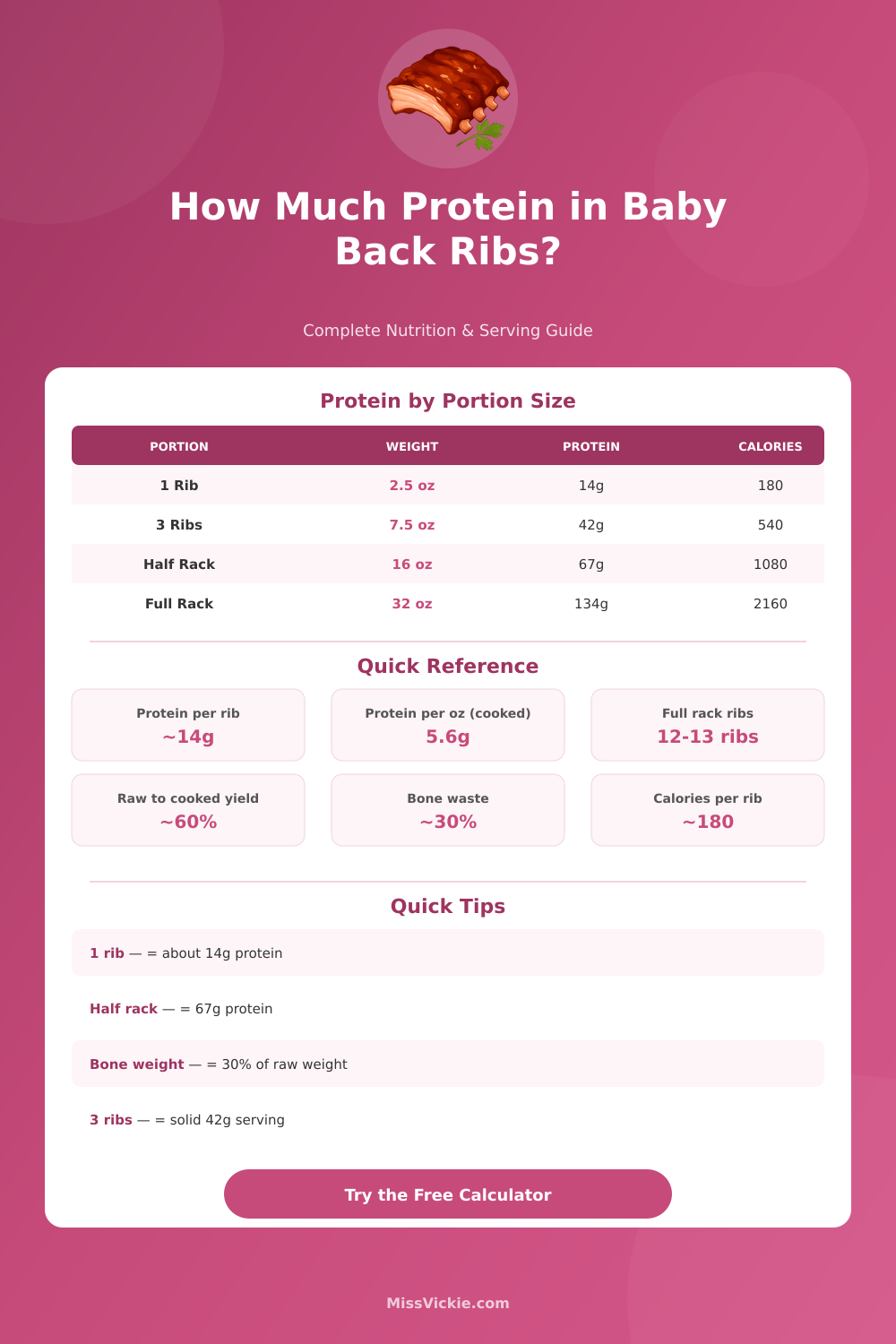
| Portion | Weight (oz) | Weight (g) | Protein | Calories |
|---|---|---|---|---|
| 1 Rib | 2.5 | 70 | 14g | 180 |
| 2 Ribs | 5.0 | 140 | 28g | 360 |
| 3 Ribs | 7.5 | 210 | 42g | 540 |
| 4 Ribs | 10.0 | 280 | 56g | 720 |
| Half Rack (6) | 15.0 | 425 | 84g | 1,080 |
| Full Rack (13) | 32.5 | 910 | 182g | 2,340 |
| Portion | Meat (oz) | Meat (g) | Protein | Calories |
|---|---|---|---|---|
| 1 Rib meat | 1.5 | 43 | 12g | 130 |
| 3 oz meat | 3.0 | 85 | 24g | 260 |
| 6 oz meat | 6.0 | 170 | 48g | 520 |
| 100g meat | 3.5 | 100 | 28g | 305 |
| Half rack meat | 9.0 | 255 | 72g | 780 |
| Full rack meat | 19.5 | 553 | 156g | 1,695 |
| Measurement | Imperial | Metric | Notes |
|---|---|---|---|
| 1 raw rib (bone-in) | 3.5–4 oz | 100–115g | Before cooking |
| 1 cooked rib (bone-in) | 2.3–2.7 oz | 65–77g | After cooking |
| Cooking yield | 58–65% | Weight lost during cooking | |
| Bone percentage | 30–35% | Bone weight of cooked rib | |
| Edible meat per rib | 1.5 oz | 43g | Cooked, bone removed |
| Full rack (raw) | 3–3.5 lbs | 1.4–1.6 kg | 12–13 ribs per rack |
| Full rack (cooked) | 1.8–2.2 lbs | 0.8–1.0 kg | After shrinkage |
| Attribute | Baby Back Ribs | Spare Ribs | Difference |
|---|---|---|---|
| Protein per oz (cooked meat) | 8.0g | 7.2g | +11% baby back |
| Calories per oz (cooked meat) | 87 | 95 | Baby back leaner |
| Fat per oz (cooked meat) | 5.1g | 6.3g | -19% baby back |
| Meat-to-bone ratio | 65–70% | 60–65% | More meat on baby back |
| Ribs per rack | 12–13 | 11–13 | Similar |
| Avg rack weight (raw) | 3–3.5 lbs | 3.5–4.5 lbs | Spare ribs heavier |
One baby back rib bone with the meat would weigh around 2.5 units and provide around 14 grams of protein. That beats my expectations for one bone. The edible part of meat is only about 1.5 units when one removes it from the bone, everything that stays is 30 to 35% of the whole weight.
Three ribs form a solid meal with 42 g of protein and around 540 calories, which matches what many restaurants offer as a main dish.
Baby Back Ribs: Size, Protein and Cooking Tips
Full stands weigh 3 to 3.5 pounds with 12 or 13 bones. During cooking one loses around 38% of that weight, so a whole stand shrinks to maybe 2 pounds. The content of protein only from meat reaches around 8 g per unit after cooking, a bit leaner than spare ribs, that have around 7.2 g. For fat it is about 5.1 g per unit from baby back against 6.3 g on spare (about 19% less).
The information below does not come from any calculator or converter device. It is based on actual research, forum talks and cooking experiences of communities, that one finds across the net.
Baby back ribs come from the upper part of the pork back, near the spine. One also calls them loin-back ribs or simply back ribs. The meat itself is of the same kind as in pork loin.
They received the name “baby back” coming from the pork back and because of there smaller size compared to spare ribs. One cuts them from the top of the rib cage between the spine and the spare ribs. No other bit of pig can be those baby back ribs.
Compared to spare ribs, baby back cook more quickly and have less fat. They need less preparation and do not carry the cartilage, that can annoy. Spare ribs usually have thicker meat, more flavor and cost less per pound.
Loin-back ribs are fairly moist compared to spare and more easily roast until tenderness without drying. Even so baby back have a narrower window for the level of cook, which makes them easily overdone. Spare ribs are more forgiving, even if one overdoes them.
The small size of baby back ribs suits them for faster preparation. For smoking a good method is the 2-1-1 for baby back or the 3-2-1 for spare ribs. One of the popular ways starts by smoking the ribs during three hours, then cooking in foil during two hours.
Then the ribs go back on the smoker until the meat pulls from the bone. The target internal temperature is around 203 to 205 degrees. That final step usually lasts around 90 minutes.
Smoking at 225 degrees takes around four to six hours. At 250 degrees it takes three to three and a half hours, using two to three units of wood. Also baking in an oven works well.
The secret for baby back ribs in the oven is cooking low and slowly. At 325 degrees during two to two and a half hours one gets tender ribs with nice color. Five to six hours in the oven is too much and dries them out.
Foil-wrapping softens the meat and can make it almost mushy. Without foil the meat stays tender but with a bit of resistance. That is simply a matter of personal taste.
Because of the portion sizes, plan around half a stand or six ribs for one person, when baby back is the main food. One stand of baby back ribs is enough for two people. Someone with big hunger can eat a whole stand alone.
It depends also on what else willbe served.
A quick rub in barbecue sauce before the cook adds good flavor. A good rub for seasoning can carry pepper, chili powder, cayenne, garlic powder, onion powder, salt and pepper. Sweet Baby Ray’s barbecue sauce is a famous choice for marinade.