
Sometimes it can be confusing walking down the meat aisle or even into a butcher shop. There are ribs lined up and they all kind of resemble one another, but what’s the difference? Why does one cost more then the other and why will one take longer to cook? What cuts from an animal makes the difference between short ribs that melt in your mouth versus ones that has dried out? Is it simply picking the fattiest chunk? No, it’s knowing which cut matches the length of your cooking patience.
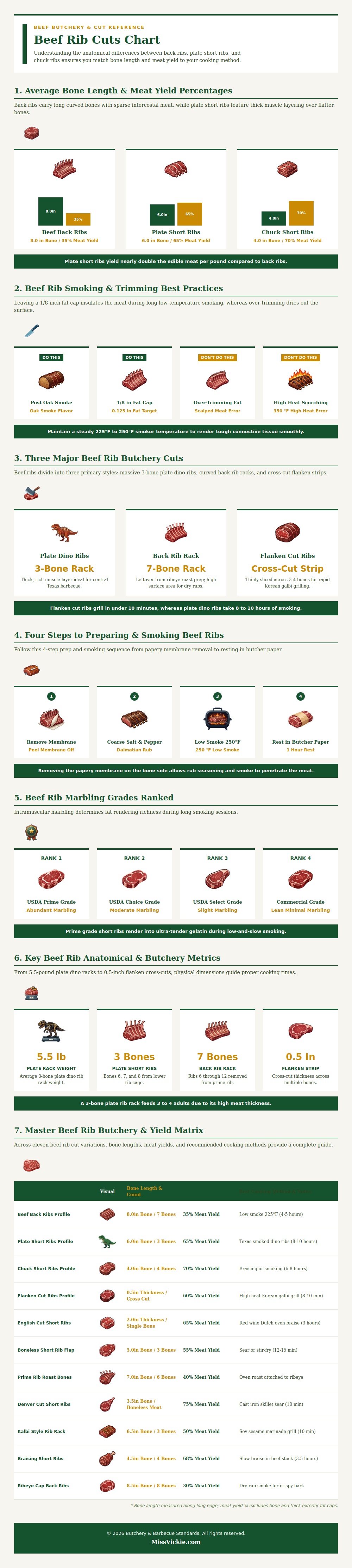
To help you make the match, we’ve broken down three main cuts of beef ribs into this chart (above). The back ribs, for example, will be less meaty with longer bones and a leaner profile coming from the loin area. They’re also built different than plate short ribs. Plate short ribs lies further down on the rib cage and tend to have more meat, though thickness varies too. When it comes to plate ribs, there’s a lot more bang for your buck per pound. You’ll find yourself with almost twice as much meat compared to back ribs.
How to Choose and Cook Beef Ribs
And why does that matter? Because how do you cook ‘em? If we compare back ribs to pork spare ribs, they’re similar in texture but back ribs cooks for shorter times at lower heats. Plate ribs, or dino ribs as they’re known, are dense enough to handle hours and hours of low-and-slow smoking which helps break down tough connective tissue.
When it comes time to cook, preparation steps is every bit as crucial as making the cut. Fat is one such area where knowing what you’re doing makes all the difference between good ribs and great ones. For example, the goal is to leave a very thin layer of fat on meat, maybe an eighth of an inch thick. Why? This fat cap is your insulator, helping retain moisture in the meat while collagen within the meat break down into gelatin. If there’s no fat left, you’ll end up with dried-out ribs, a common error. Low-and-slow means letting time do its thing; pulling out that protective layer to roughly sabotages the whole slow-cooking process.
Patience also proves valuable when it comes to temperature control. Keeping the smoking chamber at a constant level of 225-250 degrees Fahrenheit ensures the heat seep into the dense meat without burning the outside. It may feel like cooking at higher temperatures would of been more efficient, but too much heat can seal the surface before the interior is tender. Slow and low will win the race here, as the heat needs time to break down the connective tissue and render the fat. Wood species such as oak and others gives a subtle background flavor, enhancing the natural richness of the beef while not overwhelming it.
You don’t always have to smoke a rib for 10 hours. Some ribs is built for speedy cooking. Thin-cut flanks (sliced thinly across the bones), cook up in less than ten minutes over the flame. Marinated in Korean style as galbi, these thin slices are delicious and easy. Totally different from thick smoked dino ribs (which fall off the bone), knowing all the available options allows you to select based off availability and time constraints. Want something to put on the table quickly? Your friend is the flanken cut. Got a weekend to kill? Plate ribs will pay off.
And then there’s the meat itself. Because higher graded cuts (USDA Prime for example) has more marbling, they contain a greater amount of the fat inside the meat that will melt and add to the final product. In other words, it’ll be juicier and richer. Lower grade beef isn’t always bad. You just might need to pay closer attention to your moisture and the amount of fat in your rub.
Let your meat rest before eating If you’re cooking a rack of ribs, removing from the smoker and wrapping the meat in butcher paper will help keep it warm AND give the meat time to distribute all of its juices evenly throughout. If you just start slicing right away, all of those juices are going to run down on the cutting board and leave you with less-flavorful dry meat. Giving it some time to rest makes each bite as flavorful as can be.
Knowing what cut of meat you’ve got, how to trim it up, and how long to cook it makes an otherwise difficult-to-master ingredient a solid centerpiece for whatever dinner you’re making. You should of tried these before.