
One tried-and-true solution to getting that right is steamed eggs, which are also one option for solving another constant egg-cooking challenge: the white adhering to the shell. For some uses (like ramen) you want it clean off, but most of the time your timing’s not quite right and you end up with an egg that won’t separate cleanly and has pock marks all over. Don’t worry; it’s hardly ever about how you cooked it, or even what kind of pan or what size pot. It’s about timing.
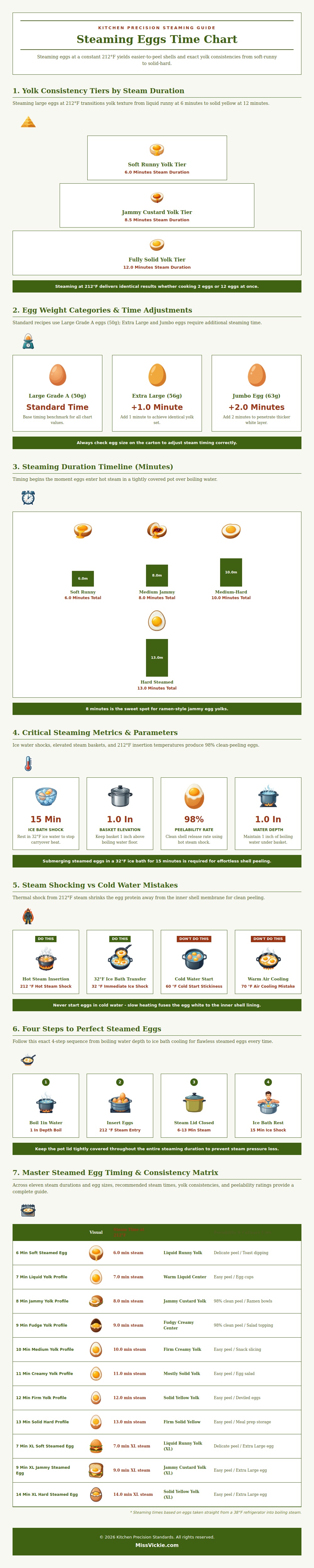
This makes steam cooking so precise. This is why the chart above give you the specific number of minutes for each level in the tiers of texture: from completely liquid through to solid hard-boiled, starting from typical fridge-cold large eggs. It’s all about thermal shock: Lower the eggs (in their basket) into a pot of vigorously boiling water and they hit 212 degrees immediately; the outside cooks fast and the yolk remains soft. The white contracts and pulls away from inner shell membrane, making the egg easy to peel after they cool down. It is a tiny physical reaction, but one that transforms the dish.
How to Steam Perfect Eggs
Home cooks makes an educated guess as to when eggs should of been pulled from heat; essentially plucking them when they think they’re done, which usually means they are either too rubbery or still too raw. This chart set a definitive starting point. At six minutes, you’ll have a perfectly runny yolk good for dunking toast. For the more popular jammy style, which oozes but keeps its shape like a custard yolk, cook for eight and a half minutes. That’s your classic ramen egg look. Push it to twelve minutes if you want a totally solidified yellow interior, great for cutting up for salad or deviled eggs. Each level of doneness is clearly marked, and the separation between one and the next span only a few seconds.
Egg size counts too: When recipes list times as a baseline, they’re based off large Grade A eggs (the ones I use). Because larger eggs has more thermal mass, more yolk and white to cook through… You’ll want to add about a minute to the time for extra-large eggs, and two for jumbo. Why? That added mass require additional time to heat up. Again, don’t neglect it; ignoring mass lead to overcooked centers or undercooked edges. Read the carton first; then set the clock.
Then there’s the cooling part, which is equally critical than the cooking portion. When your time runs out, grab a bowl of ice water and place those eggs right in. It will immediately stop the continued cooking process. If you leave them on the countertop, the egg will still have some leftover heat that’ll keep it firming up. This is bad for the texture you just spent all this effort trying to perfect. Fifteen minutes in 32-degree water will get that shell off nice and clean. If you don’t do this step, you won’t get a clean peel. This is serious.
The urge to begin with a cold egg is tempting but resist the call. It’s the old school way, slow and unpredictable… As it sticks heavily to the shell membrane when the egg white binds. To ensure consistency, only hot steam will definitely separate it. Keep the lid snugly closed on your steamer pot to retain heat and pressure. Don’t open it. Do not change the flame during steaming time. Consistency rules.
When you get the hang of this chart, it changes an unorganized morning ritual to something scientific and orderly. No more guessing, it’s all about planning. Hard boiled eggs for meal prep? Check. Do you want soft poached style yolks for breakfast sandwiches? Check. No matter what you want to use them for, it’s all the same procedure. All that varies is the clock. After you learn how long to cook an egg based on what texture you want, you’ll never have another defiant shell again. You will have total control at your fingertips. After a bit of time, you’ll have complete control of every steamed egg.