Olive Oil For Pizza Dough Calculator
Calculate olive oil for pizza dough from flour weight, baker percentage, pizza style, dough count, hydration plan, crumb tenderness, and whether the dough bakes on a pan, stone, or steel.
🍕 Olive Oil Dough Presets
Pick a dough style, then adjust flour weight, oil baker percentage, dough count, hydration, tenderness target, and bake surface.
⚖ Flour, Oil, and Hydration Details
Olive oil dough plan
Your olive oil, water adjustment, and dough tenderness notes will appear here.
Baker Percentage Breakdown
Kitchen Measure Breakdown
🧮 Current Dough Oil Cards
📋 Olive Oil Baker Percentage Tables
| Pizza Style | Typical Olive Oil | Best Bake Surface | Hydration Cue | Dough Texture Note |
|---|---|---|---|---|
| Neapolitan or wood-fired round | 0% to 1% | Stone or steel at very high heat | 60% to 65% | Lean, elastic dough with a blistered rim and less added fat. |
| New York style pizza | 1% to 3% | Stone, steel, or screen | 62% to 65% | Small oil amounts help foldability, browning, and a softer bite. |
| Thin crust or tavern style | 1% to 2.5% | Stone, steel, or screen | 55% to 60% | Moderate oil can add snap without making the dough greasy. |
| Grandma sheet pan | 3% to 5% | Oiled sheet pan | 66% to 70% | Oil helps the bottom fry gently while the crumb stays tender. |
| Round pan pizza | 3% to 5% | Oiled round pan | 68% to 72% | The dough benefits from both internal oil and pan oil. |
| Detroit style pan dough | 4% to 6% | Dark steel or aluminum pan | 70% to 74% | Higher oil supports a tender interior and crisp pan edges. |
| Sicilian thick crust | 4% to 6% | Deep rectangular pan | 70% to 75% | A rich, hydrated dough keeps thick slices soft after baking. |
| Roman slab pizza | 2% to 4% | Sheet pan or stone finish | 72% to 78% | Oil supports extensibility and crisp bottom texture. |
| Flour Weight | 1% Oil | 2% Oil | 4% Oil | 6% Oil |
|---|---|---|---|---|
| 250 g flour | 2.5 g / 0.19 tbsp | 5 g / 0.37 tbsp | 10 g / 0.74 tbsp | 15 g / 1.11 tbsp |
| 500 g flour | 5 g / 0.37 tbsp | 10 g / 0.74 tbsp | 20 g / 1.48 tbsp | 30 g / 2.22 tbsp |
| 750 g flour | 7.5 g / 0.56 tbsp | 15 g / 1.11 tbsp | 30 g / 2.22 tbsp | 45 g / 3.33 tbsp |
| 1000 g flour | 10 g / 0.74 tbsp | 20 g / 1.48 tbsp | 40 g / 2.96 tbsp | 60 g / 4.44 tbsp |
| 1500 g flour | 15 g / 1.11 tbsp | 30 g / 2.22 tbsp | 60 g / 4.44 tbsp | 90 g / 6.67 tbsp |
| Hydration Adjustment | When To Use It | Water Formula | Effect On Handling | Best Match |
|---|---|---|---|---|
| Keep water unchanged | Oil at 0% to 3% | Flour x hydration | Preserves the recipe's original water level. | New York, home oven, thin crust. |
| Reduce water by 25% of oil | Oil at 3% to 5% | Base water minus 0.25 x oil | Slightly firmer dough without losing tenderness. | Grandma, round pan pizza. |
| Reduce water by 50% of oil | Oil at 5% to 8% | Base water minus 0.50 x oil | Controls slackness in rich or heavily oiled dough. | Detroit, Sicilian, focaccia pizza. |
| Rich dough reduction | Soft focaccia-like dough | Base water minus 1.5% flour | Keeps a rich dough easier to fold and pan. | Deep pan or very tender crumb. |
| Pan softness addition | High-hydration pan pizza | Base water plus 2% flour | Looser dough with more open crumb and pan rise. | Roman, Detroit, Sicilian. |
| Oil Measure | Approx Grams | Approx Milliliters | Best Use | Accuracy Note |
|---|---|---|---|---|
| 1 teaspoon olive oil | 4.5 g | 4.9 ml | Small dough ball or test batch. | Useful when scale resolution is coarse. |
| 1 tablespoon olive oil | 13.5 g | 14.8 ml | Medium home pizza batch. | Assumes olive oil density around 0.91 g/ml. |
| 2 tablespoons olive oil | 27 g | 29.7 ml | Pan pizza batch with 600 g to 900 g flour. | Still weigh when repeating a favorite formula. |
| 1/4 cup olive oil | 54 g | 59.1 ml | Large sheet pan or focaccia-style batch. | Measure level; oil clings to spoons and cups. |
| 1/3 cup olive oil | 72 g | 78.9 ml | Very large or rich pan dough. | Usually too much for lean stone-baked pizza. |
📊 Pan Versus Stone Oil Checks
Less oil keeps the crust snappy and avoids frying before the crumb sets.
A little oil helps browning because screens vent moisture quickly.
Internal oil plus pan oil creates a tender bite and crisp bottom.
Higher oil supports thick dough, long proofing, and fried edges.
💡 Olive Oil Dough Notes
Olive oil density varies slightly by temperature and variety. The tablespoon conversion uses 13.5 g per US tablespoon as a practical kitchen estimate.
There you are, in your kitchen. You have flour and olive oil out, and in front of you sits a recipe written in percentages that don’t make sense to you.
Pizza-dough percentages is straightforward: They’re about whether you want a greasy, tender, or chewy crust. And yet they matter, because the amount of olive oil in your dough are a mathematical equation. If most home bakers were asked to describe their method, they’d say, “I just throw some on till it looks right.”
Why Oil Percentage Matters in Pizza Dough
Wrong! Olive oil is a structural ingredient. It coat the gluten proteins and prevents them from forming bonds with one another. This affects texture.
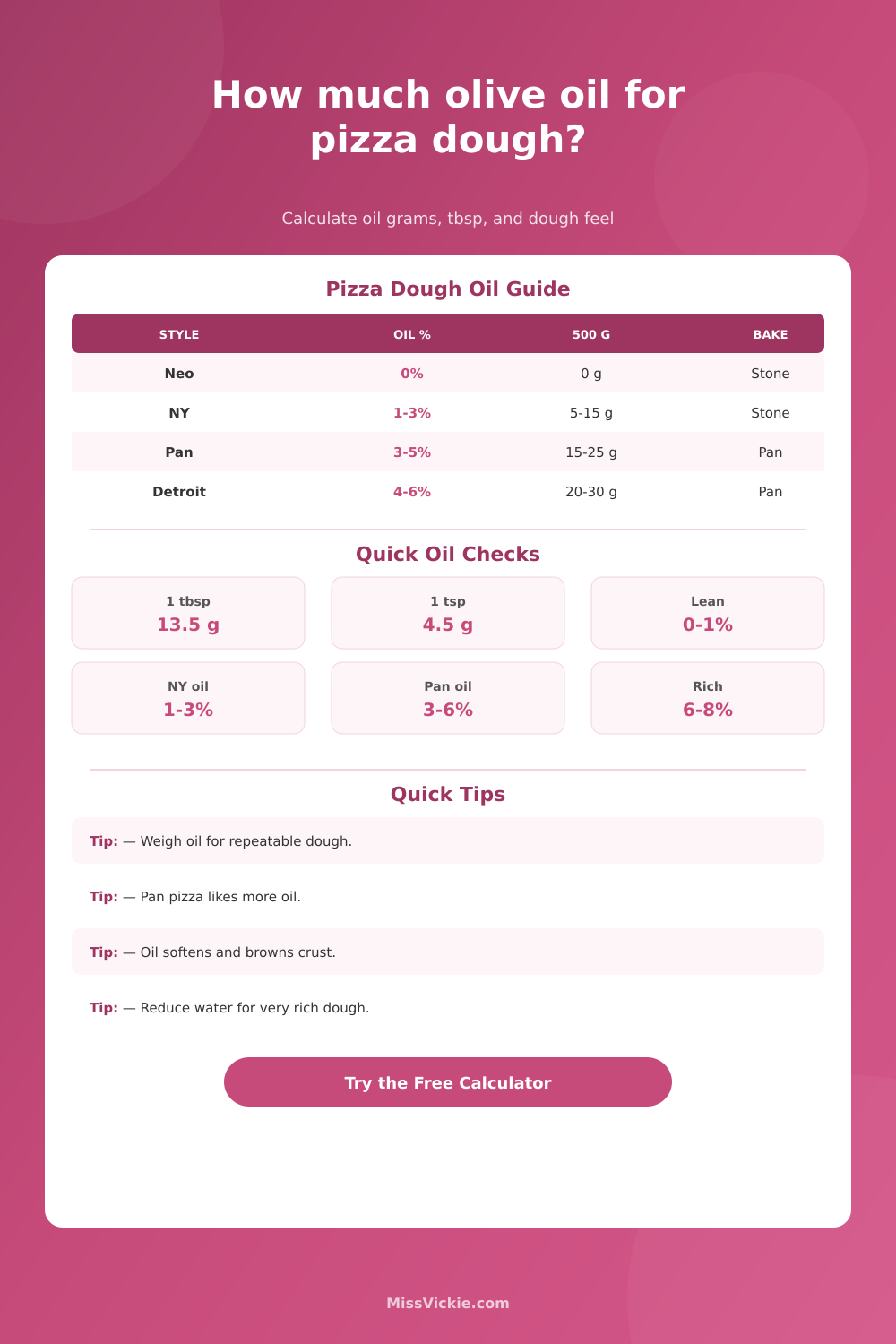
Now for the math part: the calculator gives you the numbers, now you gotta know what they are. A pizza style is your selection of a textural profile. If you select Neapolitan, you’re choosing a lean dough, frequent 0 percent oil. That creates a stronger gluten network so when it hit a wood-fired oven the dough can puffs up. What you get is soft inside with a blistered edge. You want the steam to do the lifting, not the fat.
The other way is New York style dough. They adds 1-3% olive oil which makes the dough pliable and lubricated. It brown better because of the fat, and it folds over cleanly without cracking in half. Without the oil, the crust will be pale and lack flavor.
You can plug in your batch size and find out precisely how many grams of oil you need (instead of guessing at it with a tablespoon).
For pan pizzas: More oil is needed. For Detroit and Sicilian styles, this can be four to six percent. It not only tenderizes the crumb but fries the dough on the bottom as it bakes, making it crispy and golden at the edge. If you make a Detroit slice out of your leavened lean Neapolitan formula, the bottom won’t color up. The edges will also was tough.
Oil percentage changes with the bake method; see reference table.
Also keep in mind how you handle the dough. When the mixture gets slick (from all that fat), it’s difficult to work with. If you increase the oil content, you may want to use a little less water. This help it hold together well enough to work. Use the calculator to adjust the moisture levels based off what type of oil you’re using. Then it won’t tear and get sticky. It is a little tweak, but it should of been worth it.
The nature of the oil itself depends on temperature: At higher temps, it penetrates, browns, and evens out the crust better (since the high heat also help get rid of any moisture on the surface). Because lower-temperature ovens aren’t blasting as much heat, they requires more oil for browning. For example, a 400-degree sheet pan pizza will require more oil then a similarly browned 500-degree pizza that’s been baked on a stone. If you specify which type of surface you’re baking on, the tool take this into account with its guidance.
Don’t sweat greasing your pan. Any oil you use is fine for that purpose. The calculator assume only the oil incorporated into the dough. This includes oil from any fat in the recipe or oil added separately. Oil the outside of the loaf prior to baking liberally, but don’t count it as part of the baker’s percentage. Confusing those two functions will lead you astray. Outside oil help with browning and release; inside oil affects texture.
The key ingredient is olive oil. It’s like a control knob on the finished product. Adding too little will leave your pan pizza dry. Adding to much can cause your Neapolitan crust to fall apart. Understanding what you’re trying to make will help you know how much is enough. Do you want a crispy slab of pie? Or do you want a foldable slice?
Use the calculator as a guide to dial in your desired result. Then taste the end product and add/subtract based off your preference. That’s how you develop your personal crust recipe.