Cream Cheese Frosting Calculator
Estimate cream cheese frosting for cakes, cupcakes, bars, rolls, and dessert trays while balancing tang ratio, butter support, powdered sugar level, piping firmness, chilled hold, and batch yield.
🍰Cream Cheese Frosting Presets
Pick a dessert plan, then adjust the tang, sugar, butter, firmness, chilled hold, and recipe yield.
⚖Dessert, Tang, and Texture Inputs
Cream cheese frosting plan
Adjust inputs to estimate frosting.
Ingredient Balance
Dessert and Batch Math
🧁Quick Yield Cards
📋Cream Cheese Frosting Reference Tables
| Dessert Type | Typical Count | Standard Frosting | Generous or Piped | Best Tang Level |
|---|---|---|---|---|
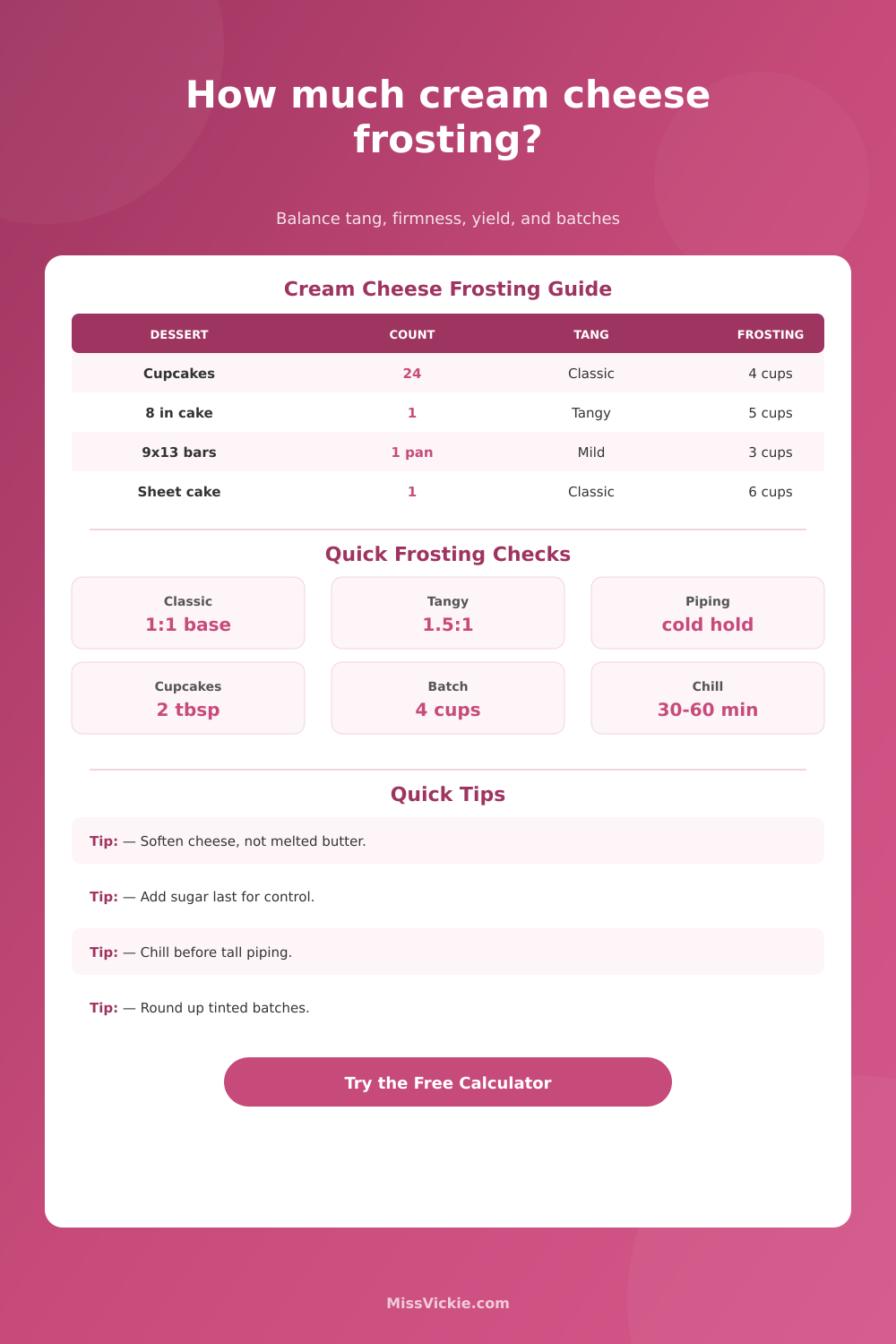
| Standard cupcakes | 12 to 24 cupcakes | 1.5 to 3 cups | 2.5 to 5 cups | Classic or tangy for red velvet and carrot cake |
| Mini cupcakes | 48 to 96 minis | 2.5 to 5 cups | 4 to 8 cups | Classic keeps the flavor clear without soft peaks |
| Round layer cake | One 8 or 9 inch cake | 4 to 5.5 cups | 6 to 8 cups | Tangy works well with spice, carrot, and pumpkin cakes |
| Sheet cake | One half sheet | 4.5 to 6 cups | 6.5 to 9 cups | Mild or classic spreads cleanly over large surfaces |
| Bars or brownies | One 9 x 13 pan | 2 to 3 cups | 3 to 4.5 cups | Mild is usually enough for a thin top layer |
| Cinnamon rolls | 12 to 18 rolls | 1.5 to 3 cups | 3 to 4 cups | Bold tang balances warm spice and sweet dough |
| Tang Ratio | Cream Cheese | Butter | Powdered Sugar Baseline | Texture Note |
|---|---|---|---|---|
| Mild | 0.75 part | 1 part | About 2 parts per total fat weight | Less tang, more buttercream-like, better in warmer rooms. |
| Classic | 1 part | 1 part | About 2 parts per total fat weight | Balanced flavor and structure for most cakes and cupcakes. |
| Tangy | 1.5 parts | 1 part | About 2.1 parts per total fat weight | Noticeably cream cheese forward; chill before piping. |
| Bold tang | 2 parts | 1 part | About 2.2 parts per total fat weight | Softest profile; best as a spread or chilled filling. |
| Decorator support | 1 part | 1.2 parts | About 2.25 parts per total fat weight | Firmer borders and rosettes with a short refrigerator hold. |
| Batch Yield | Good For | Cream Cheese Base | Butter Base | Powdered Sugar Range |
|---|---|---|---|---|
| 2 cups | Small bars, 6 cupcakes, thin roll glaze | 4 to 5 oz | 3 to 4 oz | 1.5 to 2 cups |
| 4 cups | 24 modest cupcakes or one 9 x 13 cake | 8 oz | 8 oz | 3.5 to 4.5 cups |
| 6 cups | Layer cake or piped cupcake party | 12 to 16 oz | 10 to 12 oz | 5 to 7 cups |
| 8 cups | Sheet cake, tall swirls, or color buffer | 16 to 20 oz | 14 to 16 oz | 7 to 9 cups |
| 12 cups | Event cupcakes or multiple cakes | 24 to 32 oz | 22 to 26 oz | 10 to 14 cups |
🔬Firmness and Hold Factors
Best for bars, rolls, snack cakes, and rustic layer cake filling.
Works for cupcake swirls when the frosting is chilled and the room is cool.
Uses a firmer sugar level and short chilled hold before piping.
Better for borders, rosettes, and transport, but less tangy on the palate.
💡Cream Cheese Frosting Notes
This calculator estimates home-bakery cream cheese frosting. Room temperature, cream cheese water content, butter softness, and powdered sugar brand can change the final feel.
Frosting is one of those treats that’s somewhere between elegant and messy liability. Cream cheese frosting in particular is delicious; its tang slices through the sweetness, making it more pleasant than most other frostings. But! When the room warms up, the frosting itself threaten to slide right off cake. When the room warms up, this same tang threatens to slide right off cake.
So how do you know what will work? That’s where the calculator comes in: plug in how many desserts you’re preparing and which texture you want, and it’ll handle the math for you. You won’t have to guess at conversions and coefficients anymore; you will get a solid number of batches and a clear picture of exactly what you need to make.
How the Frosting Calculator Works
First, the tang level: How much cream cheese vs. Butter? The higher the amount of cream cheese, the sharper the taste. That’s why carrot cake doesn’t just taste like sweet dough; it actualy tastes like a dessert. However, the higher the cheese content, the lower the structure. Butter keep its form. Cheese is mushy.
If you’re making tall rosettes on top of cupcake, you want some butter there for back-up. On the other hand, if you’re smearing a thin layer across brownies, then you can get away with going heavy on cheese. And this is where the tool comes in: it balances that trade-off directly by adjusting the butter/sugar amounts to compensate for the softening impact of excess cheese. Now you can grab a cupcake without worrying about your frosting collapsing.
Then there’s the matter of time. If the cupcakes are going to sit for two hours at a party while people mingle, will that perfectly pretty swirl you created in the kitchen turn into something more apocalyptic by partytime? Because cream cheese frosting isn’t like other frostings; it needs to be piped after a quick chill so it firms up properly.
Your chilled hold time goes into the calculator. Why? It is not necessarily because of food safety, but because of physics and how the structure holds together. If the plan is to eat right now, you might be able to get away with a slightly soft mixture. But if those cupcakes are destined for a party where they’ll spend an hour or two sitting around, mingling with guests, you need a firmer starting point. The tool factors in a little bit of wiggle room for this. It expects some minor slumping due to relaxation of the fats.
And then there’s the sugar. On one hand, it makes the batch sweeter. On the other, it adds body. The powdered sugar takes on moisture and forms a structure. For a mild spread, less sugar will do. To get a firm piping goal, add more. That’s where the sugar multiplier in the calculator kicks in. Depending on what texture you choose, the amount of sugar changes to match. So instead of blindly adding some sweetness, you’re building a frame.
Keep in mind: Once you get the final batch count, remember that this accounts for a practical buffer. It’s difficult to color match cream cheese. If you run out of white frosting, only have enough to make another batch, etc, the color may be slightly off. The additional percentage added by the tool stops that panic in its tracks.
Common mistake: Home bakers soften the butter too much. Creamy, they say. Soften it in the microwave till it’s almost liquid. And then add some cream cheese that’s still cold, so now everything just curdles. Keep both those fats the same temp. Room temp. Not wet; just soft.
The reference tables on this page shows how much fat (volume) is needed for different desserts. For example, you’ll need more volume for a sheet cake vs a small batch of rolls. The texture requirements are opposite: the sheet cake should be smooth enough to spread, while the rolls must hold a glaze. It also breaks out the weight of ingredients for you. In other words, it will tell you how much to mix in one batch.
If you’re purchasing a large tub of butter and/or cream cheese, this is useful. Not only does it help you know how many batches you should expect to mix up, but it also helps you understand what time to plan for starting mixtures. If you’re baking a wedding cake, for instance, I don’t think you want to begin mixing one hour prior to assembly. You need the math figured out in advance. That’s where the tool comes in clear.
In the end, good frosting is all about control. Control of yield. Control of firmness. Control of tang. And the calculator allows you to measure that. When you stop guessing and start calculating, you shed some of your anxiety. No more hoping it will hold up. You know it will.
And that’s what makes the difference between a nice dessert and a memorable dessert. It’s simple math. Pure comfort.