Worcestershire marinade, meatloaf, burger, roast, umami, acidity, cook-time, and sodium planner
Worcestershire Sauce Ratio Calculator
Calculate Worcestershire sauce teaspoons, tablespoons, and milliliters by meat weight, recipe role, umami target, acidity target, sauce blend, cook time, sodium level, and finished dish style.
📌Worcestershire Sauce Presets
Choose a real kitchen setup, then adjust meat weight, blend, umami target, acidity target, salt overlap, and cook time for your exact batch.
⚖Meat, Sauce, Balance, And Cook Inputs
Worcestershire ratio
The calculator will size Worcestershire sauce for your meat and cooking plan.
Ratio Breakdown
Flavor And Cook Check
Use Notes
🥄Current Blend Snapshot
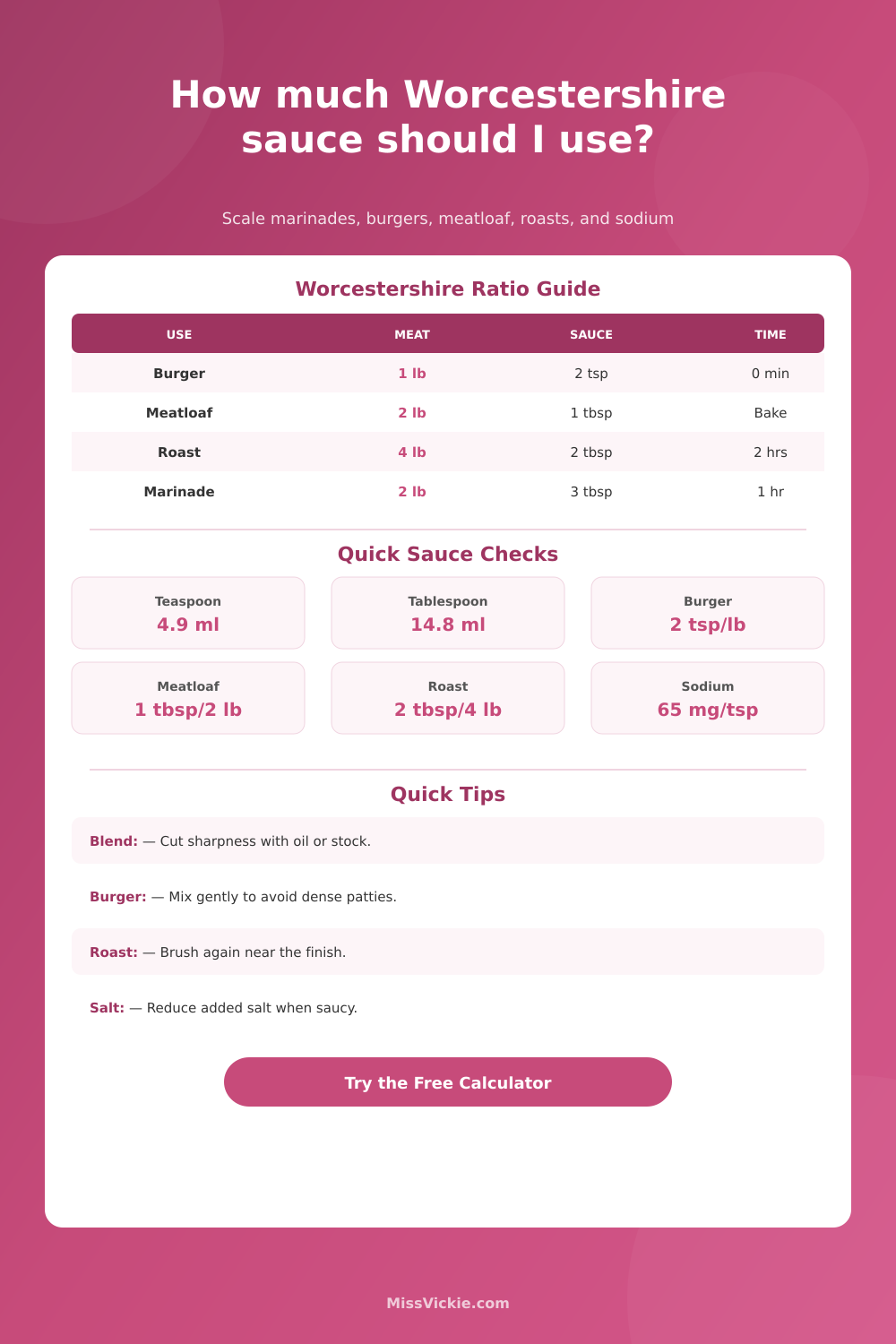
Per pound of ground beef.
Per 2 pounds of meat mix.
For a 4 pound roast brush.
Per teaspoon before other salt.
📘Meatloaf, Burger, And Roast Reference Tables
Meatloaf Worcestershire Table
| Meatloaf Size | Worcestershire | Blend Liquid | Salt Check |
|---|---|---|---|
| 1 lb mini loaf | 1 1/2 tsp, about 7 ml | 1 tbsp milk, stock, or ketchup | Reduce added salt by a small pinch. |
| 2 lb standard loaf | 1 tbsp, about 15 ml | 2 to 3 tbsp tomato or stock blend | Best with 1 to 1 1/4 tsp added salt total. |
| 3 lb family loaf | 1 1/2 tbsp, about 22 ml | 1/4 cup moist binder blend | Check crackers, cheese, or ketchup first. |
| 4 lb party loaf | 2 tbsp, about 30 ml | 1/3 cup binder or glaze starter | Mix sauce through liquid before meat. |
Burger Worcestershire Table
| Ground Meat | Worcestershire | Best Use | Handling Note |
|---|---|---|---|
| 1 lb beef burgers | 2 tsp, about 10 ml | Four 4 oz patties | Fold in gently and shape loosely. |
| 1.5 lb cookout batch | 1 tbsp, about 15 ml | Six quarter-pound patties | Use less if adding steak sauce. |
| 2 lb lean beef | 1 tbsp plus 1 tsp | Eight slim patties | Add 1 tbsp oil for lean blends. |
| 3 lb mixed burgers | 2 tbsp, about 30 ml | Large grill batch | Season evenly before portioning. |
Roast And Marinade Table
| Meat Weight | Worcestershire | Blend | Cook Time Note |
|---|---|---|---|
| 2 lb steak tips | 2 to 3 tbsp | 3 tbsp oil plus garlic | Marinate 30 to 90 minutes. |
| 3 lb pork roast | 1 1/2 to 2 tbsp | Mustard and brown sugar | Brush before roasting, then again late. |
| 4 lb beef roast | 2 tbsp | Stock, pepper, and onion powder | Long braise concentrates salt. |
| 6 lb chuck roast | 3 tbsp | 1/2 cup stock blend | Hold some sauce for finishing. |
Umami, Acidity, And Sodium Balance
| Target | Worcestershire Rate | Acid Add-In | Sodium Move |
|---|---|---|---|
| Subtle savory | About 1 tsp per lb | No extra vinegar | Keep normal salt modest. |
| Balanced meat flavor | 1 1/2 to 2 tsp per lb | Tomato, mustard, or stock | Reduce salt slightly. |
| Bold marinade | 1 tbsp per lb | Oil plus lemon or vinegar | Use less soy sauce. |
| Reduced pan sauce | Start low, reduce later | Stock or pan juices | Taste after reduction. |
🧂Practical Ratio Cards
Good for meatloaf with salty ketchup or cheese.
Classic ground beef seasoning without wet patties.
Bold flavor when balanced with oil or stock.
Three parts oil or stock to one part Worcestershire.
Works for thin steaks, chops, and burger mix.
Useful when sauce is brushed on a thick cut.
Lower acidity for overnight meat prep.
Approximate sodium before label-specific changes.
💡Worcestershire Ratio Tips
Worcestershire sauce sodium, sweetness, anchovy content, vinegar strength, and thickness vary by brand. This calculator estimates kitchen planning ratios, not medical sodium limits.
But Worcestershire sauce is no lightweight. It’s got some seriousy intense flavor to offer, a mix of salty and acidic ingredients including vinegar, molasses, tamarind, and yes, even fermented anchovies.
But use it sparingly. Too little of this stuff in your meatloaf? It is just beef. Too much of it in your burgers? You’re hitting a strong taste off salt and vinegar.
How to Use Worcestershire Sauce
Once you know what amount of meat you’re working with, and when you’d like to have it done, the ratio calculator does math for you… All while balancing out that punchy flavor.
In short, Worcestershire sauce isn’t all salt. It’s a three-pronged flavor weapon: salty to season; acidic to tenderize; and savory to add depth of flavor. Home chef often focus only on the salt content and under-season accordingly, forgetting that the acid and umami is also playing major roles.
When you’re braising a piece of meat, the acid will make it go mushy if left on for too long; when you’re searing steak, the acid break down the surface fibers and gives you better crust. And that’s where this calculator come in. Depending on how much you leave the meal marinating, and how long you plan on letting it sit after, the calculator scales back its recommendations. This small tweak changes everything from a mushy roast to a tender cut of meat.
Keep in mind what type of dish you are serving it with, though. On a burger patty, which is dense and cooked fast, you’re looking for something that distribute evenly through the meat (but doesn’t make the meat wet). About two teaspoons per pound of ground beef, the tool advise. That’s enough to boost the beef flavor but not turn it into sloppy mess.
With a meatloaf, basically a baked meatball, the Worcestershire serves not just to add flavor but also help bind things together. Here you can go heavier; the structure of the meatloaf will tend to hold onto moisture a bit better. You often use a tablespoon for every couple of pounds.
It all makes sense if you look at reference table on the page. The table explain how the ratio changes depending on whether you use a quick grill or a slow oven bake.
The hidden variable that trips people up is acidity: Worcestershire sauce contains vinegar. And if you combine it with vinegar or lemon juice in your marinade, you’re doubling down on acid. To solve this problem, the calculator lets you set an acidity target, which then adjust the Worcestershire recommendation to keep the total acid level in check. This is crucial for raw marinating, where you don’t want to cook the meat chemically before you’ve even got the heat on it. Balance out the acid inputs, and you’ll let the marinade penetrate while protecting its texture. It’s a subtle science, but you would of notice the immediate difference on the plate.
And then there’s the sodium issue, a big deal to health conscious home cooks. Traditional Worcestershire contains about sixty-five milligrams of sodium per teaspoon. Sounds like nothing, right? But add some salty rubs, bouillon cubes, and/or soy sauce into the mix and it begin to add up fast. You can note down which (if any) salty ingredients you’re adding, and the tool will adjust accordingly; it’ll back off from recommending as much Worcestershire (in this case), so your dish isn’t inedibly salty. This is also helpful when making braises and stews, since the cooking process concentrate and reduces the liquid, so a sauce that’s fine going into a four-hour braise may taste more salty after cooking.
Worcestershire sauce is an enhancer, not a main character, and ultimately all about finding the right balance. If done correctly, you don’t taste the Worcestershire; you just taste something different and better. A deeper, richer, more complex version of your meat.
With the calculator, you can find that sweet spot, removing the guesswork from one of your staple ingredients. Start trusting the numbers and soon enough you’ll be pouring Worcestershire with confidence, just enough for a quick burger night or a slow Sunday roast. It’s no longer a mysterious bottle, but a tool that works exactly as intended to help make your best meals.