Calcium chloride jar dosing, brine fill, pickle cut, and crispness planner
Pickle Crisp Per Quart Calculator
Measure Pickle Crisp style calcium chloride by jar size, jar count, pickle type, spear or chip cut, brine volume, firmness target, and canning or refrigerator method.
📌Pickle Crisp Presets
Choose a common pickle batch, then adjust jar capacity, cut, pack density, brine fill, firmness target, and processing method. This sizes calcium chloride only, not salt or vinegar.
⚖Jar, Pickle, Brine, And Firmness Inputs
Pickle Crisp Jar Plan
Your calcium chloride dose will appear here.
Jar And Dose Breakdown
Crispness And Safety Notes
Batch Guidance
🧪Calcium Chloride Jar Dose Cards
Small relish jars and short snack jars use a tiny measured pinch.
A common dose for pint cucumber spears, okra, beans, and chips.
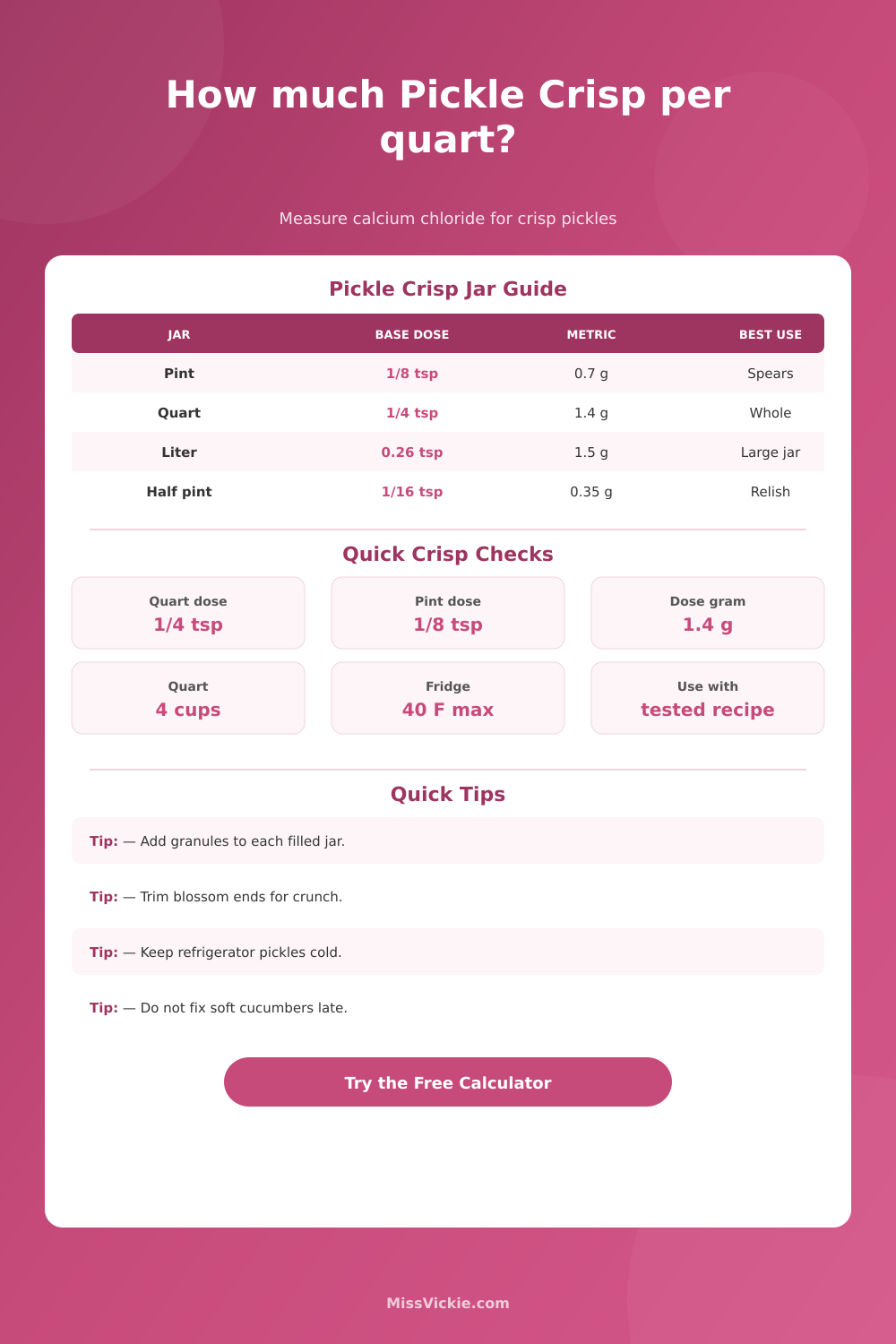
The standard quart reference dose used by this calculator.
Use your own granule weight if your product measures differently.
📊Pickle Crisp Per Jar Table
| Jar Size | Jar Capacity | Base Pickle Crisp | Approx Weight | Typical Use |
|---|---|---|---|---|
| Half-pint | 1 cup / 236 ml | 1/16 teaspoon | 0.35 g | Relish, small pepper jars, garnish pickles |
| Pint | 2 cups / 473 ml | 1/8 teaspoon | 0.7 g | Dill spears, chips, okra, green beans |
| Quart | 4 cups / 946 ml | 1/4 teaspoon | 1.4 g | Whole cucumbers, large spears, mixed vegetables |
| Liter | 4.23 cups / 1000 ml | About 0.26 teaspoon | 1.48 g | Metric jars close to a US quart |
| Quart-and-a-half | 6 cups / 1.42 L | 3/8 teaspoon | 2.1 g | Tall asparagus, long beans, large spears |
🥒Cut Style Crispness Table
| Cut Or Pack | Crunch Risk | Brine Fill Estimate | Calcium Chloride Note | Texture Move |
|---|---|---|---|---|
| Whole small cucumbers | Low surface-area risk | 42% to 48% jar volume | Standard jar dose works well | Use fresh pickling cucumbers and trim blossom ends. |
| Spears or wedges | Moderate cut-surface risk | 45% to 52% jar volume | Standard jar dose is the main plan | Pack firmly but avoid crushing the seed core. |
| Chips or coins | Higher heat and surface risk | 48% to 58% jar volume | Firm target can help, but fresh cucumbers matter more | Slice evenly and process only as the tested recipe says. |
| Relish or chopped pack | Highest softening risk | 35% to 45% jar volume | Use a gentle dose; crunch depends on raw texture | Drain well and do not expect calcium chloride to rebuild pectin. |
🫙Canning Vs Refrigerator Crispness Table
| Method | Texture Effect | Use Pickle Crisp When | Temperature Note | Safety Reminder |
|---|---|---|---|---|
| Water-bath canned quick pickles | Heat can soften cucumber cells | Add granules to each filled jar before lids | Use the tested processing time | Do not change vinegar, water, or salt ratios for shelf-stable recipes. |
| Low-temperature pasteurization | Often gentler on crunch | Use with recipes that specifically allow the method | Hold the specified water temperature carefully | Use a thermometer and the exact method from a tested source. |
| Refrigerator pickles | No canning heat, usually crisper | Add to jars for extra snap if desired | Keep at 40 F / 4 C or colder | Refrigerator pickles are not shelf-stable unless processed by a tested recipe. |
| Fermented then packed | Ferment time drives final texture | Use only if your tested process supports it | Chill finished pickles promptly | Calcium chloride does not replace proper fermentation salt or acidity control. |
✅Crisp Pickle Checks
Calcium chloride helps hold existing pectin; it cannot make old soft cucumbers crisp.
Remove the blossom end because enzymes there can soften cucumber pickles.
Keep refrigerator pickles chilled and treat them as perishable food.
Pickle Crisp changes texture only; it is not a safety formula.
💡Pickle Crisp Notes
This calculator estimates food-grade calcium chloride for pickle texture. It does not create a canning recipe, verify acidity, or replace tested processing instructions.
The perfect pickle is firm to the bite… Not soft or mushy as it goes down. Carefuly load fresh cukes into their jars. Make the brining solution and bring it to a boil. Then, process the filled jars. And when you crack one open a week later? Limp pickles.
That’s typically due to a problem of chemistry, not how they were made. Calcium chloride is the substance that make all the difference between soft and crisp. When you cook something such as in a boiling water bath, the heat breaks down the pectin structure that makes produce firm so the process makes things mushy. To get around that, the calcium strengthens cells’ walls. This helps cucumbers retain their shape even under the heat of canning.
How to Make Crisp Pickles
And the calculator does all the work for you to figure out how much to add to each batch (and what size jars). You don’t have to guess at conversions and coefficients. It’s scaled just right. Add too little calcium chloride and nothing improve. Too much turns pickles bitter and chalky.
The tool does adjusts automatically, but the anchor is the dose, which is the capacity of the jars. One quarter teaspoon of calcium chloride is the typical reference rate per quart jar. Use half that amount for a pint jar. Use one-quarter of that for a half-pint jar. When mixing different size jar within a batch, knowing the ratio makes it easier.
For example, the calculator calculates how much calcium chloride by weight is required to make a dozen quarts. Sixteen teaspoons (weighed) of powder? Who wants to do that? If you can get your calcium chloride as granules of roughly standard density, use grams instead for large batches (it’s cleaner).
A cut style affect the surface area that’s exposed to the brine. That affects the rate at which it gets softened. In general, whole pickles have the smallest surface area compared to volume. Even without additional calcium they’ll hold up well.
Spears and chips has more exposed tissue. Those soften quicker as enzymes break down tissue in heat. Packets of chopped/cut up pickles and relish has the most exposure. So they’re the biggest risk for getting soft. You could increase the “firmness” goal in your settings for those cuts. But don’t expect miracles: there’s only so far you can go adding crunch after the fact.
The biggest determinant of how crunchy your pickles turn out? How fresh were your cukes? There’s no amount of additive that can make ‘em crisp again, if they were already too old/watery to start with.
The other thing you must do, which may sound obvious but it isn’t: Trim the blossom end. That’s where the enzyme is located, the one that liquefies pectin (a softening agent) inside the spear. Nothing you do with minerals will stop this completely. But removing it slows down internal breakdown, letting calcium harden whatever remains. Especially for baby dills and spears, this is important. Because they’re not cut into thin chips, any change in interior texture shows up more clearly.
In the end, it comes down to storage. Fridge pickles don’t go through any kind of high-heat treatment. That means they stay more naturaly firm. You can optionally add calcium chloride at this point. You are taking out an insurance policy, but it is not required.
Fermented pickles are another animal altogether. Preservation happens with lactobacillus bacteria. During fermentation, some people adds calcium in the form of calcium chloride to their salt brine. The calculator will help you sort all this out.
Don’t overdo your fridge pickle batch because the jar size fits a canning recipe. Pickling involves chemistry and expectations. A limp cucumber won’t crunch. A fresh one can be saved from both acid and heat. That’s where the tool comes in, measuring exactly how much protection each jar gets. It provides just enough mineral fortification to keep them firm. A hunch about being able to get some crunch becomes a prediction.
Begin with firm produce. Cut off any soft ends. Then let the calcium go to work. You get crisp pickles.