Matcha Per Cup Calculator
Estimate matcha powder for hot matcha, koicha, cafe lattes, iced lattes, culinary drinks, and concentrate using cup size, grade, strength, sift loss, milk ratio, sweetener, caffeine, and water temperature.
🍵 Matcha Drink Presets
Pick a common matcha cup, then adjust serving size, grade, strength, milk, sweetener, sift loss, and whisk water for your bowl or glass.
⚖ Matcha Cup Details
Matcha latte estimate
Your matcha amount will appear here.
Drink Breakdown
Liquid And Serving Plan
- Sift matcha before adding water.
- Use cooler water for premium grades.
📏 Quick Matcha Measures
🌡 Water Temperature And Drink Reference Tables
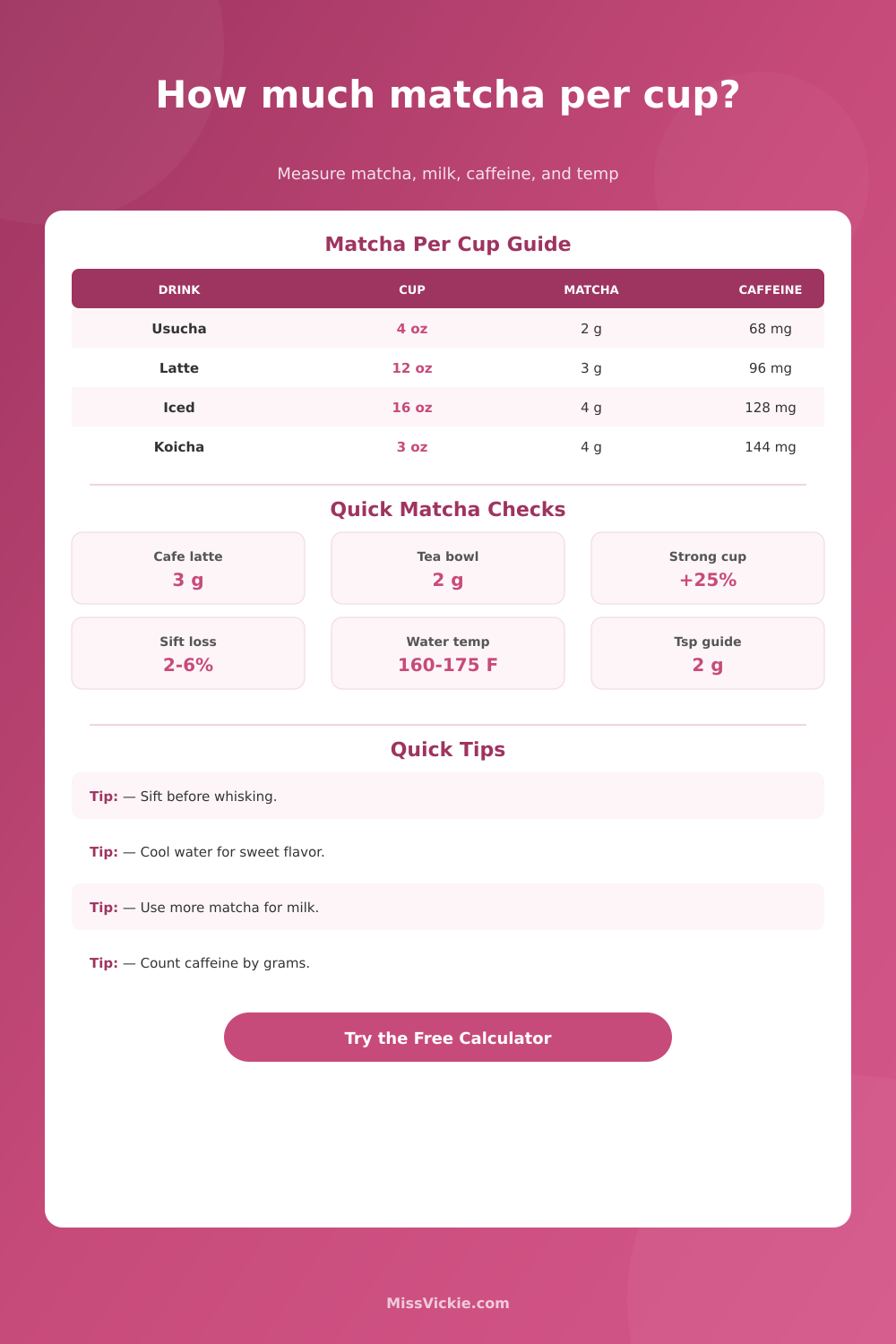
| Drink Style | Typical Cup Size | Matcha Per Cup | Whisk Water | Milk Or Top-Off |
|---|---|---|---|---|
| Usucha thin matcha | 3 to 4 fl oz, 90 to 120 ml | 1.5 to 2.2 g | All or nearly all water | No milk; foam with a bamboo whisk. |
| Koicha thick matcha | 2 to 3 fl oz, 60 to 90 ml | 3.5 to 4.5 g | Small amount of warm water | No milk; kneaded into a thick tea. |
| Hot matcha latte | 8 to 12 fl oz, 240 to 355 ml | 2.5 to 3.5 g | 2 to 3 fl oz for whisking | Steamed milk usually fills 60 to 75%. |
| Iced matcha latte | 12 to 20 fl oz, 355 to 590 ml | 3 to 5 g | 2 to 4 fl oz for a shot | Milk plus ice often fills most of the glass. |
| Smoothie or shake | 12 to 20 fl oz, 355 to 590 ml | 2 to 4 g | Optional small slurry | Blend with milk, fruit, or protein base. |
| Matcha Grade | Best Water Temp | Caffeine Estimate | Flavor Note | Calculator Use |
|---|---|---|---|---|
| Ceremonial grade | 155 to 170 F, 68 to 77 C | About 34 mg per gram | Sweet, grassy, least bitter when not overheated. | Use for usucha, koicha, and unsweetened cups. |
| Premium daily grade | 160 to 175 F, 71 to 79 C | About 32 mg per gram | Balanced for tea or latte, with moderate bitterness. | Good all-purpose setting for home drinks. |
| Latte grade | 165 to 180 F, 74 to 82 C | About 31 mg per gram | Strong enough to show through dairy or oat milk. | Choose for cafe-style hot and iced lattes. |
| Culinary grade | 165 to 180 F, 74 to 82 C | About 29 mg per gram | More robust and sometimes more bitter. | Best in smoothies, baking, sweet drinks, and blends. |
| Roasted tea powder | 175 to 190 F, 79 to 88 C | About 8 mg per gram | Nutty, lower caffeine, and less green bitterness. | Use when estimating hojicha-style powder drinks. |
| Serving Goal | Powder Needed | Teaspoons | Milk Range | Caffeine Range |
|---|---|---|---|---|
| One 8 oz hot latte | 2.5 to 3 g | 1 1/4 to 1 1/2 tsp | 5 to 6 fl oz milk | 75 to 100 mg |
| One 12 oz cafe latte | 3 to 3.5 g | 1 1/2 to 1 3/4 tsp | 7 to 9 fl oz milk | 90 to 115 mg |
| One 16 oz iced latte | 3.5 to 4.5 g | 1 3/4 to 2 1/4 tsp | 9 to 12 fl oz milk | 105 to 145 mg |
| Six 12 oz lattes | 18 to 21 g | 9 to 10 1/2 tsp | 42 to 54 fl oz milk | 90 to 115 mg each |
| One koicha bowl | 3.5 to 4.5 g | 1 3/4 to 2 1/4 tsp | No milk | 120 to 155 mg |
🔬 Caffeine, Sweetener, And Milk Notes
Typical matcha estimate per gram of green tea powder.
Level teaspoons vary, so weigh powder for repeatable cups.
Approximate calories in each level teaspoon of sugar.
Common latte range after whisk water and ice are counted.
💡 Matcha Measuring Tips
Matcha caffeine and flavor estimates vary by cultivar, harvest, grind fineness, age, storage, and serving method. Use the calculator as a kitchen planning guide, then adjust to taste.
At a glance, making matcha at home appears to be a fairly straightforward process: take the powdered green tea, pour in some water, whisk it up! But all too often, results is too bitter or not the right consistency.
Why? Because making matcha are more of a ratio game than an estimate; there’s a delicate balance of milk, water, and the matcha powder itself that can make your matcha taste either medicinal and bitter or sweet and smooth.
How to Make Perfect Matcha at Home
Use this page’s calculator. Input your desired cup size and how strong you’d like it, and it’ll do the rest of math for you. You won’t have to think about conversions or guess coefficients anymore.
The spoon is most common place to begin, but it’s rarely accurate. Depending on humidity and whether or not the powder clumped together, one and a half to two and a half grams could be too little, or enough to make the tea astringent. A bolder iced latte will likely need more than that to realy come through. That amount is too much for a delicate cup with ceremonial grade matcha. This is where the calculator comes in: simply choose your desired strength and grade, and let it do the rest. It will even account for loss of powder due to sifting.
Because dissolving clumpy powders take longer, and because they form pockets of concentrated bitter flavor, you want to avoid them, hence, the sifter. Some of it sticks to the sieve though, and adding it back into final weight keeps the overall strength consistent.
Another important factor is water temperature. Scalding hot water will boil your matcha’s delicate leaves, letting loose the bitter tannins before the sweet-tasting amino acids has time to form. The result is an unpleasantly grassy brew that sticks harshly to tongue. Refer to the chart below for a guide on which grade respond best to what temperature. For example, ceremonial grades should steep in ~160 degrees F water; latte, closer to 175 degrees.
Basically, think of it as extracting twice. You first whisk a touch of warm water into your matcha to make a silky paste, and again after pouring it into the rest of your drink. If that starting point tastes bitter, everything afterward will follow suit.
Milk isn’t used simply as a diluent. It also partners with flavors. In tea, it softens bitterness because dairy proteins binds with some of the bitter compounds in the tea. Almond milk is typically on the nuttier side and thin; oat milk is naturaly creamy and sweet. Depending on your personal preference, you can use more or less milk, which you can tweak using the calculator. If you want something that’s very milky, go up to 70 percent or even more; like what you’d find at cafes!, but if you prefer for tea flavor to shine through, reduce amount down below.
When it comes to iced teas, you’ll need to consider the water/ice ratio. Adding ice will displace some of the liquid, so don’t fill up your shaker all the way then add ice: you’ll end up with overflow. The calculator takes this into account, adjusting the amount of liquid base so that when mixed with the ice, it all fits into glass.
Speaking of caffeine, it’s always part of the matcha experience. Matcha is consumed as the entire leaf, so instead of getting spikes and crashes like with coffee, you get a steady level of energy. This is due to L-theanine, an amino acid that create a calm focus, but also buffers the caffeine. It’s still important to know how much caffeine you’re getting from matcha. An average serving has about 70 milligrams (a strong bowl will have closer to 150). The calculator estimates your caffeine content based off how many grams of powder you use. This helps you plan your daily consumption. You can drink a lighter cup later in the day and save a stronger bowl for earlier.
Consistency is key here. Now that you know your preferred ratio, you can duplicate it to the exact details. There is no more guesswork, only knowing how much of the good stuff will go into your glass. Water pours over the powder, the whisk follows a consistent W pattern, and the bubbles rise as they should. The resulting drink is vibrant, green, and to your desired potency. The detail pays off: no more anxiety, just more time appreciating the drink.