🧈 MissVickie turkey butter planner
Turkey Butter Calculator
Plan softened herb butter, melted basting butter, under-skin coverage, exterior coating, breast focus, seasoning salt, and roasting-stage timing for a whole turkey or turkey breast.
🦃 Turkey Butter Presets
Choose a real turkey setup, then adjust the bird weight, butter style, under-skin split, herb blend, basting count, salt level, and roasting stage.
⚖ Butter Inputs
Food safety note: Butter that touches raw turkey or your raw-turkey hands should be treated as raw-contact butter. Reserve clean melted butter separately for later basting.
Turkey butter plan
Adjust inputs to build a butter split for your roast.
Butter Split
Flavor and Safety
Roasting Stage Notes
📌 Butter Planning Markers
Adjusted butter per pound before handling loss.
Fresh chopped herb estimate for compound butter.
Clean melted reserve to brush during roasting.
Softened butter directed to breast coverage.
📊 Butter Amount Reference Table
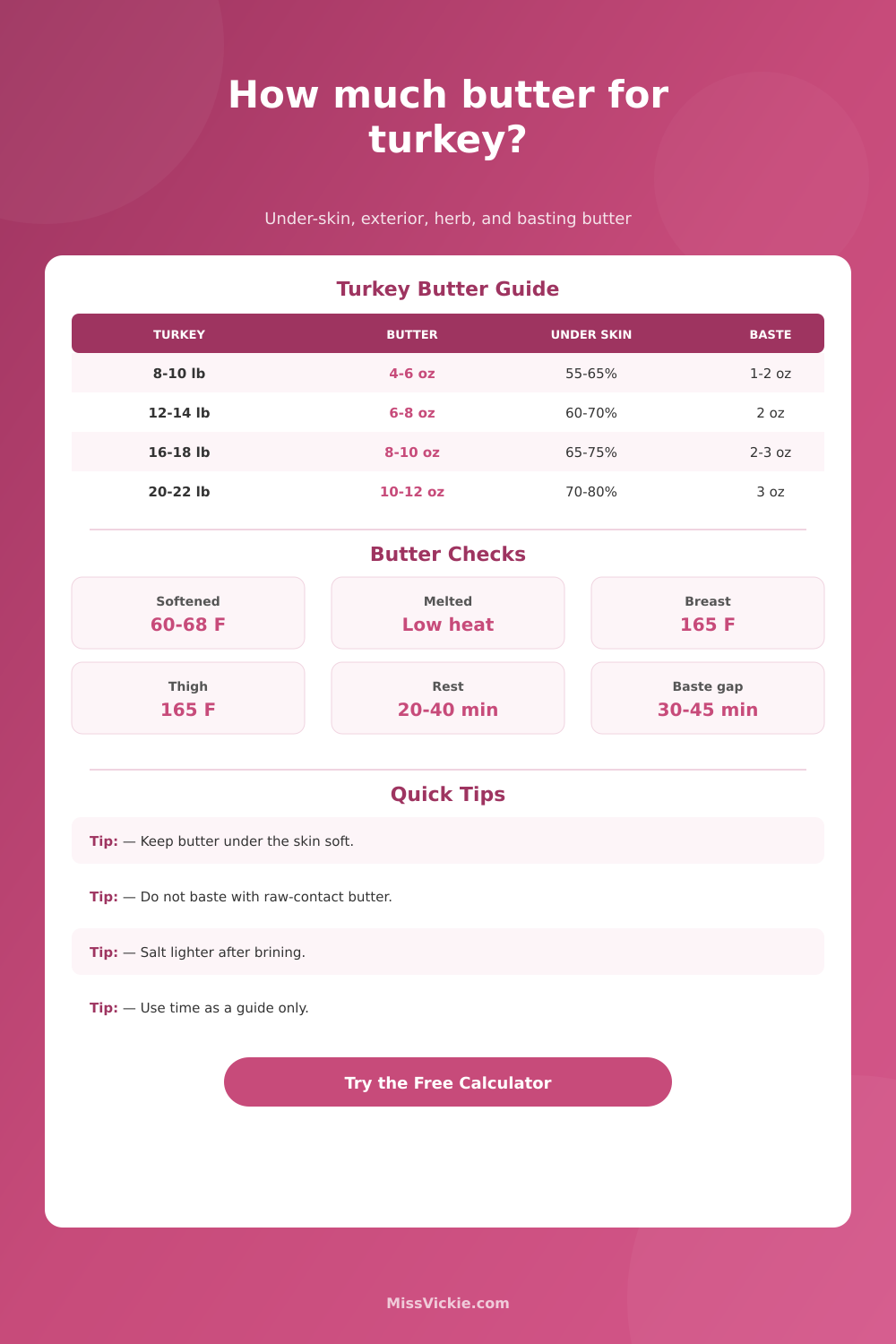
| Turkey Size | Standard Butter | Under-Skin Share | Exterior or Baste Reserve |
|---|---|---|---|
| 8 to 10 lb whole turkey | 4 to 6 oz / 113 to 170 g | 2.5 to 4 oz for breast and thighs | 1.5 to 2 oz for skin and basting |
| 12 to 14 lb whole turkey | 6 to 8 oz / 170 to 227 g | 4 to 5.5 oz tucked under skin | 2 to 3 oz exterior or clean reserve |
| 16 to 18 lb whole turkey | 8 to 10 oz / 227 to 283 g | 5.5 to 7.5 oz under skin | 2.5 to 3.5 oz exterior or basting |
| 20 to 22 lb whole turkey | 10 to 12 oz / 283 to 340 g | 7 to 9 oz under skin | 3 to 4 oz exterior or basting |
| 4 to 7 lb turkey breast | 2.5 to 4.5 oz / 71 to 128 g | 65% to 80% under breast skin | Keep basting light to protect browning |
🧈 Softened vs Melted Butter Table
| Butter State | Best Use | Roast Stage | Kitchen Note |
|---|---|---|---|
| Softened butter | Under the skin and breast coverage | Prep before roasting | Soft enough to spread, not liquid or broken. |
| Melted butter | Clean basting reserve | Mid-roast only | Hold separately from raw-contact prep butter. |
| Clarified butter or ghee | High-browning exterior brushing | Start or late stage | Less milk solids, so it tolerates more heat. |
| Pan butter with drippings | Drizzle after cooked through | Resting or carving | Use only after the turkey reaches safe temperature. |
✅ Turkey Safety and Temperature Table
| Check Point | Safe Target | When to Check | Butter Note |
|---|---|---|---|
| Thickest breast | 165°F / 74°C | Near the low end of roast estimate | Butter helps browning but does not prove doneness. |
| Innermost thigh | 165°F / 74°C | With the breast temperature check | Avoid bone when probing. |
| Stuffing center | 165°F / 74°C | Before removing stuffed turkey | Do not rely on butter color or skin color. |
| Raw-contact butter | Cook thoroughly | Only before or during roast | Do not brush it on after cooking. |
| Clean basting butter | No raw contact | Mid-roast in small portions | Keep it separate in a clean cup. |
🧭 Butter Coverage Grid
Best for lean breast meat because the butter stays where heat can melt it slowly.
Good for browning, but a heavy exterior layer can slide into the pan early.
Use clean melted butter in small passes so the oven does not lose heat too often.
Use less salt for brined, injected, kosher, or heavily seasoned turkeys.
💡 Turkey Butter Tips
The turkey is buttered up: Butter isn’t just an ingredient; it’s part of the structure of the bird itself. Purchase the finest turkey available, but place fat in all the wrong places, and your thighs will be underdone while the breasts are dry. While most recipes lumps butter into one category, that doesn’t work. Melted basting butter does one job; softened compound butter do another, and when they’re combined dinner is ruined. This tool lets you split those tasks without having to guess which goes where.
First: What’s your butter doing? Is it softened, meaning that it will yield to a knife blade but not melt? And will it keep the bird from getting dry? Because the butter goes on top of the breast meat. Its leanest section, the butter must stay up against skin. You don’t want melted butter for this job. That’s for basting only; you’ll apply it later to help brown the bird while avoiding any raw germs. Food-safety rules requires keeping those butter pools distinct. A spoon in the raw-turkey-dripping butter pool can’t go back into the reserved clean butter bowl for basting duty. The calculator makes you state this split in work, keeping some clean butter for later.
How to Use Butter on Turkey
How much? How much butter on a little bird? Too many home cooks goes overboard, thinking that more butter make it richer, but it doesn’t. It’s typically a waste of time (and butter) and leaves them with a greasy-skinned bird. As a general rule of thumb, about half an ounce of butter per pound of bird will suffice for a nice coating. But you can adjust that figure in the input fields; it still keeps with the math. You need just enough fat to rub into meat and carry your herbs, without slippage before proteins set. The reference table show why a bigger bird actualy needs slightly fewer total ounces of fat despite having more surface area; a twelve-pound bird needs slightly less fat then an eighteen-pound one.
The technique is more important than herb selection. Finely chopped herbs work best; too coarse and the air pockets will prevent the fat from sticking to meat. Think paste, not sprinkle. Herbs that hold up in heat (meaning don’t get bitter) like sage, thyme, and parsley are always safe choices. Keep garlic mild; burned garlic = gross. Most folks go overboard on the salt. If you’ve brined your bird, there’s no need for highly salted butter. In fact, go easy. The brine seasonings will have worked their way deep into meat, so topping with extra salt will form an acrid crust. Adjust amount of salt recommended by the calculator based off whether you brined the bird to avoid a puckery mouthful in the middle.
Don’t worry about basting, because it’s usually more harmful than helpful. Opening the oven door lets heat escape and prolongs the cooking process; besides, the longer breast sits in the oven, the dryer it gets. Use a fresh reserve of melted butter if basting is your thing; and be careful with it. Once or twice would of been enough.
The timing entries guide you as to when to stop… and let the bird rest. Why? Because resting helps juices redistribute throughout meat. When you cut into a hot turkey, those juices won’t end up on your plate, they’ll land on your cutting board, not in your mouth. Let it rest for a minimum of twenty minutes. By this point the butter has done its work: the skin is all browned and the meat is well-protected. Patience makes a good meal great, and you must master it now.