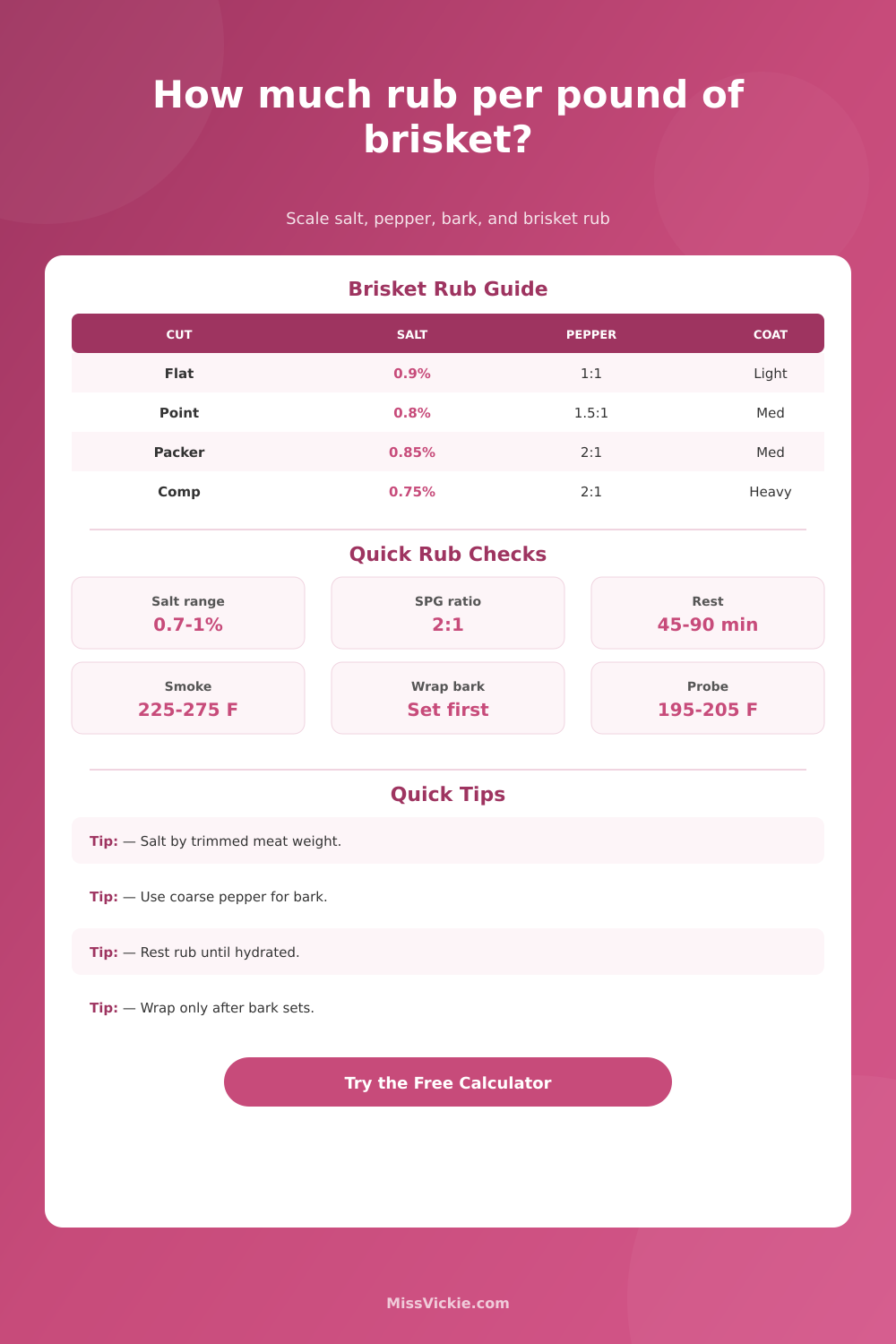
Brisket weight, trim, surface area, salt percent, pepper ratio, bark, rest, and smoke prep
Brisket Rub Per Pound Calculator
Estimate total brisket rub from post-trim meat weight and brisket surface area, then split the batch into salt, pepper, sugar, chile, garlic, and savory spices for your bark target.
Start with a real brisket setup, then tune weight, trim level, surface area, rub style, salt target, pepper ratio, bark target, rest time, smoker temperature, and wrapping plan.
Brisket rub plan
Salt is calculated by post-trim meat weight; coating is checked against brisket surface area.
Rub Batch Breakdown
| Brisket Setup | Salt by Meat Weight | Typical Pepper Ratio | Total Rub Per Raw Pound | Best Use |
|---|---|---|---|---|
| Lean flat only | 0.8% to 0.95% | 1:1 to 1.5:1 | 0.38 to 0.55 oz | Even slices, milder bark, shorter rest before smoking. |
| Whole packer brisket | 0.75% to 0.9% | 1.5:1 to 2:1 | 0.45 to 0.7 oz | Classic barbecue bark on mixed lean and fatty sections. |
| Point or burnt-end trim | 0.7% to 0.85% | 2:1 to 2.5:1 | 0.5 to 0.8 oz | Rich fatty meat that can carry extra pepper and chile. |
| Competition brisket | 0.65% to 0.8% | 1.5:1 to 2:1 | 0.65 to 0.95 oz | Layered rub, strong color, careful salt control. |
| Surface Area Shortcut | Approx Area | Rub Coat Rate | Rest Before Smoke | What To Watch |
|---|---|---|---|---|
| Flat, close trimmed | 40 to 48 sq in per lb | 0.55 to 0.75 g per sq in | 30 to 75 min | Lean surface can taste salty if the rest runs overnight. |
| Packer, standard trim | 28 to 36 sq in per lb | 0.65 to 0.9 g per sq in | 45 to 120 min | Coat edges and thin flat corners lightly. |
| Point, fatty trim | 30 to 40 sq in per lb | 0.75 to 1 g per sq in | 60 to 180 min | Pepper sticks well, but sugar can darken early. |
| Measured custom area | Your input | Match bark target | Match salt level | Use manual mode for unusually wide or thin briskets. |
| Smoking Plan | Rub Choice | Temp Range | Wrap Cue | Bark Effect |
|---|---|---|---|---|
| Low and slow overnight | Salt-pepper or SPG | 225°F to 240°F | Wrap when bark is dry and set | Deep smoke color, long rub hydration, lower scorch risk. |
| Day cook balanced | SPG or coffee chile | 250°F to 265°F | Paper at stall if bark is firm | Strong bark without pushing sugar too hard. |
| Hotter backyard cook | Low sugar pepper rub | 275°F to 300°F | Foil boat or paper after color | Fast bark set; keep sweet rubs light. |
| Competition style | Layered savory-sweet | 250°F to 275°F | Wrap after color and surface tack | Bold color, planned rub layers, softer wrapped finish. |
Use post-trim brisket weight for salt so flats and packers stay consistent.
Coarse black pepper builds texture on long cooks better than fine pepper.
A hydrated rub looks darker and damp before it enters the smoke.
Do not wrap by clock alone; the rub should resist a light touch.
This calculator estimates seasoning weight for planning. Meat shape, brand grind, salt crystal size, binder thickness, humidity, pit airflow, and cook temperature can all change how brisket bark forms.
There’s nothing quite like it: the smoker is cold, the charcoal is lit, and there it sits, twelve pounds of what appears to be wet leather. You grasp the pepper grinder in one hand and the salt shaker in the other, but have no clue about how much to use. Everyone knows that seasoning is decorative; sprinkle until it becomes attractive.
Wrong. It’s not decoration, it’s chemistry. It seeps into the fibers of meat. It extracts moisture so smoke flavor can stick. It creates a protective barrier around lean edges to prevent drying. Screw this equation, and you’ll wind up with a slab that tastes either like a salt lick or plain boiled beef. Choose your poison.
How to Season Your Meat Correctly
You’ll notice that the calculator (above) does all the math for you when you enter your trim level and meat weight, no guesswork with coefficients or anything. However, knowing why those numbers are critical makes all the difference between being a consistent and lucky cook. Total raw weight isn’t even the biggest factor; weight of your trimmed brisket is. Salt doesn’t penetrate fat. So if you base your seasoning based off untrimmed weight, you’re going to under-season the meat’s actual muscle tissue.
The calculator accounts for this by estimating how much your trimmed brisket will weigh, given type of trim style you select. For instance, a competition trim cuts out way more silver skin and fat than a typical backyard standard trim. This leaves way more lean surface area exposed to seasoning. In other words, if you have a high trim but low salt percentage, it’ll taste bland. To compensate for the higher surface area, you’ve got to increase your coating rate.
And then there’s the pepper ratio. It is famous for its simplicity: salt and coarse black pepper make a Texas-style rub. But the ratio matters. Common starting places include a two-to-one pepper-to-salt ratio (e.g., 2 pounds of peppercorns to 1 pound of Kosher salt), which produces a dark, textural bark that stands up to extended cooking time. The pepper adds both heat and body. It has to be a coarse grind, no negotiating here. At high temps, fine pepper will burn bitter and dissolve into the meat without any texture on the crust.
With the calculator, you can dial in the ratio. You can lean more heavily on pepper if you’re smoking a fatty point cut that can take it, or back off if you’re working with a leaner flat that could get dried out under a heavy spice load.
The opposite of bark is what happens when you fail to form it. You want some kind of crust that’s dark and sticky and carries flavor. This is where sugar comes in. But sugar isn’t stable. At higher temperatures, too much sugar will burn your food to an acrid, burnt state. There’s no salvaging a piece of meat cooked like that with sauce.
So how does the tool help? The goal here was for you to be able to see this trade-off. How thick of a bark do you want? Do you have the meat covered in something (i.e., binder) and plan to let it sit while the spice rehydrates? If you select a heavy bark, the tool assumes you have already done this and tells you to rest the meat before it goes into the smoker.
Yes, I said until it goes into the smoke. Not after the meat has been seasoned, but before. Letting the seasoned brisket sit for 45-90 minutes before placing it in the smoke doesn’t mean you’re being lazy; it gives the salt time to dissolve into the meat and start breaking down surface proteins. If you don’t give the meat time to rest, your spices aren’t going to stick, instead, they’ll simply sit on the meat then fall off as you handle it. What you end up with is a dry, pale outside and a bland bite.
The other side of this: Timing. Decide when to wrap. It is not by the calendar. By the bark. “Too soon and you’ve steamed off some of that rub’s flavor. Too late and you might burn up some sugars.” That table on the page spells it out; your type of rub informs your timing on the wrapper. Sweet SPG blends requires help with the heat as they deepen in color. Low-sugar savory barks can go longer without the wrapper. It is a little thing, but it is important. We’re trying to protect what we worked so hard to create at the top end.
It all comes down to precision and patience. Your nose knows, your eyes know. Use the numbers from the calculator but follow the scent, the feel of the meat until it’s done. You’re looking for an inviting flavor that honors the beef, a yield in the meat, a crust that shatters. Begin with the correct salt percentage for your trimmed weight, create a bark that can endure the stall, and let it happen. Then you’ve got a slab of tough meat transformed into something deserving of the long wait.
Actually, it should of been much easier. If you follow these rules, you’ll recieve better results every time. It’s more moddern than old ways of doing things.