Batter Per Cupcake Calculator
Estimate the batter needed for mini, standard, tall, and jumbo cupcakes using cup size, liner fill level, batter density, leavening expansion, yield target, pan count, and batch scaling.
🧁 Cupcake Batch Presets
Choose a common cupcake plan, then adjust the cup size, liner fill level, batter style, recipe yield, and overage for your pan.
⚖ Batter And Pan Details
Cupcake batter plan
Fill level, batch yield, pan count, and batter weight will appear here.
Portion Breakdown
Batch Breakdown
📏 Quick Batter Measures
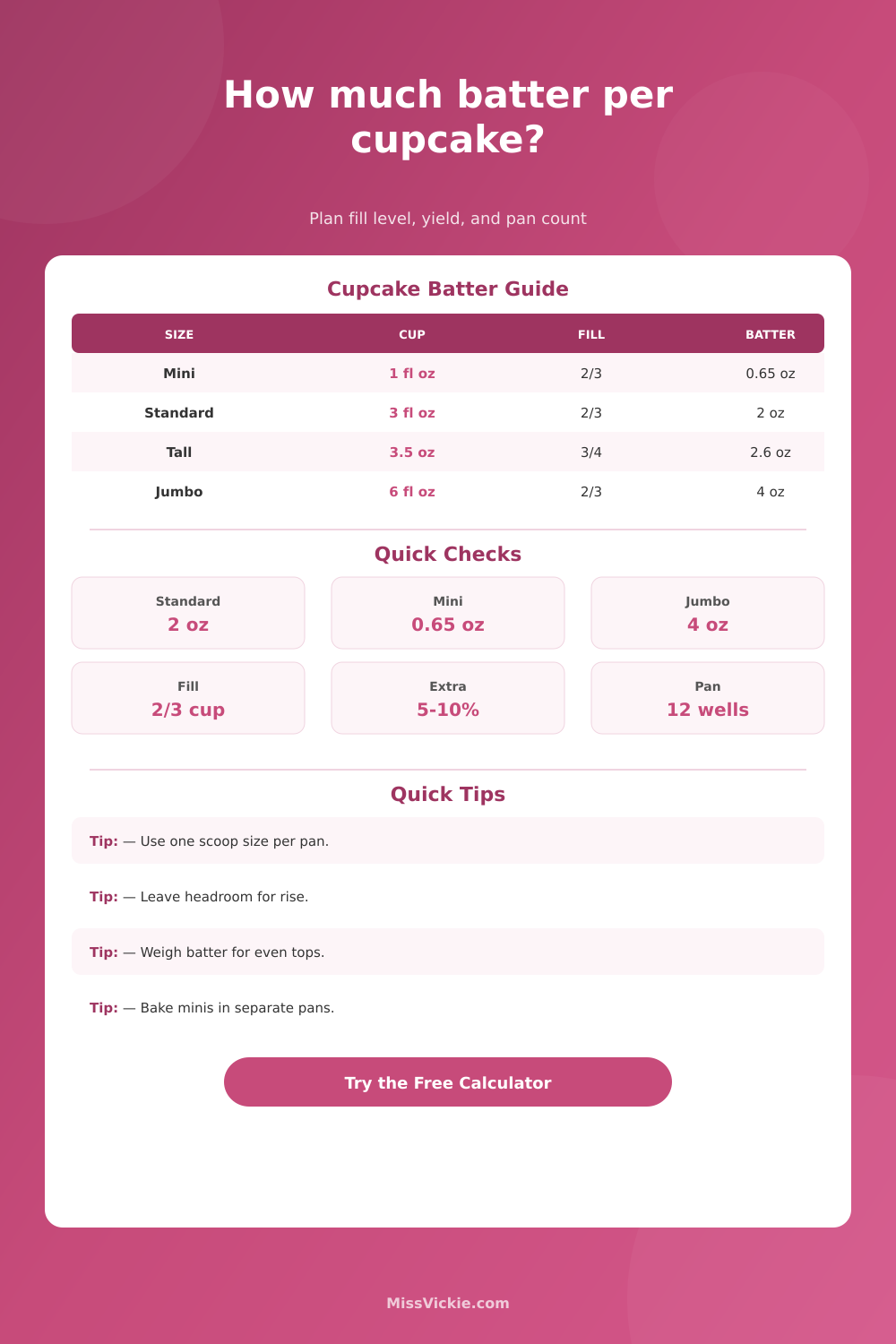
📋 Standard, Mini, And Jumbo Fill Tables
| Cupcake Size | Typical Liner Capacity | 2/3 Fill Batter | 3/4 Fill Batter | Common Pan Count |
|---|---|---|---|---|
| Mini cupcake | 0.9 to 1.1 fl oz, 27 to 33 ml | 0.6 to 0.75 fl oz, 18 to 22 ml | 0.7 to 0.85 fl oz, 21 to 25 ml | 24 or 48 wells per pan |
| Standard cupcake | 2.75 to 3.25 fl oz, 81 to 96 ml | 1.8 to 2.2 fl oz, 53 to 65 ml | 2.1 to 2.45 fl oz, 62 to 72 ml | 12 wells per pan |
| Tall bakery liner | 3.25 to 3.75 fl oz, 96 to 111 ml | 2.2 to 2.5 fl oz, 65 to 74 ml | 2.45 to 2.8 fl oz, 72 to 83 ml | 12 wells per pan |
| Jumbo cupcake | 5.5 to 6.5 fl oz, 163 to 192 ml | 3.7 to 4.3 fl oz, 109 to 127 ml | 4.1 to 4.9 fl oz, 121 to 145 ml | 6 wells per pan |
| Batter Style | Density Range | Rise Behavior | Suggested Fill | Calculator Note |
|---|---|---|---|---|
| Vanilla butter cake | 0.94 to 1.00 g/ml | Medium dome with standard baking powder | 2/3 full for even tops | Good baseline for most boxed or scratch cupcake batters. |
| Chocolate batter | 0.90 to 0.98 g/ml | Loose batter spreads before it rises | Just under 2/3 to 2/3 full | Thin chocolate batter can creep over the liner if overfilled. |
| Pound cake batter | 1.05 to 1.18 g/ml | Low to moderate rise, heavy crumb | 2/3 to 3/4 full | Dense batter weighs more at the same scoop volume. |
| Chiffon or sponge | 0.78 to 0.88 g/ml | High expansion from whipped eggs | 1/2 to just under 2/3 full | Airy batter needs more headroom than butter cake. |
| Muffin-style batter | 1.02 to 1.14 g/ml | Strong crown when thick and rested | 2/3 to 3/4 full | Use the high-fill setting only when a muffin crown is desired. |
| Batch Goal | Mini Batter | Standard Batter | Jumbo Batter | Pan Planning |
|---|---|---|---|---|
| 6 cupcakes | 0.5 cup plus scrape extra | 1.5 cups plus scrape extra | 3 cups plus scrape extra | One partial pan; fill empty wells with a little water. |
| 12 cupcakes | 1 cup plus scrape extra | 3 cups plus scrape extra | 6 cups plus scrape extra | One standard pan or two jumbo pans. |
| 24 cupcakes | 2 cups plus scrape extra | 6 cups plus scrape extra | 12 cups plus scrape extra | Two standard pans or one 24-well mini pan. |
| 48 cupcakes | 4 cups plus scrape extra | 12 cups plus scrape extra | 24 cups plus scrape extra | Four standard pans; rotate pans for even baking. |
| 96 cupcakes | 8 cups plus scrape extra | 24 cups plus scrape extra | 48 cups plus scrape extra | Plan several baking rounds and keep batter chilled if needed. |
🔬 Batter Density And Yield References
Equals 8 fl oz before batter density is applied.
Approximate weight of 1 cup at 0.96 g/ml.
Most 2/3-filled standard cupcakes use about this much.
Baked expansion near the rim can spill over.
💡 Cupcake Batter Notes
The calculator estimates batter volume and weight before baking. Final height still depends on oven temperature, mixing method, pan color, liner stiffness, and recipe leavening strength.
It usually begins with excitement and ends with a gooey hot mess on the oven rack. You’ve got good liners and your batter looks delicious. And I’ll bet you want to fill them full, full enough that they appears pillow-like.
Batter isn’t water. It has structure and weight. When heated, it wants to expand. That means you need to plan for its expansion, otherwise it will spill over baking unevenly into a cupcake-shaped disaster.
How to Fill Cupcake Liners
But no more! Enter the calculator above. Not only does it tell you how much batter to pour, it says how much space you should of allow for it to rise. This makes all the difference between cupcakes with professional domed tops and an oven mess.
What’s the deal with liner capacity vs fill level? When using standard cupcake liners (not mini), filling them all the way to top will yield roughly three fluid ounces of product. That means nope. Industry standard is a two thirds fill so there’s space inside the cupcake to rise upward. That way the cake forms a nice rounded dome shape instead of oozing over side of the paper.
So the tool takes into account which liner size you select and adjusts based off your desired fill percentage. Bump it up to three quarters if you’re baking super tall bakery-style cupcakes. Do this only if your oven can handles a longer bake time.
Minis are another story: since their structure isn’t as strong and they’ll also dry out more quickly, you may need a reduced fill percentage in order to get that delicate crumb.
The other thing most home bakers don’t think about until it’s too late is batter density. A thick pound cake batter will weigh heavier per ounce then a light chiffon mixture. And why does this matter? This matters because it affects how the batter spreads before it set. Light batters will spread out thin and rise up higher (more aggressively), whereas a heavy batter tends to be thicker and rises up vertically (staying put).
Choosing a heavy batter style in the calculator will increase the estimated weight. This helps you know whether your mixer can handles the batch, or if you need to split it. The density setting converts volume to weight, so now you have a realistic idea of what you’re mixing up. It may sound like a little detail but it keeps you from having an under-mixed bowl.
Most tripping-up variable: Leavening expansion. Some recipes call for whipped egg whites; others are leavened with baking soda or powder. Amounts vary per recipe. With the calculator you can dial in for this. Set the higher setting if your recipe is one noted for big domes. What happens? It will tell the system to leave even more headroom in the liner (as a safeguard against overflow).
Makes sense when you look at reference tables they provide on the page. Those depict typical ranges by type of batter, showing how a fluffier vanilla sponge will behave different than a denser chocolate.
But the real saving grace is that it scales the recipe for you without any mental math fumbling. So if you want 24 regular-sized cupcakes but you have a base recipe that produces 12, you’ll need to multiply the ingredients by two and then add a little extra to account for the batter that gets stuck to bowl. But you’ll also have to consider scrapes and losses as you scoop batter into the tins. A little batter gets stuck on the whisk and in the bowl. The calculator automatically factors that scrape-loss in by adding a tiny extra amount (typically five to ten percent). Better to have some batter left sitting in a bowl when people come over than to be scrambling with half an hour to go.
The output informs you exactly how much you’ll need to make, and what batch multiplier to use. Easy.
Last but not least, think about the number of pans that fit in your oven. Multiple baking pans may result in an unevenly heated oven. This tool calculates your total number of full pan required and whether you’ll end up with a partial pan to deal with. Remember: if you’re left with a half-empty pan, fill any remaining wells with a splash of water to protect your paper liners from scorching and ensure they all bake evenly on the same rack. It is a little trick but it matters.
Add some buffer for spillage, use realistic estimates for expansion and get your fill level just right, and you no longer guess, you bake with confidence. Simple math, big payoff. Accidental-looking cupcakes? No more. Intentional looking cupcakes? Yes please.