Water for Taco Seasoning Calculator
Calculate the right water, sauce yield, simmer time, tomato adjustment, and sodium dilution for packet, homemade, low-sodium, bulk, or restaurant-style taco seasoning.
🌮 Taco Night Presets
Choose a common taco filling, then fine-tune the seasoning source, meat or beans amount, skillet evaporation, tomato add-ins, sauciness, sodium strength, and simmer time.
⚖ Seasoning and Filling Details
Classic taco seasoning water
Add water after browning and draining, then simmer until the seasoning coats the filling.
Water and Sauce Breakdown
Seasoning Strength Check
📏 Taco Seasoning Benchmarks
📋 Water Ratios by Seasoning Source
| Seasoning Source | Typical Mix Amount | Base Water | Sodium Behavior | Best Use |
|---|---|---|---|---|
| Regular store-bought packet | 1 packet for 1 lb browned meat | 2/3 cup water before simmering | Usually the saltiest option; dilution is mostly done with extra filling or tomato. | Classic skillet beef, turkey, or pork tacos. |
| Low-sodium packet | 1 packet for 1 lb browned meat | 2/3 to 3/4 cup water | Lower salt can handle a slightly saucier finish without tasting harsh. | Turkey tacos, family dinners, and meal prep bowls. |
| Homemade fine-ground blend | 3 tablespoons for 1 lb filling | 1/2 to 2/3 cup water | Salt varies by recipe; add water first, then adjust salt after simmering. | Small-batch beef, beans, lentils, and vegetable fillings. |
| Homemade chunky spice blend | 3 to 4 tablespoons for 1 lb filling | 3/4 cup water | Dried onion, garlic, and chile flakes absorb more liquid as they soften. | Restaurant-style taco meat with visible seasoning texture. |
| Bulk restaurant-style mix | 2 1/2 to 3 tablespoons for 1 lb filling | 2/3 cup water | Often salty and starchy; extra water helps bloom spices, then simmer to cling. | Taco bars, batch cooking, and steam-table holding. |
| Taco seasoning paste | 2 tablespoons for 1 lb filling | 1/3 to 1/2 cup water | Already hydrated and seasoned, so it needs less water than dry powder. | Fast skillet tacos and thick saucy fillings. |
| Sauce-style seasoning pouch | 1 pouch for 1 lb filling | 0 to 1/4 cup water | Most liquid is already in the pouch; water mainly loosens the pan glaze. | Very quick tacos or fillings that will be held warm. |
🍲 Filling, Tomato, and Evaporation Guide
| Calculator Factor | Setting | Water Effect | Sauce Yield Effect | Kitchen Note |
|---|---|---|---|---|
| Meat or beans amount | Ground meat, beans, lentils, or mixed filling | More filling scales the water, but beans need about 15 to 25 percent less than browned meat. | Beans and lentils thicken sauce as starch releases during simmering. | Drain canned beans unless you want a looser filling. |
| Desired sauciness | Dry shells, classic skillet, saucy soft tacos, bowls, or nachos | Dry fillings reduce water; saucy bowls increase water by about 20 to 35 percent. | Saucy settings finish with more spoonable liquid around the filling. | Crunchy shells usually need less sauce to avoid breakage. |
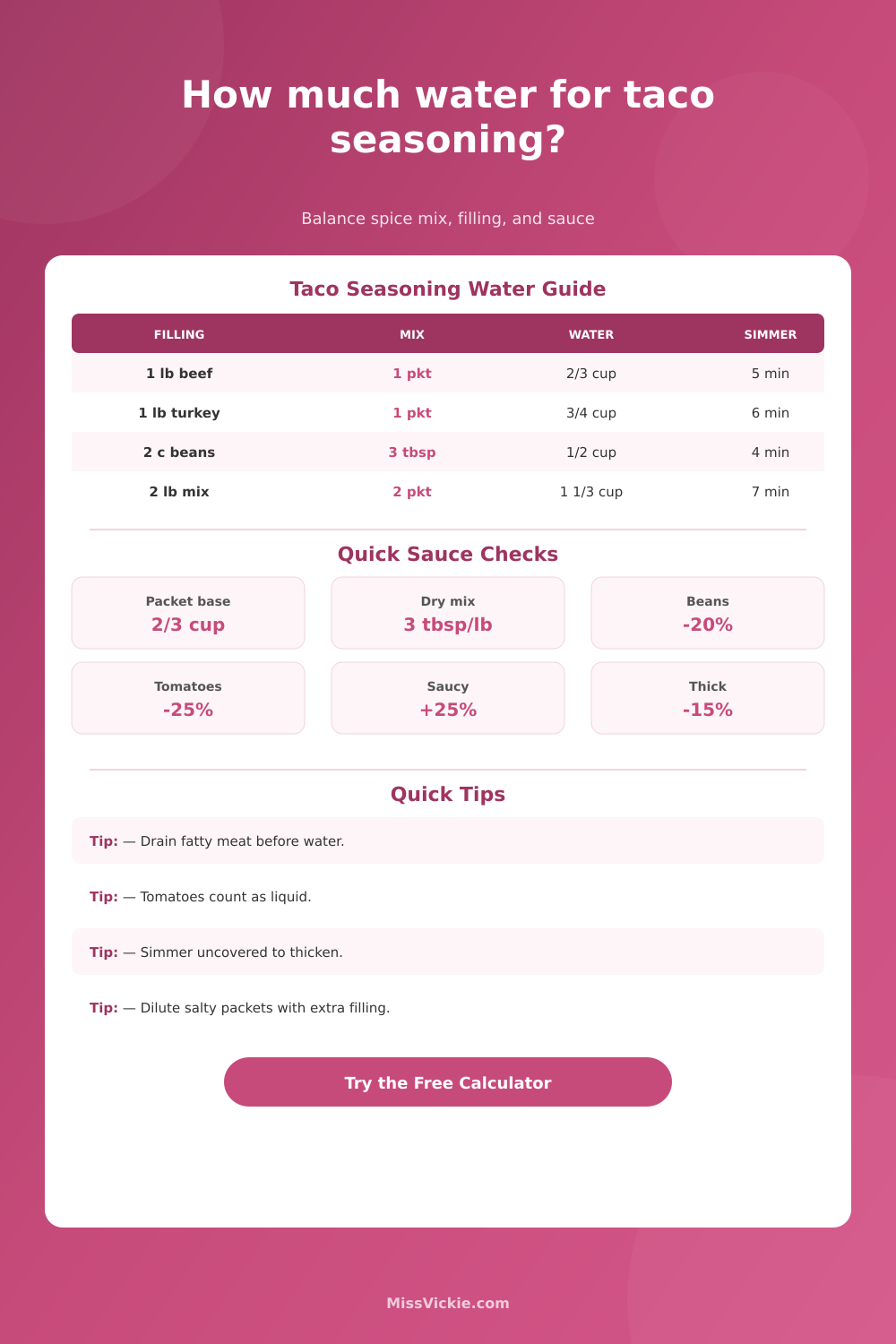
| Tomato add-ins | Salsa, diced tomatoes, sauce, paste, fresh tomato, or tomatoes with chiles | Watery tomatoes subtract from added water; tomato paste needs extra water to loosen. | Salsa and sauce increase total sauce yield even when added water drops. | Drain diced tomatoes for thicker taco meat. |
| Skillet evaporation | Covered pan, normal skillet, wide skillet, high heat, or slow cooker | Wide pans and high heat add water to replace faster steam loss. | Slow cookers keep yield higher; wide pans concentrate sauce faster. | Simmer uncovered for the most predictable thickening. |
| Simmer time | 1 to 30 minutes | Extra minutes reduce finished sauce and concentrate salt. | Long simmering gives clingy sauce but can dry lean turkey. | Add a tablespoon of water at a time if the pan gets pasty. |
| Sodium dilution | Standard, milder, lower sodium, concentrated, or kid-friendly | Milder settings add water but also recommend extra unsalted filling when salt remains high. | Diluted sauce tastes rounder if simmered until glossy. | Water can dilute salt concentration, but it cannot remove salt. |
🥣 Common Batch Amounts
| Batch | Seasoning | Classic Water | Tomato-Friendly Water | Expected Sauce Yield |
|---|---|---|---|---|
| 1 lb ground beef | 1 packet or 3 tbsp homemade mix | 2/3 cup | 1/3 to 1/2 cup with salsa | About 1 cup finished sauce after simmering. |
| 1 lb ground turkey | 1 packet or 3 tbsp homemade mix | 3/4 cup | 1/2 cup with tomato sauce | About 1 1/8 cups because lean meat has less fat. |
| 2 cups cooked beans | 2 to 3 tbsp homemade mix | 1/2 cup | 1/4 to 1/3 cup with salsa | About 3/4 cup thick starchy sauce. |
| 2 lb beef and beans | 2 packets or 6 tbsp homemade mix | 1 1/4 to 1 1/2 cups | 3/4 to 1 cup with tomatoes | About 2 cups taco sauce for bowls or burritos. |
| 3 lb meal prep | 3 packets or 9 tbsp homemade mix | 2 cups | 1 1/4 to 1 1/2 cups with tomato add-ins | About 3 cups finished sauce before chilling. |
| 5 lb taco bar | 5 packets or 15 tbsp bulk mix | 3 1/3 cups | 2 1/4 to 2 3/4 cups with tomato | About 5 cups sauce, then hold warm gently. |
🧂 Sodium and Sauce Yield Reference
Approximate sodium per serving when one packet seasons one pound of meat for four servings.
Lower-salt packets still need simmering so the starch can thicken the sauce.
Depends on added salt; unsalted blends can be seasoned after the sauce reduces.
Add unsalted filling or tomato for a gentler sodium concentration.
💡 Taco Seasoning Water Notes
The calculator estimates water for skillet taco filling. Actual results vary with packet brand, salt level, tomato thickness, pan width, heat level, fat drainage, and how long the filling is held warm.
Taco meat cooking has been your dilemma all along: brown some ground beef, stir in some seasoning, pour in a little water, and either end up with soup or something that’s far more dry. Because there are no exact measurements and most people just wing it (based off their hazy recollection of an ancient recipe), water doesn’t behave. It vary by spice brand, pan, and type of meat. If only you could get this ratio correct, everything would taste better.
Instead of a mess in the pan, you have a cohesive filling. No more soggy taco shell, either; the sauce will stick and not drip onto your shirt. And the calculator does all of this math for you. There’s no guesswork. There are no conversions. There are no coefficients. The tool goes beyond what packet says.
How to Make Perfect Taco Meat
It factors in the liquid volume of your tomatoes to subtract from the recommended water amount. It factors in how quickly heat evaporates off of your skillet. What kind of meat you’re using. Does it have high fat content or is it lean like turkey? If it is lean, it lets off fewer drippings. This means you need a bit more liquid to avoid burning.
Then there are variables like a large pan versus a small pan. A large one will lose steam quicker. You’ll need to account for that by adding extra water initially. And this slight change can mean the difference between having a meal that stays together versus falling apart.
Tomatoes are another variable that confuses people. A common misconception about salsa is that it’s all flavor. In fact, it’s mostly liquid. Add in a cup of salsa and you’re adding a cup of water to the pot. Follow the classic advice of two-thirds cup water, but add in some salsa, and you’ll be drowning your dinner. To account for this, the tool does the subtraction for you, removing the liquid volume of any tomato-based add-ins from the recommended water.
Tomato paste is different because unlike whole tomatoes, it’s a thickener that requires hydration. Know the difference, and know how to control the consistency. You don’t want a pool of sauce at the bottom of the bowl; you want it to coat the meat.
One significant problem with store-bought packets of seasoning: they’re packed full of starches and, especially, sodium. Why? That is because salt makes them stick to the food, and too much salt will overpower your tongue if you get the proportion wrong. You may think you’ve solved this by diluting the packet further with additional water, but that just reduces the concentration. Instead, dilute it with something else: add more of the thing being filled. Add more rice, beans, or unsalted veggies to spread the salt over more food. How much should you add? The reference table provides a sodium dilution guide, which tells you how many cups of extra filling you’ll need to keep sodium at a reasonable level while still preserving flavor. So the spice comes through instead of the salt dominating everything.
The simmer time also matters greatly. If you only simmer for five minutes, the sauce will thicken slightly and the spices should release their flavor (which is why I say usually). But if you do that for twenty minutes, much of the water will boil off. The sauce will get salty and thick and concentrated. This is good if you like a really thick, nacho-like topping. It is bader if you are looking for a looser filling suitable for soft tortillas.
The calculator takes all this into account: it figures out how much evaporates, depending on the heat setting and type of pan you use. A covered pan holds steam, so your yield will remain higher. An open wide skillet lets go of steam, reducing the amount as well. Before you start cooking, you need to know what kind of thickness you prefer. Once it’s dry, adding more water is difficult. But making a soupy mixture thicker isn’t as hard.
Next, bloom the seasoning by throwing it in raw before adding any liquid. For half a minute, stir the spice-dry mixture into the drained, still-hot meat. This activates the chile powder and cumin. This releases their oils. This makes sure they stick to protein. Water added now would just wash away the spices (which then sit atop that grease layer). It is a small detail, but one that significantly changes how the flavor spreads. By the time the seasonings have stuck, your water becomes a single sauce instead of an isolated pool of broth. It brings everything together and makes it all taste like one thing.
A recipe isn’t everything. Ratios are everything. Ratios governs cooking. Your stovetop and your own tastes will adjust your final tweaks from the calculator’s starting point. Too runny? Simmer until it thickens up. Is it too thick? Splash in a little water. You’re looking for a spoonable sauce that coats the meat with a shiny gloss. Once you have the ratio down, there’s no more noticeable difference between a good taco and a great taco.
Measure the water first. It’s not an afterthought; it’s the sauce’s foundation. You should of checked the amount before starting.