Pasta Per Serving Calculator
Plan dry pasta ounces, cooked cups, sauce amount, appetite adjustments, leftovers, and nutrition estimates by pasta shape and meal role.
🍝 Pasta Serving Presets
Choose a real cooking scenario, then adjust the pasta shape, meal role, dry amount, cooked volume, sauce pairing, appetite, and leftovers.
⚖ Serving Details
Pasta serving plan
Enter your pasta details to calculate dry weight, cooked cups, sauce, and nutrition.
Portion Breakdown
Sauce and Nutrition
- Cook pasta in plenty of boiling water.
- Reserve starchy water before draining.
📏 Serving Size Quick Grid
📋 Pasta Shape Yield Reference
| Pasta Shape | Dry Main Serving | Cooked Yield | Dry Cup Weight | Best Sauce Pairing |
|---|---|---|---|---|
| Spaghetti, linguine, or fettuccine | 2 oz / 56 g | About 1 cup cooked per 2 oz dry | Loose nests vary; weigh for accuracy | Tomato, olive oil, pesto, cream, or seafood sauces |
| Penne, rigatoni, or ziti | 2 oz / 56 g | About 1.05 cups cooked per 2 oz dry | About 3.6 oz per dry cup | Chunky tomato, ragu, baked pasta, and cream sauces |
| Elbows or small macaroni | 2 oz / 56 g | About 1 cup cooked per 2 oz dry | About 4 oz per dry cup | Cheese sauce, pasta salad, soups, and casseroles |
| Shells, cavatappi, or orecchiette | 2 oz / 56 g | About 1.1 cups cooked per 2 oz dry | About 3.5 oz per dry cup | Cream sauce, tomato, baked dishes, and vegetable sauces |
| Orzo, ditalini, or soup pasta | 0.75 to 1.5 oz / 21 to 43 g | About 0.85 cup cooked per 2 oz dry | About 5.8 oz per dry cup | Broth, soups, pilaf-style sides, and pasta salads |
| Egg noodles | 2 oz / 56 g | About 1.15 cups cooked per 2 oz dry | About 2.8 oz per dry cup | Butter, stroganoff, casseroles, and creamy sauces |
| Whole wheat pasta | 2 oz / 56 g | About 1 cup cooked per 2 oz dry | Similar to matching shape | Tomato, roasted vegetables, pesto, and hearty sauces |
| Gluten-free pasta | 2 oz / 56 g | About 0.95 cup cooked per 2 oz dry | Similar to matching shape | Tomato, olive oil, and lighter sauces that will not mask texture |
| Tortellini or filled pasta | 3 oz / 85 g | About 1.25 cups cooked per 3 oz dry or refrigerated | Often sold by weight, not cup volume | Tomato, butter, broth, pesto, or light cream sauces |
Yield data uses common culinary portion references: most dried pasta doubles to about 1 cooked cup per 2 dry ounces, while tiny, hollow, filled, and egg noodle shapes vary.
🥣 Meal Role and Sauce Reference
| Meal Role | Dry Pasta Per Person | Cooked Cups Per Person | Good Sauce Amount | Planning Note |
|---|---|---|---|---|
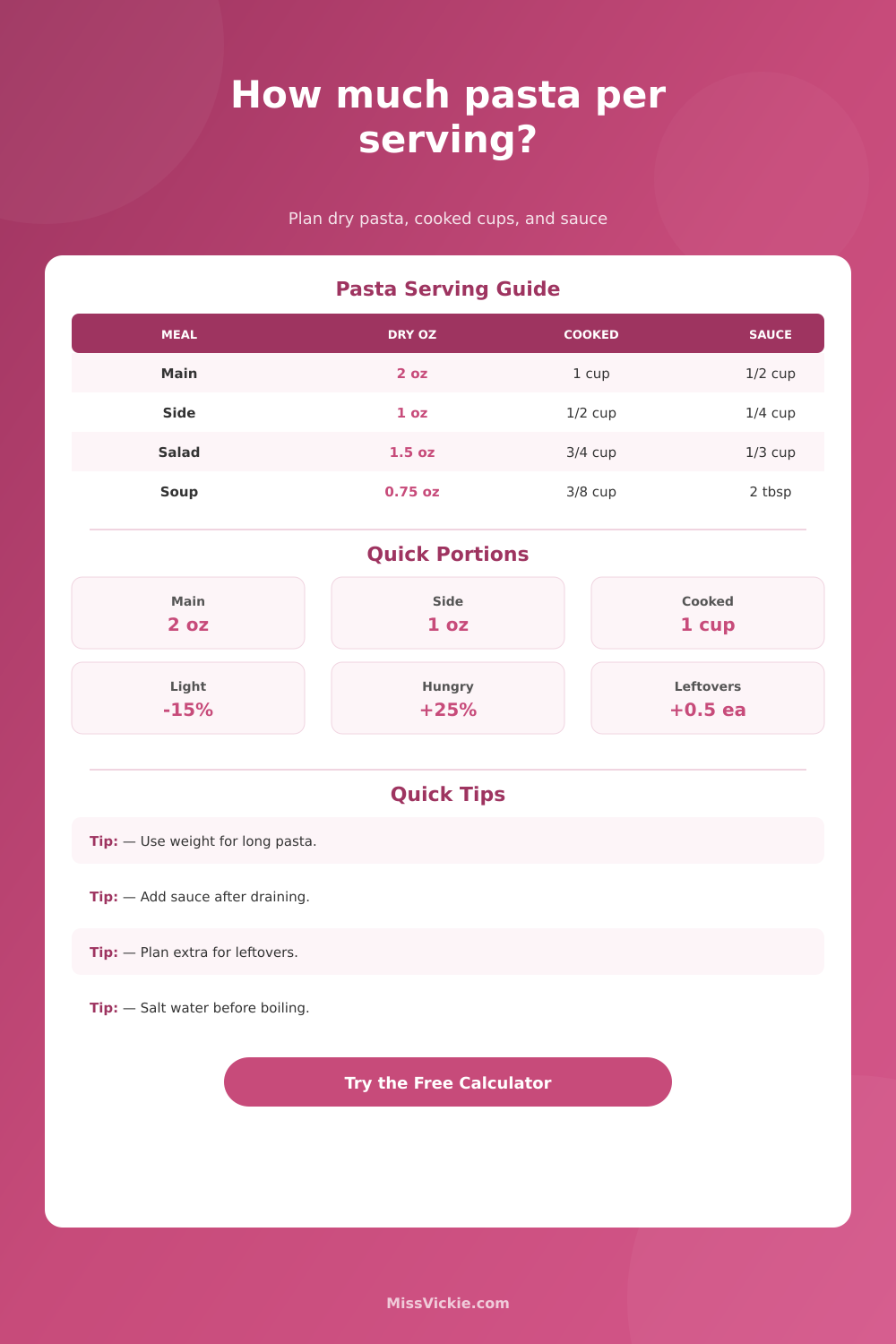
| Main dish pasta | 2 oz / 56 g | About 1 cup | 1/3 to 2/3 cup sauce | Use this for spaghetti dinners, weeknight pasta, and protein-topped plates. |
| Side dish | 1 oz / 28 g | About 1/2 cup | 2 to 4 tbsp sauce | Good beside meat, fish, vegetables, or a larger main course. |
| Pasta salad | 1.5 oz / 43 g | About 3/4 cup | 1/4 to 1/3 cup dressing | Cold pasta firms as it chills, so keep dressing available for refreshing. |
| Soup pasta | 0.75 oz / 21 g | About 3/8 cup | Broth based | Tiny shapes continue absorbing liquid after cooking. |
| Baked casserole | 1.75 oz / 50 g | About 7/8 cup | 1/2 cup sauce | Undercook pasta slightly before baking so it does not turn soft. |
| Buffet or potluck | 1.5 oz / 43 g | About 3/4 cup | 1/3 to 1/2 cup sauce | Use a buffer because servings vary and trays sit longer. |
| Kids portions | 1.25 oz / 35 g | About 5/8 cup | 1/4 cup sauce | Works for younger eaters or as part of a plate with sides. |
| Sauce Type | Per Main Serving | Per Side Serving | Best With | Kitchen Note |
|---|---|---|---|---|
| Tomato or marinara | 1/2 cup / 120 ml | 1/4 cup / 60 ml | Spaghetti, penne, shells, whole wheat pasta | Reserve pasta water if sauce is thick or reduced. |
| Cream, Alfredo, or cheese sauce | 1/3 cup / 80 ml | 3 tbsp / 45 ml | Fettuccine, elbows, egg noodles, shells | Start lighter; cream sauces coat more heavily than tomato. |
| Pesto or herb oil | 3 tbsp / 45 ml | 1 to 2 tbsp / 15 to 30 ml | Linguine, penne, tortellini, pasta salad | Thin with warm pasta water instead of adding much more pesto. |
| Olive oil, garlic, or butter | 2 tbsp / 30 ml | 1 tbsp / 15 ml | Long pasta, orzo, egg noodles, vegetable pasta | Starchy water turns oil into a light coating sauce. |
| Meat sauce or ragu | 2/3 cup / 160 ml | 1/3 cup / 80 ml | Rigatoni, ziti, shells, spaghetti | Chunky sauce can serve as both sauce and protein. |
| Baked pasta sauce | 1/2 cup / 120 ml | 1/3 cup / 80 ml | Ziti, elbows, shells, cavatappi | Use enough sauce to cover pasta before baking. |
| Pasta salad dressing | 1/3 cup / 80 ml | 1/4 cup / 60 ml | Rotini, shells, elbows, orzo | Add part while warm and refresh before serving. |
| Broth or soup base | 2 tbsp / 30 ml flavor base | 1 tbsp / 15 ml flavor base | Orzo, ditalini, stars, broken spaghetti | Cook pasta separately for clearer broth and better leftovers. |
🍲 Common Quantity Table
| Group Size | Main Dish Dry Pasta | Side Dish Dry Pasta | Cooked Main Yield | Tomato Sauce Estimate |
|---|---|---|---|---|
| 2 people | 4 oz / 113 g | 2 oz / 56 g | About 2 cups | 1 cup / 240 ml |
| 4 people | 8 oz / 227 g | 4 oz / 113 g | About 4 cups | 2 cups / 475 ml |
| 6 people | 12 oz / 340 g | 6 oz / 170 g | About 6 cups | 3 cups / 710 ml |
| 8 people | 1 lb / 454 g | 8 oz / 227 g | About 8 cups | 4 cups / 950 ml |
| 12 people | 1.5 lb / 680 g | 12 oz / 340 g | About 12 cups | 6 cups / 1.4 L |
| 25 people | 3.1 lb / 1.4 kg | 1.6 lb / 0.7 kg | About 25 cups | 12.5 cups / 3 L |
| 50 people | 6.25 lb / 2.8 kg | 3.1 lb / 1.4 kg | About 50 cups | 25 cups / 5.9 L |
🧪 Nutrition Reference Per Dry Serving
| Pasta Type | Serving Used | Calories | Protein | Carbs | Fat |
|---|---|---|---|---|---|
| Regular semolina pasta | 2 oz / 56 g dry | 210 | 7 g | 42 g | 1 g |
| Whole wheat pasta | 2 oz / 56 g dry | 200 | 8 g | 41 g | 1.5 g |
| Gluten-free corn or rice pasta | 2 oz / 56 g dry | 200 | 4 g | 44 g | 1 g |
| Egg noodles | 2 oz / 56 g dry | 220 | 8 g | 40 g | 3 g |
| Tortellini or filled pasta | 3 oz / 85 g | 260 | 11 g | 38 g | 7 g |
Nutrition values are planning estimates for plain pasta before sauce, cheese, meat, oil, or added vegetables. Check your package label when dietary accuracy matters.
💡 Pasta Planning Notes
Most people struggle with cooking pasta in bulk because what is in the box does not equal what ends up on there plates. You eyeball a pound of spaghetti, thinking it’s enough, but then you’re left with half the amount of pasta as sauce, and no sauce for the rest. This happen all the time to home cooks, who rarely weigh their ingredients but rather guess at volume.
But boiling water causes significant expansion, and different types of pasta can expands dramatically more than others (thinner spaghetti vs. Denser rigatoni). The variable? The expansion factor will make or break your dinner party.
How to Get the Right Amount of Pasta and Sauce
When you enter the type of pasta and number of servings, the above calculator do all that math for you, no more guessing at coefficients and conversions. No, it’s not as simple as: “There are X number of people, therefore I need X times X.” You have to consider how much you’re going to eat, since a bigger bowl will make you think you ate less then you actualy did. You also has to consider whether leftovers is involved and what kind of pasta shape you selected.
Some shapes hold their volume better than others. Small ones like shells or elbows keep more air between them. Long pastas like fettuccini pack together tightly when uncooked, then expands a lot when cooked. This tool take those factors into account, you don’t have to remember a half-dozen expansion ratios.
Choosing the right sauce pairing matters more then most home cooks realize. Is it a heavy Alfredo? Is it a thin olive oil? A thick, meaty ragù? Do you have a cream based sauce, which will coat the surface better than watery marinara? This reference table on the page explain this well: the thicker, heavier (and generally stickier) the sauce, the less liquid you want per cup of pasta. You should of also know to use less liquid with cream sauces because the fat itself coats the pasta much better.
Most folks pour until they think there’s plenty, but oftentimes, that’s going to waste at the bottom of their pans. If you know the right ratio, you can plan for how much to reduce a homemade sauce, or simply buy the right amount of jarred sauce.
The real planning comes down to appetite. Is this a side dish to a big roast chicken? Or will you serve it as a main course without anything heavy on the side? That’s a matter of an ounce (or even a whole ounce) of dry weight per person.
And what about leftovers? Lots of folks make extra pasta for lunches and forget that leftover pasta tighten up when cooled. That means you’ll need to account for that change in volume when calculating what you’re going to start with. Or maybe you plan on having half the batch for lunch tomorrow: add a bit of a buffer so you don’t end up under-serving your table-side diner. You can add a leftover allowance like this into the calculator.
And then there’s salt. Who knew our intuition was so wrong? Salt the water to taste, right? It is like the sea. Well, no. That means way too salty pasta if you’re not careful. It’s an overstatement. But there’s a reminder in the tool about this: Season along the way (i.e., while boiling) rather than just at the very end. Small, yes, but important.
Also important: the starch that leeches into the water. Save a cup of starchy water before pouring it off into your pot, and use it when needed to thin out a sauce that’s gone too far, or to help an oil-based dressing blend and cling to the noodles.
An estimate is available for nutritional data if you’re tracking calories or other details, but bear in mind that this is a rough guide. Pasta is pretty much carbs and a little bit of protein. However, if you make it yourself with plain old flour, the flour itself will alter things a bit. Whole wheat is higher in fiber, while gluten free flours tends to vary calorie-wise. Consider it a general baseline against which to judge your sauce/meat/oil/cheese additions, but don’t count on it for rigid caloric accounting.
So in the end: How do you cook pasta for people? It’s not so much an exact science as it is a matter of proportions. What you’re looking for is some sauce with every bite but also some starchy goodness. The best way to ensure this is to get the dry amount correct prior to boiling. From there, the rest of the meal will fall into place, you’ll never again find yourself with leftover sauce in the fridge or hungry diners wanting seconds when the portions was not heavy enough.