Pasta Servings Per Box Calculator
Estimate servings in a dry pasta box by weight, pasta shape, dry portion, appetite, sauce richness, side or main role, cooked yield, and guest count.
Pick a common pasta plan, then adjust box size, shape, sauce, appetite, and guests.
Pasta Box Plan
Estimate updates after calculation.
Serving Math
Box and Yield Plan
Serving Steps
- Weigh dry pasta before cooking.
- Cook until firm-tender for best yield.
- Fold sauce in gradually.
- Hold a small plain pasta reserve.
Best when pasta sits beside meat, salad, or bread.
Use for a regular pasta dinner with sauce.
Good for potlucks where guests sample many dishes.
Chilled salads stretch with vegetables and dressing.
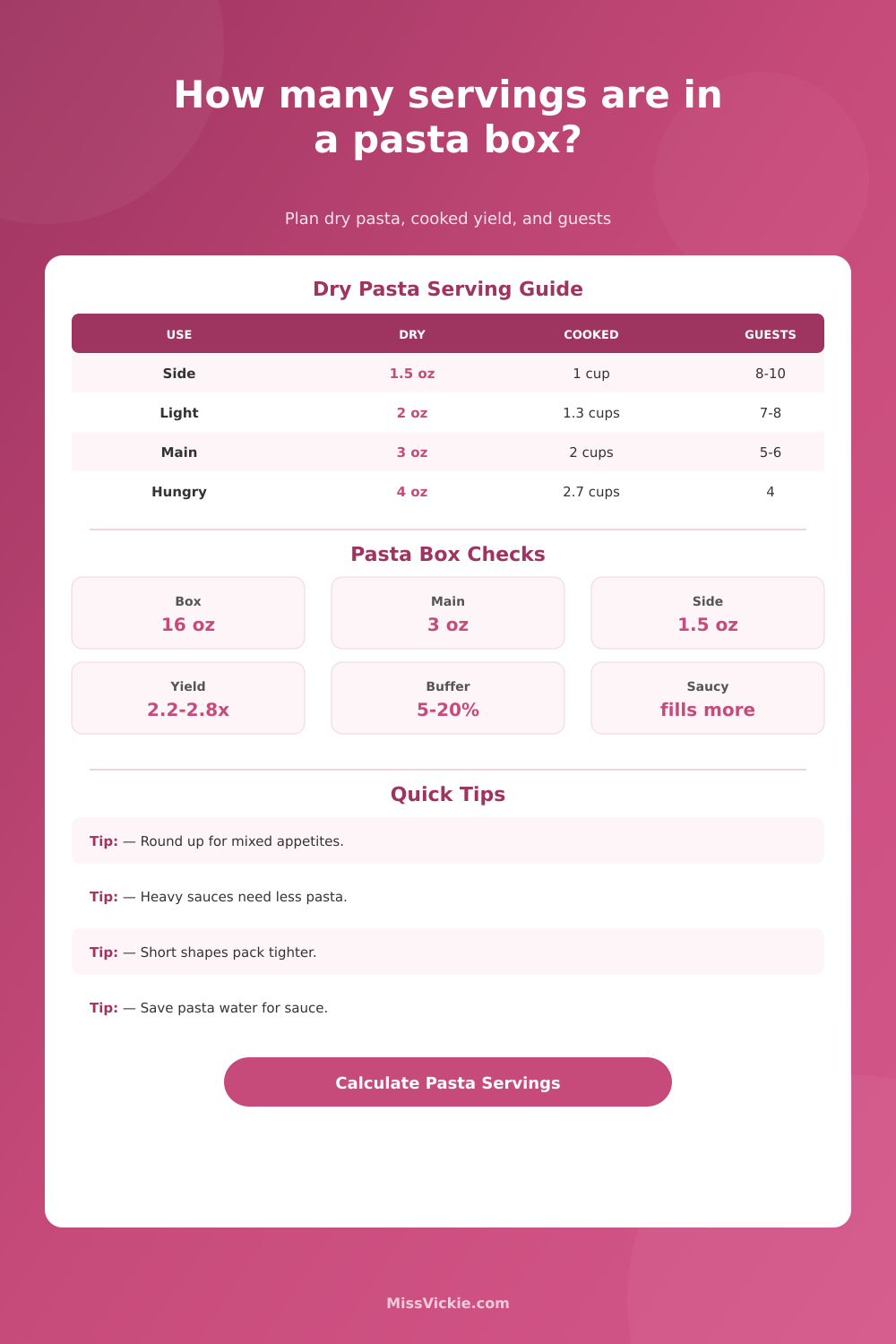
| Portion Style | Dry Pasta Per Person | Cooked Cups | Best Use |
|---|---|---|---|
| Small side | 1 to 1.5 oz / 28 to 43 g | 2/3 to 1 cup | Side plates, soup add-in, buffet sampling |
| Label serving | 2 oz / 57 g | 1.2 to 1.5 cups | Mixed meals and regular sauce portions |
| Main dish | 2.5 to 3 oz / 71 to 85 g | 1.7 to 2.1 cups | Dinner where pasta is the main item |
| Hungry portion | 3.5 to 4 oz / 99 to 113 g | 2.4 to 2.8 cups | Teen groups, sports meals, few sides |
| Pasta Shape | Dry Weight Yield | Approx Cups From 2 oz | Planning Note |
|---|---|---|---|
| Spaghetti or linguine | 2.4x to 2.6x | 1.25 cups | Long strands look generous on the plate. |
| Penne or rigatoni | 2.3x to 2.5x | 1.30 cups | Tubes hold chunky sauce well. |
| Elbow macaroni | 2.4x to 2.7x | 1.35 cups | Compact shape suits baked dishes. |
| Fettuccine | 2.2x to 2.4x | 1.15 cups | Ribbons pair with rich sauces. |
| Farfalle or bow ties | 2.4x to 2.7x | 1.40 cups | Large shape feels plentiful in salads. |
| Orzo | 2.7x to 3.0x | 1.10 cups | Dense small pieces serve more like rice. |
| Box Size | 2 oz Servings | Main Portions | Side Portions |
|---|---|---|---|
| 8 oz / 227 g | 4 servings | 2 to 3 guests | 5 guests |
| 12 oz / 340 g | 6 servings | 4 guests | 8 guests |
| 16 oz / 454 g | 8 servings | 5 to 6 guests | 10 guests |
| 24 oz / 680 g | 12 servings | 8 guests | 16 guests |
| 32 oz / 907 g | 16 servings | 10 to 12 guests | 20 guests |
| Sauce Style | Pasta Adjustment | Why It Changes | Best Portion Cue |
|---|---|---|---|
| Brothy or light oil sauce | Add 8% | Less richness, so pasta remains the main filler. | Plan closer to appetite target. |
| Tomato or marinara | Baseline | Balanced sauce weight and acidity. | Use the normal serving size. |
| Meat sauce | Reduce 8% | Protein and sauce volume fill the plate. | Portion pasta modestly. |
| Creamy cheese sauce | Reduce 12% | Fat and dairy make portions feel richer. | Serve smaller bowls. |
| Baked with cheese | Reduce 15% | Cheese, sauce, and browning add bulk. | Cut by pan portion size. |
Dry pasta weights and cooked volumes vary by brand, shape, salting, cooking time, and how much sauce clings after draining.
It’s a simple problem: You grab a typical sixteen-ounce box of spaghetti in the grocery aisle and wonder, “Will this feed six people? Or just three?” It all depends: Are they eating it as a hearty main course alongside some garlic bread, or a lighter side dish with chicken? Once you know how hungry they’ll be and how many guests you’re hosting, a calculator does the math for you. No more guessing!
Will two ounces of spaghetti per person be enough for those hungry teenagers, or no? Because cooked, dried pasta realy increases its volume! That small looking handful of dry spaghetti turn into a generous serving on the plate. The only constant number that you’ll have until adding water is your dry weight, so it’s the place to start.
How Much Pasta to Cook
According to a basic label, a serving size is about two ounces of dry pasta, that equates to one cup cooked. This is a good starting point for an average adult eating a balanced meal with protein and veggies. But no one eats like a nutrition label recommend. Appetite vary greatly depending on who sits at the table. Teens with growing bodies or starving adults hungry from a day’s work will eat a bowl intended for two. Kids may struggle to finish a single scoopful.
Why? Because your eyes are tricked into thinking that different pastas has different volumes. For example, long shapes like linguine appear more airy and full when piled onto a plate. Short shapes like penne or rotini cram tightly into bowls, so they require a little less dry weight to reach a satisfying serving size. To compensate for this, the tool takes into account the type of pasta shape you choose and adjusts its yield accordingly.
Orzo doesn’t hold sauce in the same way fettucine does. This means the cooked volume per ounce shifts different than expected. The amount of pasta is also surprisingly related to the richness of your sauce: if you’re using something light like a simple garlicky oil dressing, there’s not much leeway, it’s all substance on the plate with no room to substitute. Plan accordingly by increasing the size of your original dry package.
On the other hand, if you’re making a creamy alfredo or rich ragù with lots of meat, these sauces are already heavy with protein and dairy, which fill you up quicker. Use a bit less pasta and nobody will know you’ve made this swap. You also won’t have to worry about over-cooking the noodles. If they sit too long, they soak up moisture and become soggy.
Before you boil your water, think about the context of the meal. Is it a potluck or buffet situation where people are going to sample different dishes and therefore have smaller portions of each? Does a side dish mean there’s also meat, salad, or bread on the table? You tell the calculator if you’re making pasta as the main event or a supporting player at the meal, which helps it adjust its multipliers accordingly.
This prevents you from buying additional boxes that’ll end up getting eaten cold the next day or sitting around unused. Dry pasta is a pantry staple for most homes (long-lasting and easy to prepare). But what’s the yield ratio of whatever else is being made with it? How can you make that pantry pasta go further?
Typically, dried pasta will double (or triple) its volume when cooked. That is, unless you’re making something super-soft (which soaks up more liquid), or stopping it right before al dente (keeping some bite but having less volume). Adjust the multiplier to suit your preferred end-cooking point: Is your pasta firmer or softer than average?
When unexpected visitors stop by, having done some pre-planning is always less stressful than fumbling for measurements in the middle of a hungry audience. With a set of serving size guidelines memorized, you can better manage expectations and avoid waste. Depending on the appetite, most 16 ounce boxes will feed between 5-6 people as a main dish. When you’re forced into an impromptu meal using only what’s in your cabinets (and haven’t been to the store yet), those few calculations in your head could of come in handy.
If you have any box that are too small to be a full meal, throw in some sides of veggies/protein to make it last longer while still feeling satisfying. It’s not precision engineering; it’s about managing expectations. Wasting food is bad; being awkward is bad. The sweet spot is where you can account for who will eat what (and how much sauce they’ll need).
When you realize how these variables interact. Weight, shape, appetite, you begin planning instead of guessing. And that’s when a humble box of dry noodles becomes the sturdy starting point for whatever you’re feeding, no matter how many guests walk through your door.