Sweet Potatoes Per Pound Calculator
Estimate how many sweet potatoes make a pound, plus peeled weight, baked yield, mashed cups, cubed cups, target recipe cups, servings, and a practical kitchen buffer.
🍠Sweet Potato Presets
Choose a common cooking plan, then adjust root count, size, type, peel waste, target cups, use style, and serving size.
⚖Sweet Potato Inputs
Sweet potato estimate
Your results appear here.
Weight And Count
Yield And Serving Plan
Kitchen Steps
- Choose a root size.
- Pick a recipe use.
- Set peel waste.
- Check cups and servings.
📏Serving Size Grid
📋Size And Count Table
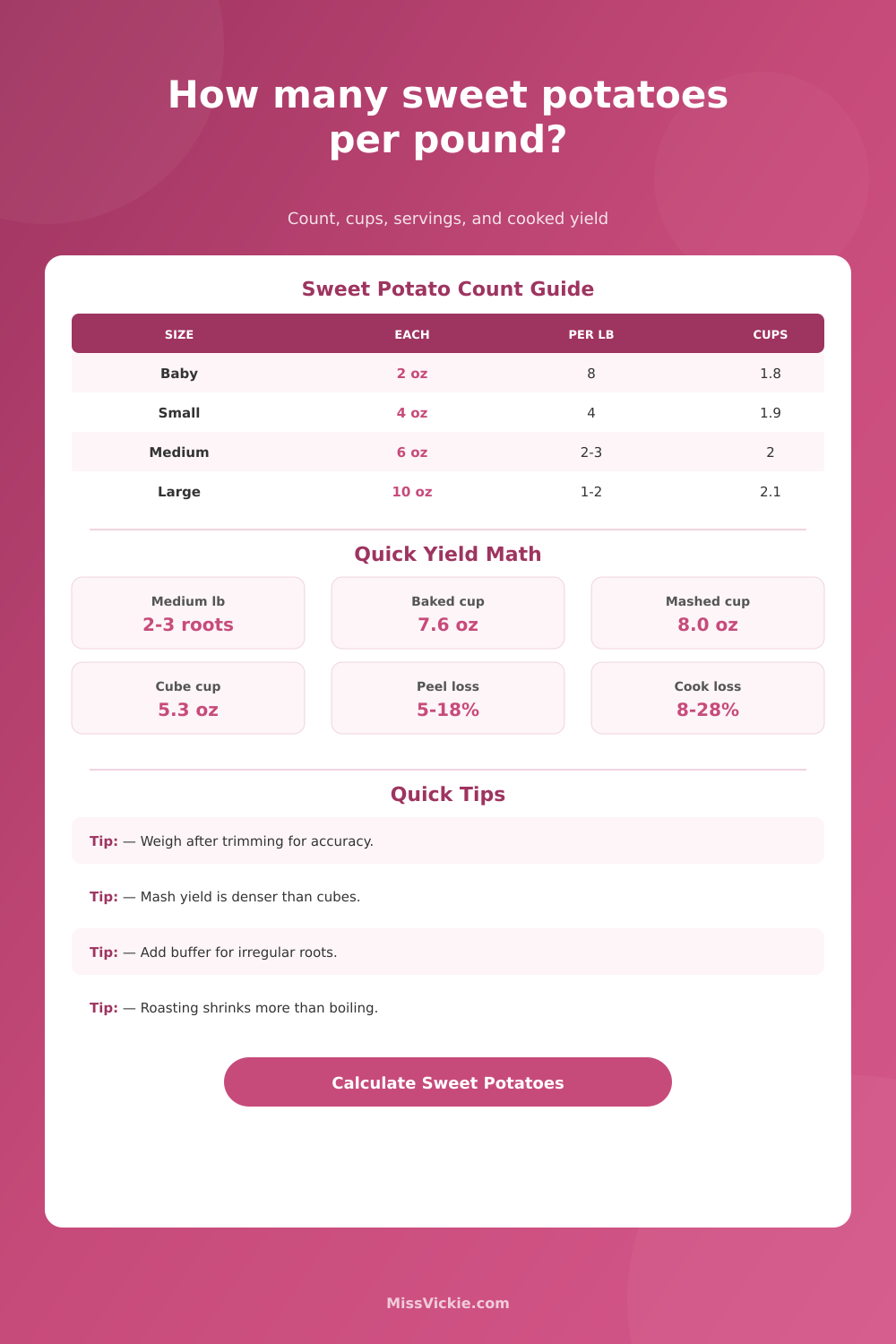
| Root Size | Average Weight | Approx Count Per Pound | Best Kitchen Use |
|---|---|---|---|
| Baby | 2 oz / 57 g | About 8 per lb | Whole roasting, party trays, lunch bowls |
| Small | 4 oz / 113 g | About 4 per lb | Single servings, quick microwave sides |
| Medium | 6 oz / 170 g | About 2.7 per lb | Baked sides, mash, casseroles |
| Large | 10 oz / 283 g | About 1.6 per lb | Stuffed potatoes, fries, big dice |
| Jumbo | 14 oz / 397 g | About 1.1 per lb | Batch puree, pies, large casseroles |
🍳Yield And Cup Table
| Recipe Use | Cook Shrink | Cooked Cup Weight | Typical Result From 1 lb Raw |
|---|---|---|---|
| Baked whole | 12% | 7.6 oz / 215 g | About 1.7 to 1.9 packed cups |
| Mashed | 10% | 8.0 oz / 227 g | About 1.6 to 1.8 cups |
| Roasted cubes | 22% | 5.3 oz / 150 g | About 2.0 to 2.3 loose cups |
| Fries | 28% | 4.9 oz / 139 g | About 2.1 to 2.5 loose cups |
| Casserole base | 8% | 8.2 oz / 232 g | About 1.6 to 1.8 cups |
| Soup dice | 6% | 5.6 oz / 159 g | About 2.4 to 2.7 loose cups |
🧾Common Quantity Table
| Cooking Plan | Medium Roots | Raw Weight | Cooked Cups |
|---|---|---|---|
| Dinner for 4, baked sides | 4 medium | 1.5 lb / 680 g | About 3 cups baked flesh |
| Family mash for 6 | 6 medium | 2.25 lb / 1.02 kg | About 3.7 cups mashed |
| Roasted cubes for 8 | 8 medium | 3 lb / 1.36 kg | About 6.5 cups loose cubes |
| Casserole for 12 | 12 medium | 4.5 lb / 2.04 kg | About 7.4 cups base |
| Party side for 25 | 25 medium | 9.4 lb / 4.25 kg | About 15 to 20 cups by style |
🥚Type Comparison Grid
Classic grocery sweet potato with reliable mash and baked side yield.
Higher moisture and deep color, useful for casseroles and pies.
Drier, starchier flesh. Count on fewer cups from the same weight.
Dense texture and bold color, best with extra moisture in mash.
📊Nutrition Reference Table
| Serving | Calories | Carbs | Kitchen Note |
|---|---|---|---|
| 1 medium baked sweet potato | About 100 to 115 | About 24 to 27 g | Skin-on, plain, no added fat or sugar |
| 1/2 cup mashed | About 125 | About 29 g | Plain mash before butter, milk, or topping |
| 1 cup roasted cubes | About 160 to 190 | About 37 to 43 g | Before oil amount is counted |
| 1 cup puree | About 180 to 210 | About 42 to 48 g | Useful for pie filling and quick bread |
Nutrition values are broad kitchen estimates for plain sweet potato. Added oil, butter, sugar, marshmallow topping, and dairy change the final dish.
💡Sweet Potato Planning Tips
Grocery-store sweet potatoes differ from each other in moisture content and size; they’re not necessarily a consistant weight-to-volume ratio. The trick: Estimate which ones will fill one pound of roots (since size, moisture content, and cooking methods all affects how much usable volume you actualy get after peeling, cooking, and mashing). That way, you’ll never run short on the starch needed to make your holiday dinner.
A simple lesson with real-world application. That’s smart shopping. Not all the potatoes you start with will get eaten. Smaller potatoes has more skin and less meat than larger ones. A little potato with more surface area shrinks down more when peeled off compared to a big one. Having a size-category-adjusting tool take some of this shrinkage into account. It knows a medium potato provide a different amount of usable food than a jumbo one.
How to Shop for Sweet Potatoes
The moisture level is another factor. Depending on variety (the orange ones are moister), there will be more water and sugar, which affects density. Other kinds may not have as much inside, or they may soak up less of the liquid from cooking. This mean that even if they weigh the same when raw, they yield less actual puree. That’s why the recipe adjust based on those variances so it gets the consistency of your pie filling just right. It links the raw ingredient to what ends up in your bowl.
Volume and the end result of the cooking matter too: Boiled roots in mash weigh slightly more per cup than roasted ones (the latter having lost some water during roasting). This can trick cooks who substitute ingredients without adjusting their volumes. For instance, if you have a recipe that specifies mashed potatoes but are serving roasted cubes instead, you’ll need extra raw weight to achieve the same volume since roasting will concentrate the solids. Knowing this avoids last-minute shortfalls.
Plan for another element of prep: peel waste. The skins change the color and texture of the dish while adding bulk. Peel away those skins and you’ll see bruising and tough stems that needs discarding. Plan for a realistic trim percentage so you can account for your losses when shopping for the right amount of uncooked weight. Ten percent is reasonable for clean potatoes, though you may need as much than 20 percent if your roots come from a bulk bin and are bruised. Plan for the waste, and your finished dish will look abundant.
How many servings? No one knows. Each person’s appetite differs. Depending on who they are, a “normal” serving size (of a side dish) is usually 3/4ths of a cup; though some will be hungry enough for a full cup. To increase the party size: take into account the potato as part of the meal. Do you have heavy meat dishes served alongside rich gravies? Guests might prefer smaller helpings of starchy food. Use a reference grid to figure out what that means in terms of actual ounces of veggie. Then, scale up from there. You can measure hunger by the amount of vegetables serve.
Sweet potato math: Sweet potatoes are tricky. They’re heavier than they look, and you buy them by pounds but dish them out by cups. A bit of pre-planning, about cooking loss, variety, and size, bridges that gap making both your everyday dishes and your holiday ones more manageable. Less guesswork makes for clearer results and fuller plates. Use better logic on a forgiving root vegetable.