MissVickie wing marinade planner
Wing Marinating Time Calculator
Estimate a wing marinade window from wing format, count, raw weight, acid strength, salt percentage, sugar, refrigerator temperature, cooking method, and crisp-skin target.
Choose a common wing plan, then adjust the acidity, salt, sugar, fridge temperature, heat method, and skin finish.
Wing Marinade Plan
Results update as you adjust the wing setup.
Weight per wing piece controls salt and marinade coverage.
Estimated salt from the selected percentage.
Sweetness and browning pressure.
Best point to shake the bag or rotate a shallow dish.
Buffalo-style marinades season fast; long soaks can soften skin.
Salt-forward wings gain savory flavor without heavy acid.
Dairy tang is slower and works well for fried wings.
Dry seasoning plus uncovered chill gives the crispest skin.
| Wing Format | Typical Weight | Balanced Marinade | High Acid Window | Crisp-Skin Move |
|---|---|---|---|---|
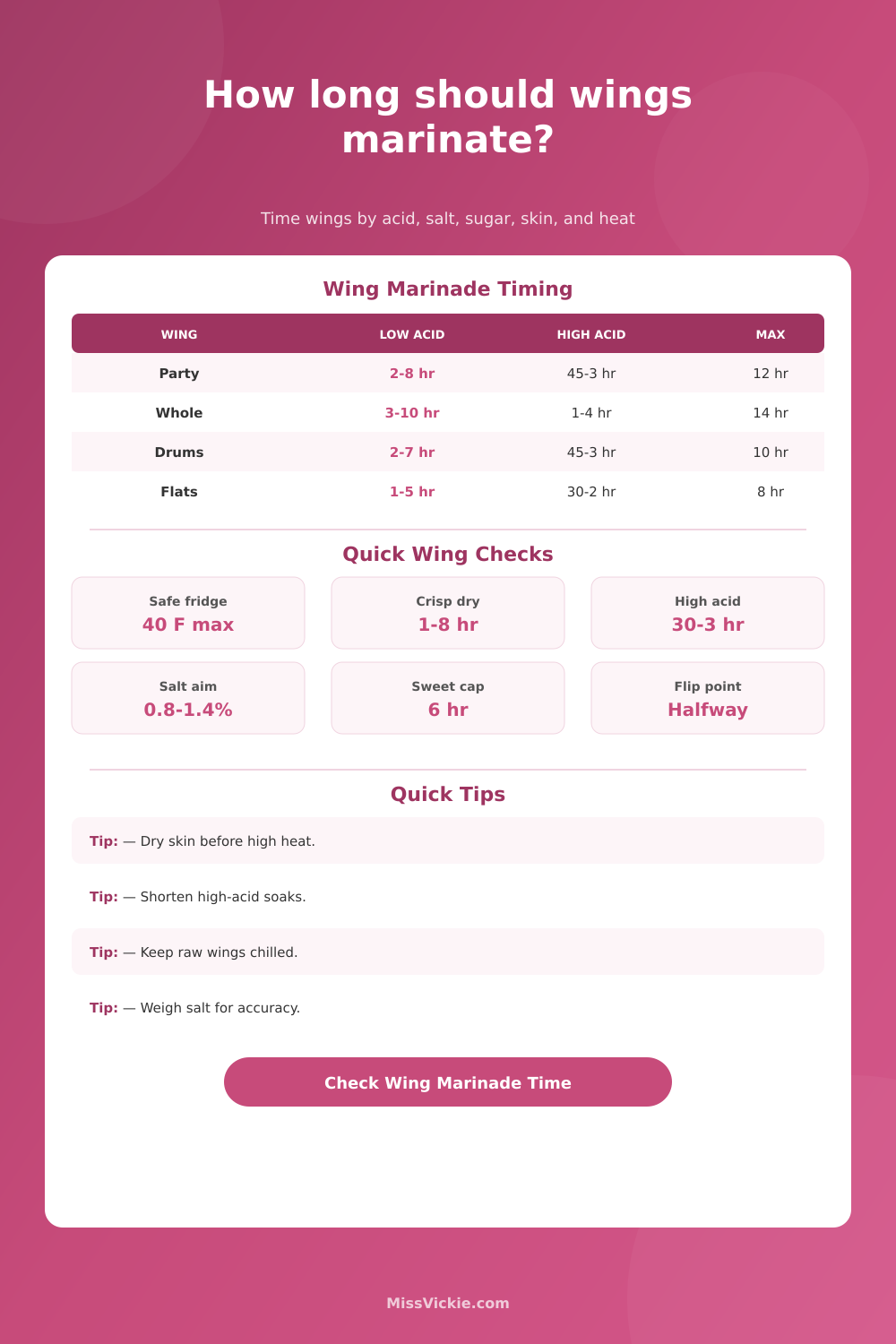
| Party wings, drums and flats | 1.5 to 2.5 oz each | 2 to 8 hours | 45 minutes to 3 hours | Drain, pat dry, rack 45 to 90 minutes. |
| Whole wings | 3.5 to 5 oz each | 3 to 10 hours | 1 to 4 hours | Open the joint area and dry on a rack. |
| Drumettes only | 1.8 to 3 oz each | 2 to 7 hours | 45 minutes to 3 hours | Turn at halfway for even seasoning. |
| Flats only | 1.2 to 2 oz each | 1 to 5 hours | 30 minutes to 2 hours | Dry very well before air frying or broiling. |
| Jumbo party wings | 2.8 to 4 oz each | 3 to 10 hours | 1 to 4 hours | Plan a longer rack dry for thick skin. |
| Marinade Factor | Gentle Range | Bold Range | Texture Risk | Wing Note |
|---|---|---|---|---|
| Acidity | Oil, herbs, soy, mild sauce | Citrus, vinegar, hot sauce base | High acid can roughen surface texture | Shorter is better for flats and crisp skin. |
| Salt percentage | 0.7% to 1.0% | 1.1% to 1.5% | Too much time tastes cured | Weigh salt against raw wing weight. |
| Sugar percentage | 0% to 2% | 2.5% to 5% | High heat can darken fast | Use less sugar for air fryer or broiler heat. |
| Enzyme fruit | Tiny amount only | 30 to 90 minutes | Mushy surface if too long | Fresh pineapple and papaya work quickly. |
| Cook Method | Wet Marinade Fit | Drying Time | Sugar Caution | Best Finish |
|---|---|---|---|---|
| Oven baked | Good with moderate acid | 45 to 90 minutes | Moderate sugar is fine | Rack over sheet pan for airflow. |
| Air fryer | Use a thin coating | 1 to 4 hours | High sugar darkens quickly | Pat dry, lightly oil, cook in batches. |
| Grill | Good for soy or hot sauce | 30 to 90 minutes | Move sweet wings off direct heat | Start indirect, finish over heat. |
| Smoker | Dry rub or low acid works best | 2 to 8 hours | Sweet rubs can set sticky | Smoke then crisp over high heat. |
| Deep fry | Dairy or low acid works well | 30 to 60 minutes | Drain sweet marinades well | Dry surface before flour or fry oil. |
| Fridge Temp | Timing Effect | Food Safety Action | Max Planning Window | Wing Handling Note |
|---|---|---|---|---|
| 30 to 34°F | Marinade acts slower | Keep covered and cold | Up to quality cap | Add a small time buffer for deep flavor. |
| 35 to 38°F | Normal timing | Ideal refrigerator range | Up to quality cap | Best range for planned party prep. |
| 39 to 40°F | Use shorter timing | Cook sooner | 24 hours or less | Verify the fridge if planning overnight wings. |
| Over 40°F | Do not marinate | Chill wings first | 0 hours | Raw poultry should not sit above 40°F. |
For raw poultry, refrigerator storage should stay at or below 40°F. Cook marinated wings to a safe final internal temperature.
It’s game day. You’ve got three pounds of chicken wings on the counter. You’re craving something juicy but not mushy. You want a flavor that penetrates deep into meat without overcooking the protein with acid. When you bite through, there’s that crackle of the shattered skin. It all happens within a narrow window of time.
To get it right, most home cooks just guess timing and end up with food that is either bland or too white and mealy because flavors didnt soak into the meat long enough. The calculator tool handle the conversions and coefficients for you. Simply enter your wing count and type of marinade, and let it do the math.
How to Make Perfect Chicken Wings
Time is also a major variable. Generally speaking, it’s all about acid, which doesn’t only add flavor; it breaks down the structure of protein through chemical reactions (think: lemon juice + vinegar + hot sauce). That’s good news when you can manage the clock, but bad news when the wings spends too long overnight in an acidic bath. On the bright side, high-acid marinades acts quickly, as soon as they hit surface proteins.
Since drummies has more meat than skin compared to flats, they marinate more slowly. The calculator consider this difference in surface area, so no more over-marinated flats and under-seasoned drums!
Acid is different than salt. While salt extracts flavor out of the meat via osmosis, and retains moisture, acid breaks the meat down, it’s corrosive. So you don’t have to worry about over-salting as much because salt won’t break down the meat and ruin texture. On the other hand, if you’re marinating with little to no acid (like a dry rub, or one that’s mostly soy), then you’ll be able to get away with letting the chicken hang out for longer. Just make sure it stays sufficiently cold.
Again, the key here is to weigh the salt into bowl based off the raw weight of the chicken, instead of just eyeballing it. Why? Because the taste will change completely when you alter the salt concentration by only a half percent.
One thing folks tend to forget about: sugar. While sugar makes food brown via both Maillard reactions and caramelization, sugar itself will burn at lower temps than straight up protein or oil. So a higher sugar marinade (such as a sweeter BBQ mix) should of been cooked for less time, or with a lot less heat. This is why I account for how much sugar’s in your marinade; if you’ve picked a cooking type that could burn the wings before they get fully done, it’ll alert you. It is a minor point, but an important one when you’re aiming to land in that golden brown area rather than create burnt wings.
For quality and food safety reasons, temperature control is not negotiable. The fridge has to maintain 40 degrees or below throughout. Above that, bacteria grow faster, and the marinade will have different effects then when it’s cool.
Marinades made with enzyme-containing fruits such as fresh pineapple or papaya are especially unforgiving. Proteases in these fruits chews up protein like mad. While half an hour may be just right, six hours can produce a paste-like surface that grills into pieces. Fruit enzymes are much quicker then you might imagine.
Finally, remember what kind of skin you want before you even open the bag. Wet wings will steam rather than roast or fry; if you want crispy chicken, make sure the surface is relatively dry before cooking. For air-fried or baked wings, expect this to mean a bit of drying time after marination but prior to cooking time. Instead of leaving them covered, letting them sit uncovered on a rack in the fridge pulls moisture out of the skin allowing it to crisp up properly under high heat. That drying step is often the missing link between good wings and great ones. The calculator estimate how long the drying period should be based off how wet your chicken is at first and the humidity in your area.
Marinating isn’t passive; it’s a balance between flavor penetration and texture preservation. Think of it as juggling water and ions in your hands. On one hand, you want to make sure your chicken gets plenty of flavor. On the other, you don’t want to cook it into mush. Once you know how salt, sugar, and acid interact with the chicken, it’s no longer guesswork, and instead becomes cooking with purpose. And that purpose is always the same: that deliciously browned skin followed by tender, flavorful meat within. That takes time, and understanding the clock is as important as understanding your ingredents.