
Chances are, until a weather alert came through or the last of your coffee was gone, you didn’t think about pantry as a tool for strategy. From that point forward, it’s more about treating food less like something you buy every week and more like a supply to be managed. What stays fresh? What spoils before you expect? How prepared (versus panicky) do you feel?
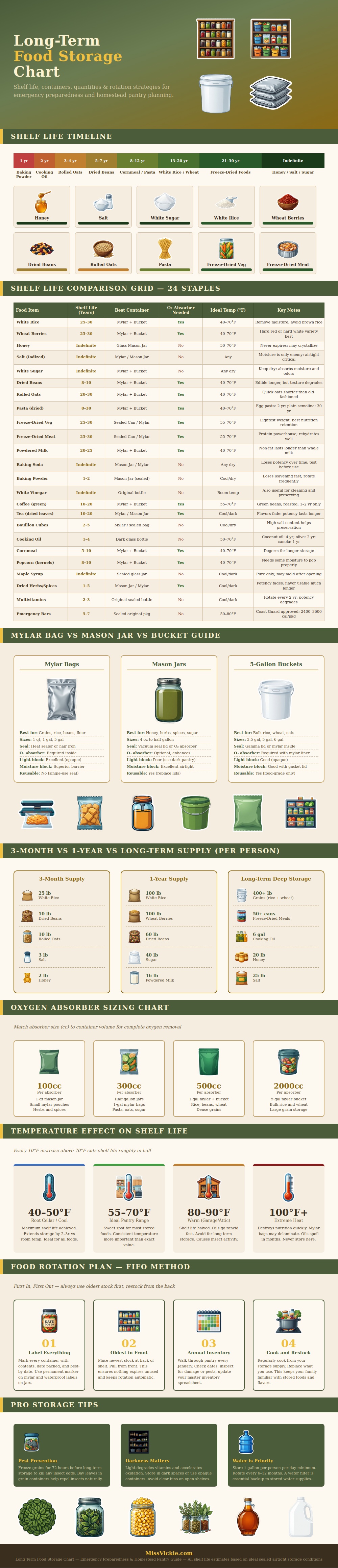
Dry goods last forever… or do they? They do not. Heat and oxygen will eventually ruin most items over time. As the below chart shows, shelf life differ greatly based off what you’re storing. For example, oatmeal degrades quickly (quick oats even quicker), while wheat berries has a much longer lifespan. If you don’t know what kind of grain you purchased in bulk, you’ll end up with some stale cereal and wasted money. The graphic make it easy to identify which items should be rotated every couple of years, and which can be stored for the long haul.
How to Store Food for Emergencies
Where many new preppers falter is in their container selection. While it’s tempting to pop rice into whatever clear container with a lid is handy, light will cause oxidation and nutrient loss over time. Food-grade buckets lined with opaque mylar bags are better because they block out moisture as well as light. But they also require oxygen absorbers within the bag to make environment within the bag inert, preventing insect breeding. Otherwise, you’ll have a slow march toward infestation. The container guide explain which containers work best for which types of food so you don’t find yourself throwing all your bulk grain into glass jars (when those would of be better used for something like spices or honey, where there’s no need to remove oxygen).
Most people don’t know this, but temperature has more of an effect on storage longevity then almost anything else. For every ten degrees you’re storing something above 70 degrees Fahrenheit, your food’s shelf life are cut in half. You’d think storing your emergency food in a nice cool root cellar would be best, right? Well, that’s what people thought. They eventually found out their attic was actualy much hotter than the root cellar, which turned years of safe food into just a few months’ worth of spoiled grub. Mylar bags peel apart eventually due to heat and the oils inside will also go rancid very quickly. A good rule of thumb is keep your supply stored in a cool place, such as a basement or a root cellar. You want it cool because a stable environment keeps both nutrients and the texture intact.
Rotating makes me feel as though I’m doing more work then necessary, but it saves me the horror of opening a can or bag only to find that something has gone bad. That First In, First Out principle preserve freshness, so you know what’s in there and how it tastes when cooked up. Writing all your pack dates on containers is annoying in the moment, but helps you make snap judgments later on in crisis mode. Staying active in cooking out of your stash help keep meals varied and lets you discover problems early on, rather than at the last minute.
I’d argue that water should be on its own level when it comes to planning. You can survive without food longer then you can without water. A gallon per person per day should be your minimum baseline for survival. Pairing this with a good water filter add an extra layer of safety to your stored water. You will have peace of mind knowing that even if those first few days are used up or ruined, you still have drinking water.
A good pantry isn’t just a hoard; it’s also an insurance policy. You must carefully set up and maintain your food storage as a safe place for your food by being thoughtful about rotation, temperature control, and packaging. Set it up right, and you’ll go from panic-stricken to confident, fast. Every hour spent sealing those bags will be paid back by the calm assurance that you’ve got this: whatever goes on out there, your family is going to be okay.