Chia Pudding Set Time Calculator
Estimate chia pudding chill time, ready window, liquid amount, stirring points, and texture risk from seed amount, milk type, ratio, fridge temperature, jar depth, sweetener, and target texture.
🥣 Chia Pudding Presets
Choose a kitchen scenario, then fine tune seed amount, milk style, liquid ratio, fridge temperature, jar depth, stirring schedule, sweetener, thickener, and texture goal.
⚖ Set Time Inputs
Your Chia Pudding Window
Ratio and chill plan will appear here.
Batch Breakdown
Set Drivers
Suggested Timeline
- Mix chia and cold milk.
- Stir early for even gel.
- Chill until the center is thick.
🥄 Ratio And Serving Grid
📋 Chia Ratio Reference
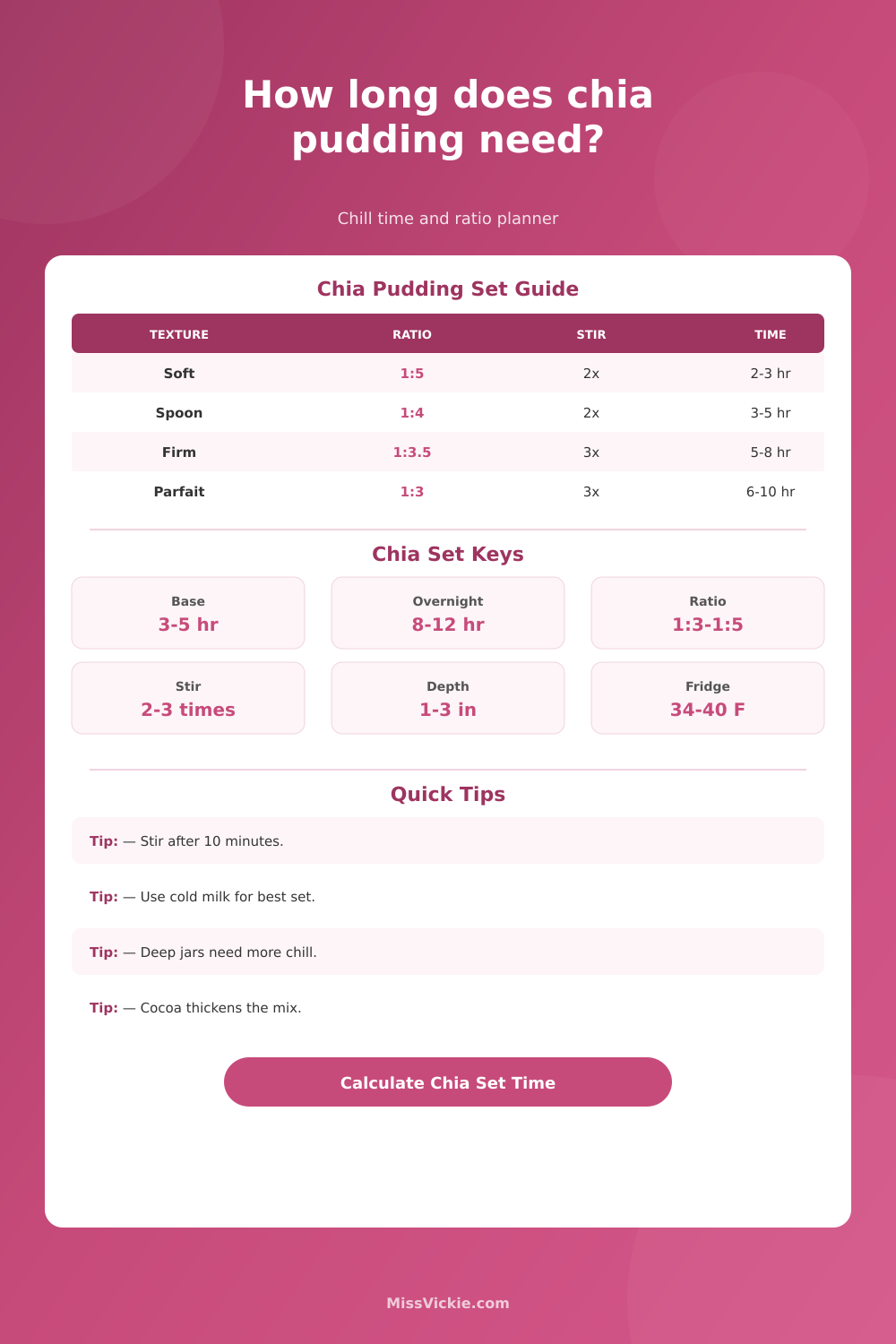
| Texture Goal | Chia To Liquid | Typical Set | Best Use |
|---|---|---|---|
| Soft and loose | 1 tbsp chia to 5 tbsp liquid | 2 to 3 hours | Breakfast drink, smoothie bowl base |
| Spoonable | 1 tbsp chia to 4 tbsp liquid | 3 to 5 hours | Classic single jar pudding |
| Thick snack cup | 1 tbsp chia to 3.5 tbsp liquid | 4 to 7 hours | Meal prep, toppings, packed cups |
| Firm parfait layer | 1 tbsp chia to 3 tbsp liquid | 6 to 10 hours | Layered fruit cups and dessert jars |
| Sliceable base | 1 tbsp chia to 2.5 tbsp liquid | 8 to 12 hours | Pressed bar base with yogurt or cocoa |
🥛 Milk Type Set Factors
| Milk Type | Set Speed | Texture Result | Kitchen Note |
|---|---|---|---|
| Whole dairy milk | Standard | Creamy and smooth | Reliable for most ratios and fridge temperatures. |
| Almond milk | Slightly slower | Clean and light | Works best with one extra early stir. |
| Oat milk | Standard to fast | Soft, rounded body | Natural starch helps a creamy finish. |
| Canned coconut milk | Faster | Rich and firm | Whisk until smooth before adding seeds. |
| Greek yogurt blend | Faster | Dense and tangy | Use a higher liquid ratio to avoid paste-like cups. |
⏲ Batch Size Conversion Table
| Chia Amount | Liquid At 1:4 | Approx Yield | Serving Plan |
|---|---|---|---|
| 2 tbsp or 24 g | 1/2 cup or 120 ml | 3/4 cup | Small snack cup |
| 3 tbsp or 36 g | 3/4 cup or 180 ml | 1 to 1.2 cups | One breakfast jar |
| 6 tbsp or 72 g | 1 1/2 cups or 360 ml | 2 to 2.3 cups | Two generous jars |
| 12 tbsp or 144 g | 3 cups or 720 ml | 4 to 4.5 cups | Four meal prep cups |
| 18 tbsp or 216 g | 4 1/2 cups or 1.06 L | 6 to 7 cups | Six small jars |
🌡 Fridge And Jar Adjustment Table
| Condition | Time Change | Main Risk | Practical Fix |
|---|---|---|---|
| 34 to 36°F fridge | Standard | Very cold gel | Rest five minutes before eating for better creaminess. |
| 41 to 44°F fridge | Add 10 to 18% | Loose center | Chill longer before topping with fruit. |
| Shallow 1 inch cup | Subtract 5 to 10% | Dry edge | Cover the surface well. |
| Deep 3 inch jar | Add 15 to 25% | Dense base | Stir down to the bottom in the first hour. |
| Wide meal prep bowl | Subtract 5% | Skin on top | Press wrap or lid close to the surface. |
🧪 Method Comparison Grid
Best for soft pudding with a tight ratio and several early stirs.
Best for classic spoonable chia made before lunch or dinner.
Best flavor and hydration for meal prep jars.
Best for bowls that need bottom-to-top stirring before chilling.
💡 Chia Set Tips
Calculator outputs are estimates for whole chia seed pudding stored cold. Ground chia, cooked mixtures, hot liquids, and freezer storage use different timing.
Why is that? Because chia seeds has special hydration requirements, knowing those conditions will help you prevent most common pitfalls: stubbornly clumpy or watery chia. Rather than trusting a particular brand of seed to “get it right,” simply know to manage the ratio, temperature, and timing of your hydration and you’ll never have another problem. Chia’s got your back. No guessing required!
To get just the right fill level, enter your preferred milk type and amount of seeds into a calculator and voila: It tell you exactly how long to let it set. Why? Because outside of a jar cools faster than the inside. So a small jar like a mug will cool off quickly from the outside, whereas a large one, like a wide-mouth mason, can look solid on the top but still be runny on the bottom. The tool takes into account both the volume of your jar and the temperature of refrigerator, the two factors that affect how fast the gel matrix will harden all over.
How to Make Perfect Chia Pudding
While most recipes specify the standard ratio, everybody’s taste buds is different when it comes to texture. A one-to-three is good for firmness (like forming a layer), whereas one-to-five work well for a loose mixture (that can be used as a drinkable base). Tinker with this ratio; depending on your preference, it will affect the way you eat it. So figure out whether you want something spoonable or drinkable before pouring ingredient.
The complication comes from milk selection: Because of varying proteins and fats, different milks soaks up water at varying speeds. Almond milk doesn’t set like whole dairy milk; oat milk will thicken more quickly thanks to its own built-in starchiness. Even coconut milk tend to make the body feel denser and heavier in your mouth. When you choose your liquid type in the calculator, it takes those variances into account and adjusts the predicted set time to match, meaning you’re working with flavor, but also chemistry.
The key: Don’t let it get lumpy; if you mix it only once before putting it in refrigerator, chances are it won’t soak evenly. When you make the mixture of seed and liquid, mix well (stir like hell), wait 10 minutes, and then give it another stir before putting it in the fridge. That second stir disrupts any lumps that may have formed from the outside layer of seeds expanding while absorbing water. Those lumps turns into jelly-like stones that won’t truly soften unless you stir them, and they take an additional half minute to make everything smooth.
The other fridge variable is temperature, which determines how long it takes for things to set. The warmer your fridge, the longer it will take. For instance, if your fridge is above 42 degrees, expect the middle of your pudding to be less well-set than it would in a cooler fridge. You should of expected that. Expect to increase chill time by an additional hour or two until the pudding reaches right consistency. This can make a difference on breakfast morning when you want everything to happen faster, as under-chilled pudding won’t hold its shape.
Add-ins and sweeteners that change the overall moisture balance will nudge the clock as well. Adding maple syrup, for example, adds water that might dilute a bit and lengthen the setting window. Protein powder or cocoa powder soaks up water, essentially tightening up the ratio and hastening the set. While these tweaks may seem small individually, they add up fast if you’re juggling several ingredients.
Understanding the connection of stirring, temperature, and depth lets you make it all come together in a cohesive texture. You don’t have to guess what happens when you open the jar or when to peek. If you treat chia pudding like a technique instead of a mystery, you can predict what it will be like each time you open the lid. This helps you get a reliably thick, smooth breakfast. It is actualy naturaly luxurius.