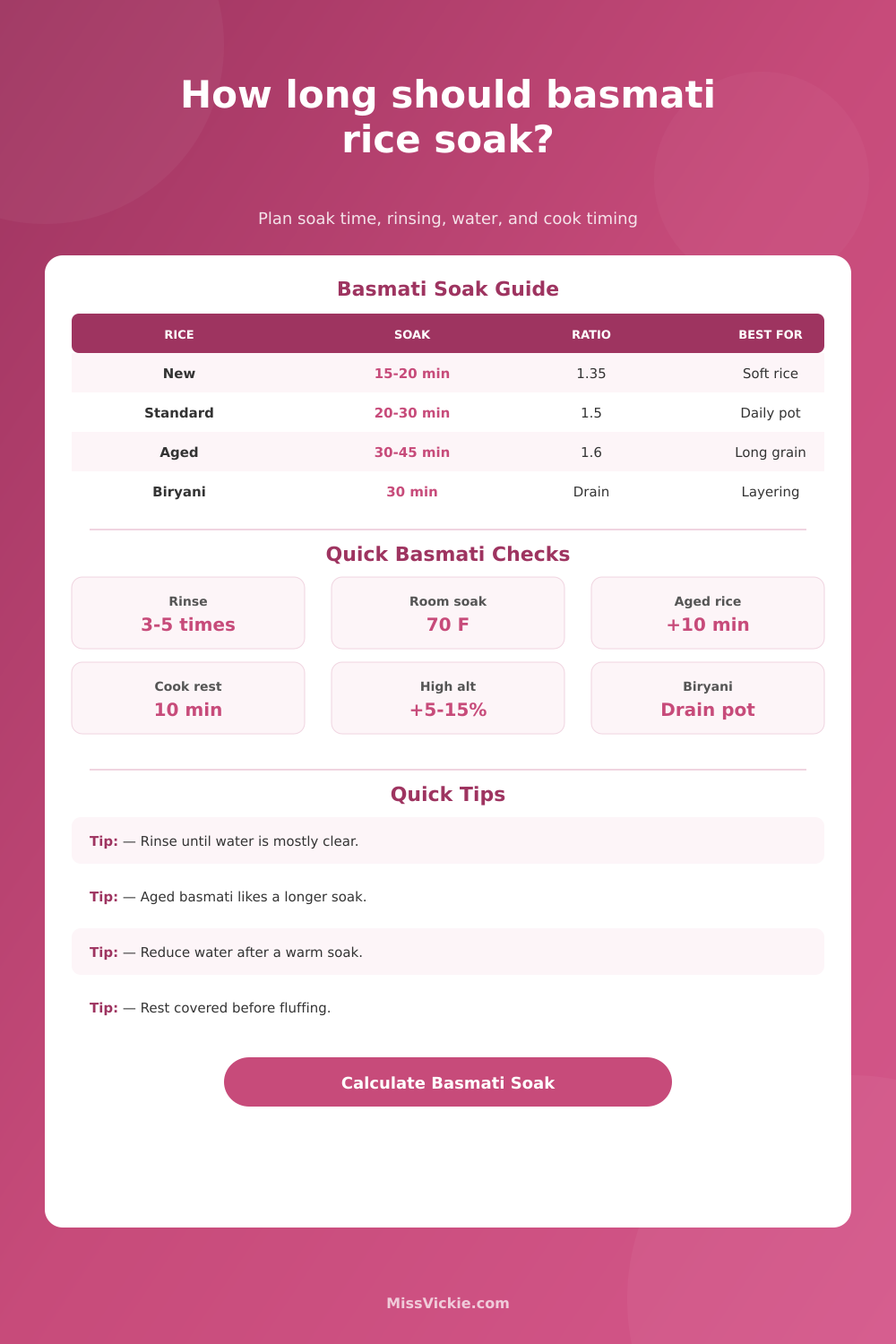
Basmati Rice Soaking Time Calculator
Estimate basmati rice soaking time, rinse cycles, water ratio, cook time, covered rest, and altitude adjustment from rice age, batch size, soak temperature, dish style, grain-length goal, and cooking method.
🍚Basmati Rice Presets
Choose a common basmati batch, then adjust cups or grams, rice age, soak temperature, rinse cycles, dish style, grain-length target, water ratio, cooking method, and altitude.
⚖Basmati Soak Inputs
Basmati Rice Plan
Enter the rice details to calculate a soaking and cooking plan.
Soak Breakdown
Cooking Breakdown
Step Plan
📊Basmati Benchmarks
The calculator estimates culinary timing and water. Brand age, milling, pot shape, flame strength, and how aggressively rice was rinsed can move the final texture.
📘Rice Age And Soak Table
| Basmati Type | Typical Soak | Water Cue | Texture Note |
|---|---|---|---|
| New crop or very fresh basmati | 12 to 22 minutes | Use the low end of the ratio | Softens fast and can break if over-soaked. |
| Standard pantry basmati | 20 to 30 minutes | About 1.45 to 1.6 cups water per cup | Best everyday balance for plain rice. |
| Aged basmati, 1 to 2 years | 30 to 42 minutes | Slightly more water or a longer rest | Stretches longer and stays separate. |
| Extra-aged basmati | 38 to 55 minutes | Use careful rinsing and a steady covered cook | Great aroma and long grain, but less forgiving. |
| Broken or mixed-grade basmati | 10 to 18 minutes | Reduce water and avoid stirring | Short grains release starch quickly. |
💧Water Ratio Table
| Dish Style | Soaked Absorption Ratio | Gram Equivalent | When To Adjust |
|---|---|---|---|
| Plain steamed basmati | 1.45 to 1.6 cups water per cup rice | 270 to 300 ml per 185 g rice | Use less water for new rice and more for aged rice. |
| Pulao or pilaf | 1.35 to 1.5 cups water per cup rice | 250 to 280 ml per 185 g rice | Oil coating and vegetables change steam loss. |
| Biryani parboil | Boil in excess water, then drain | Use 4 to 6 times water by volume | Cook only to partial doneness before layering. |
| Soft curry rice | 1.6 to 1.75 cups water per cup rice | 300 to 325 ml per 185 g rice | Use when soft grains are preferred. |
| Fried rice base | 1.25 to 1.4 cups water per cup rice | 230 to 260 ml per 185 g rice | Drier rice chills and fries better. |
⏱Cooking Method Table
| Cooking Method | Cook Time After Soak | Rest Time | Best Use |
|---|---|---|---|
| Covered stovetop absorption pot | 10 to 13 minutes on low | 10 minutes covered | Most plain basmati and pilaf batches. |
| Rice cooker white-rice cycle | Cycle-controlled, usually 25 to 35 minutes total | 10 minutes on warm | Hands-off daily rice with steady results. |
| Electric pressure cooker | 4 to 6 minutes at pressure | 8 to 10 minutes natural release | Small quick batches; reduce water slightly. |
| Open pot, boil and drain | 5 to 8 minutes after soaking | Steam covered after draining | Biryani, layered rice, and firm grains. |
| Covered oven-baked rice | 22 to 28 minutes covered | 10 minutes covered | Even heat for large pans or meal prep. |
| Covered microwave bowl | 12 to 18 minutes total | 8 minutes covered | Small portions when a pot is not available. |
🏔Rinse And Altitude Table
| Adjustment | Calculator Effect | Rice Texture Impact | Practical Cue |
|---|---|---|---|
| 0 to 1 rinse cycles | Shorter prep, starchier grains | More cling and foam | Use only for soft curry rice. |
| 3 to 5 rinse cycles | Balanced starch removal | Cleaner, longer, fluffier grains | Stop when the water is mostly clear. |
| 6 to 8 rinse cycles | Slightly lower water need | Very separate grains | Handle gently to avoid broken tips. |
| 3000 to 6000 ft altitude | Add about 5 to 9% cook time | Hydrated centers need longer steam | Keep the lid closed during rest. |
| Above 6000 ft altitude | Add about 10 to 16% cook time | More risk of firm centers | Add a small splash if the pot dries early. |
⚖Basmati Method Comparison
Use a shorter soak, lower water ratio, and a gentle fluff to avoid mushy broken tips.
Longer hydration helps the grain stretch and cook evenly without splitting.
Soak for length, boil in excess water, then drain while grains are still firm.
Expect a longer cook and rest because water boils cooler at elevation.
📝Basmati Soaking Tips
Here’s what you need to know about soaking basmati: It does something different than the starch in the rice when cooked. Before you even turn on your burner, grain itself has already decided if it wants to be clumpy or fluffy. It’s not a wait-and-see thing. It’s a matter of chemistry, and it set the tone for finished product. So get this one correct.
There is several variables involved in this process, but the largest is the age of your rice. If you have new crop basmati, it will be tender and soft, retaining extra moisture since it was just picked. It’ll also break easy if you’re rough with it, as it hydrates quickly. Older basmati that’s been sitting in your pantry for years has lost some of its internal water while being stored. This make it harder, denser, and gives it that long shape and signature snap of the grain. The calculator adjust soak times depending on age of your rice. This ensures you don’t end up with mushy grains, which would defeat the purpose of having separate strand.
How to Cook Perfect Basmati Rice
But there’s another part of washing: how much is enough? You don’t want to wash out all the taste, but you do want to get rid of surface starch that makes rice sticky. Three to five times are right. Rinse fewer than three to five times and your rice gets foamy and stick in a solid brick. Rinse too many times and you’ll have no aroma or texture. With the tool, I’ve found the balance, because it takes into account rinse cycles in final amount of water needed for cooking. Fewer rinses means you still need a little extra cooking water because the leftover starch is still floating on the water. This is a tiny tweak, but it keeps the absorption math accurate.
Many overlook another factor: the water temperature of the soak. Yes, cold water will work (though it will take longer to rehydrate the grain). Warmer water will speed up the process and come in handy when you’re rushing, but may cause more delicate newly-soaked rice to becomes too soft before cooking. Most folks should of probably stick with room temp water, as it offers even, gradual hydration and won’t shock the structure of the grain. Depending on your water selection, the calculator adjust the recommended soak period to match.
After soaking and draining the rice, you’re in cook mode. And this is where things get interesting: your altitude matter, but how? What is boiling point of water where you live? Higher altitudes mean it boils lower. That means higher-elevation dwellers need to account for that with their rice: water boils at a lower temperature, which causes the rice to cooks slower and dry out faster if you don’t adjust for it. Plan for maybe a few percent (or as much as 15) more cooking time, plus a bit of extra water. Here’s the table on that page to help you adjust for your altitude.
And again, no matter what cooking method you use, pressure cooker or rice cooker or good old-fashioned stovetop pot, it comes down to letting the steam do its thing. Great basmati requires covered rest time. You can’t cheat here: Ten minutes with the heat turned off and the lid on lets all that residual steam spread evenly over the grains. The result? A firmer texture; and also, a dish where each grain come out at the same level of doneness. If you take the lid off too soon and fluff, the outer part’s likely to be cooked, but the inside will often was underdone. I know it sounds like a small thing, but it makes the difference between professional-grade rice and good rice.
Let the steam do its thing, trust in the process and you’ll have dinner just right, every single time.