Brown Rice Soaking Time Calculator
Estimate brown rice soaking time, cook water, cooking window, altitude adjustment, and bran softness from grain length, dry amount, soak temperature, rice age, cooking method, and texture goal.
🍚 Brown Rice Presets
Choose a real kitchen scenario, then tune the grain length, cups or grams, soak temperature, grain age, cooking method, altitude, target texture, bran softness, and water adjustment.
⚖ Soak And Cook Inputs
Brown Rice Soaking Plan
Set your rice details to calculate the soaking and cooking plan.
Timing Breakdown
Cooking Breakdown
Batch Steps
📌 Brown Rice Batch Snapshot
📊 Soak Method Comparison
Works when time is short, but bran stays chewier and cook time rises.
Best all-purpose path for nutty grains and dependable separated rice.
Fastest bran softening without pushing into a full hot pre-cook.
Slow and convenient for overnight prep in a warm kitchen.
📘 Reference Tables
| Brown Rice Type | Typical Dry Cup Weight | Base Soak | Base Cook Water | Texture Note |
|---|---|---|---|---|
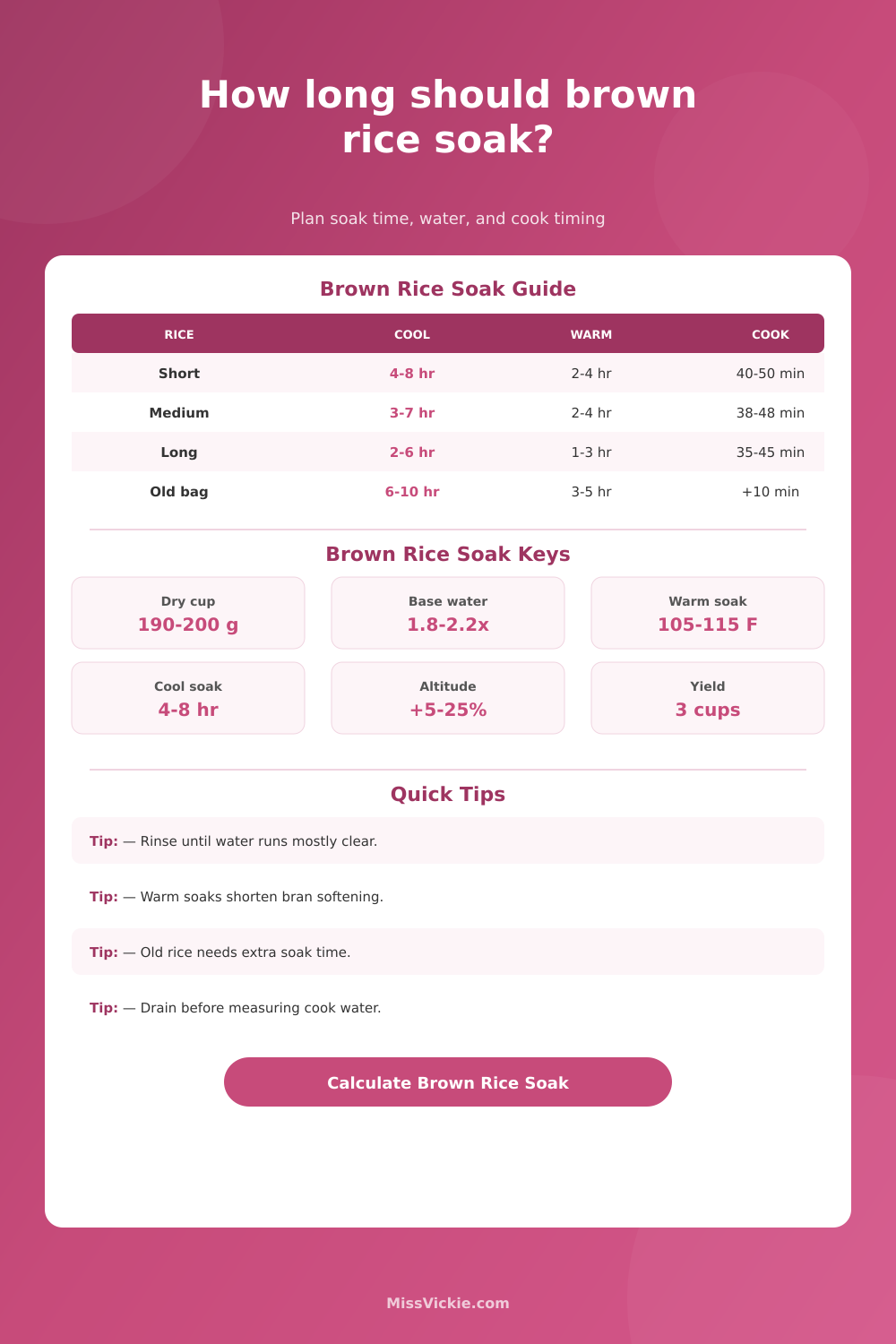
| Short-grain brown rice | 200 g per cup | 4 to 8 hours | 2.05 cups per cup rice | Plump, sticky, and bowl-friendly. |
| Medium-grain brown rice | 195 g per cup | 3 to 7 hours | 2.0 cups per cup rice | Tender but still separate. |
| Long-grain brown rice | 190 g per cup | 2 to 6 hours | 1.85 cups per cup rice | Drier, longer grains with less cling. |
| Brown basmati rice | 185 g per cup | 2 to 5 hours | 1.75 cups per cup rice | Fragrant grains, easy to over-water. |
| Brown jasmine rice | 190 g per cup | 2 to 5 hours | 1.85 cups per cup rice | Softer aroma rice, slightly clingy. |
| Sweet brown rice | 200 g per cup | 5 to 9 hours | 2.15 cups per cup rice | Sticky, dense, and best fully hydrated. |
| Sprouted brown rice | 190 g per cup | 0 to 2 hours | 1.75 cups per cup rice | Already softened by sprouting. |
| Brown and wild rice blend | 180 g per cup | 4 to 8 hours | 2.25 cups per cup rice | Wild rice pieces need extra time. |
| Soak Temperature | Best Use | Timing Effect | Handling Note |
|---|---|---|---|
| No soak, rinse only | Last-minute pot | Adds 10 to 18 minutes cooking | Use enough water and a longer covered rest. |
| Cool counter soak | Standard prep | Balanced bran softening | Drain before adding measured cooking water. |
| Warm water soak | Same-day softening | About 35 percent faster | Keep it brief and cook soon after soaking. |
| Hot-start soak | Firm old grains | Fast bran hydration | Use hot water, cover, then drain well. |
| Refrigerator soak | Overnight convenience | About 40 percent slower | Good for warm rooms or long prep windows. |
| Cooking Method | Soaked Cook Time | Water Behavior | Best Texture Target |
|---|---|---|---|
| Stovetop covered pot | 34 to 48 minutes | Moderate evaporation | Tender but separate. |
| Rice cooker brown cycle | 45 to 65 minutes | Machine controls hold and steam | Soft bowl rice or meal prep. |
| Electric pressure cooker | 18 to 28 minutes | Low evaporation | Soft grains with natural release. |
| Covered oven bake | 50 to 65 minutes | Steady heat, less scorching | Large batches and older rice. |
| Pilaf method | 36 to 50 minutes | Sauteed grains absorb slightly slower | Firm separated grains. |
| Pasta method | 25 to 35 minutes | Boil in excess water, then drain | Firm salad rice. |
| Dry Brown Rice | Approx Dry Grams | Cooked Yield | Common Use |
|---|---|---|---|
| 1 cup | 185 to 200 g | About 3 cups cooked | 2 to 3 side servings. |
| 2 cups | 370 to 400 g | About 6 cups cooked | Family dinner or lunches. |
| 3 cups | 555 to 600 g | About 9 cups cooked | Meal prep batch. |
| 4 cups | 740 to 800 g | About 12 cups cooked | Potluck or bowls for a group. |
| 6 cups | 1.1 to 1.2 kg | About 18 cups cooked | Large rice cooker or oven pan. |
Rice brands, pot width, lid fit, rinsing, water hardness, and exact simmer strength can move the final result. Use the calculator as a starting plan, then test a few grains before draining or resting.
💡 Brown Rice Soaking Tips
Brown rice has fiber, vitamins, and minerals in its outermost layer called bran. But the thing about bran is that it’s very resistant to heat. The result of cooking dry grains in boiling water? It have a hard outer shell and an underdone center. Enter soaking: It softens that fibrous shell before heating, ensuring even results.
It is not just for perfectionists. The cook time depends on your environment. To take that guesswork out of cooking rice, there’s a handy little calculator that will tell you what settings to use based off your situation.
Why You Should Soak Brown Rice
It looks at not only the temperature at which you soaked the grains, but also length of grain. Heat makes molecules move faster, so soaking in warm water will speed up hydration time. Be careful with warm water. Watch the time closely, because soaking the grains for too long can cause them to sour or germinate. Soaking in cooler water will be slower, but give you more wiggle room on timing.
How long did you keep that rice? The older the rice, the drier it will be. Dried rice is harder for water to penetrate. Fresh rice has more moisture. And older rice take longer to cook tender (or needs a longer soak). Feel your way through the rice. Is it flexible if you squeeze it between two adult-sized sofa? It’s fresh. Does it feel hard, like it’s snapping in your hand? Then its old and could of use some more water and time to soak before you cook.
Texture preference is deeply personal. Some people like soft rice in their brothy bowls; others prefer it firmer in salads. With this calculator, you get to pick the texture actualy. Some people like soft rice in their brothy bowls; others prefer it firmer in salads. With this calculator, you gets to pick the texture exactly. If you prefer it on the firmer side, you’ll cook faster, use less water and avoid overcooking the grains into mushiness. If you lean toward soft, you’ll hydrate it longer by choosing the opposite end of that range.
Soaking isn’t just about adding water; it’s about changing grain at the cellular level. Cooking it longer in a steaming water bath also changes things, though not for the better if the bran hasn’t softened. Therefore, adding water alone will affect the rice’s texture and make it gummy unless it had time to soften first.
Water Boils Differently At Altitude In high elevation areas, the water will boil at a lower temperature (meaning there’s less simmer), which also slow down the starch’s gelatinization process. No matter how long you soak those grains, if you’re over three thousand feet above sea level, it’ll take longer to cook them. Knowing why can help if things go wrong: maybe you see the rice looking like it’s done and then realize inside it still has crunch. That means the lower boiling temperature at altitude didn’t transfer enough energy to finish the job.
Having a tool that adjusts automatically is great, but knowing the “why” behind it help. There is no hard-and-fast rule for timing, but watching and waiting patiently is key to good brown rice. To get rid of any extra starch that would make the grains clump up, rinse them in a fine-mesh strainer till most of the water coming off the grains are clear. Then, drain the soak water thoroughly and add new liquid in which to cook.
After that, just go with it: Give it enough time and the correct temperature, and the bran gives way. Treat it like the dormant seed it is, rehydrating it enough so that it softens and expands without bursting apart. Going slow is the fastest way to get tender bites from a tough shell.