Rice Soaking Time Calculator
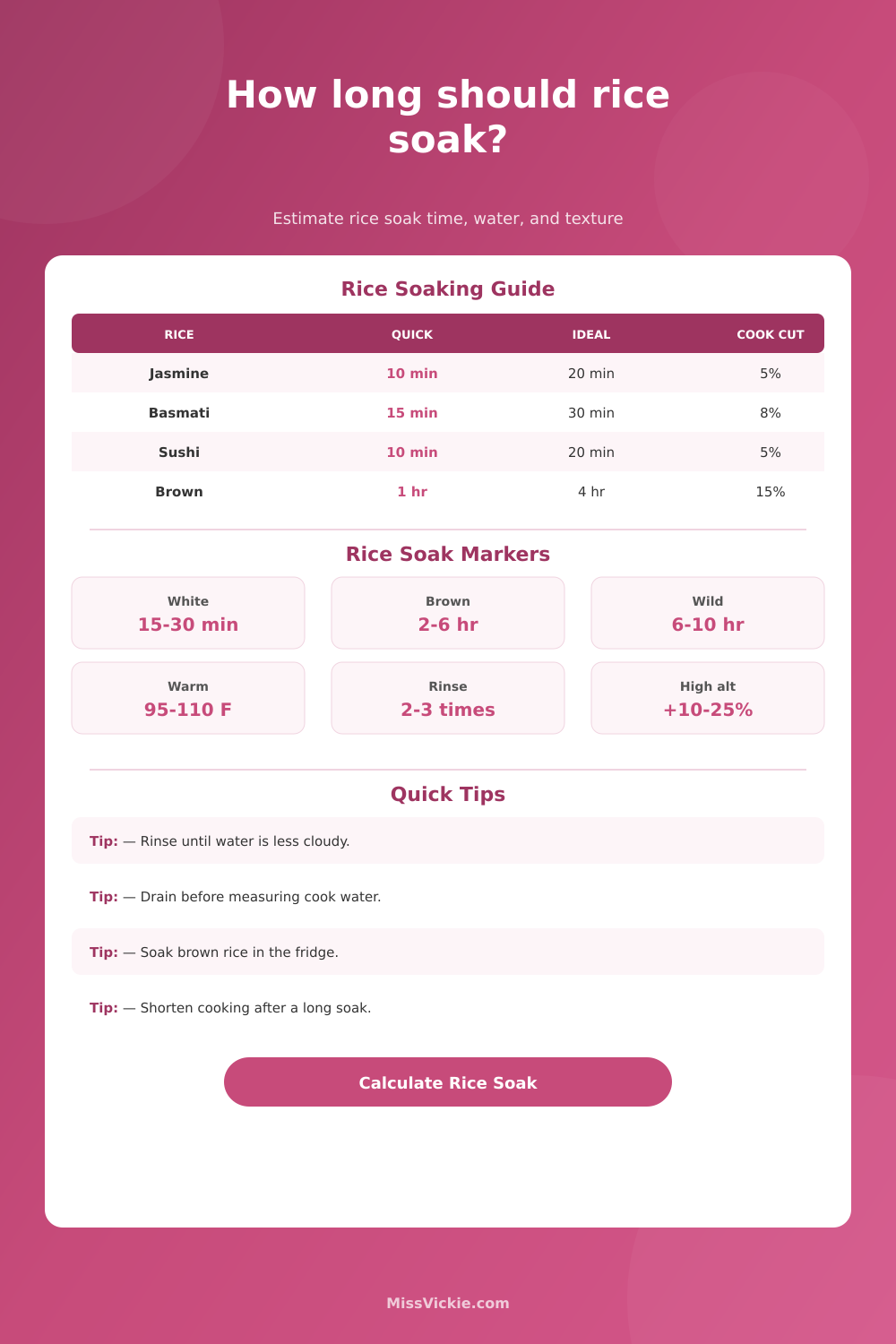
Estimate rice soaking time, water temperature, rinse level, grain age adjustment, altitude effect, cooking method change, and target texture for common white, brown, sushi, basmati, and wild rice batches.
🍚Rice Soaking Presets
Choose a common rice plan, then adjust rice type, cups or grams, soak purpose, water temperature, grain age, rinse level, cooking method, altitude, and target texture.
⚖Rice Soak Inputs
Rice Soaking Plan
Adjust the inputs to estimate rice soaking time.
Soak Breakdown
Cooking Adjustment
Step Plan
📊Rice Soaking Snapshot
This calculator estimates hydration timing for dry rice. Drain soaked rice before cooking unless your recipe specifically includes the soak water in its measured liquid.
📘Rice Type Soaking Table
| Rice Type | Typical Soak | Why Soak It | Watch Point |
|---|---|---|---|
| Jasmine or long-grain white | 10-25 min | Cleaner, fluffier grains | Too long can make thin grains fragile |
| Basmati | 20-40 min | Longer grains and better expansion | Drain gently to avoid broken tips |
| Sushi or short-grain white | 15-30 min | Even core hydration after washing | Rinse well, then rest before cooking |
| Brown rice | 2-6 hr | Bran softening and faster cooking | Use the refrigerator for long warm-day soaks |
| Wild rice blend | 2-5 hr | Helps mixed grains finish together | Blend timing depends on the white-rice portion |
| True wild rice | 6-10 hr | Softens tough outer layer | Long soak reduces simmer time noticeably |
| Arborio or risotto rice | 0-10 min | Usually rinse-rest only | Do not wash away all risotto starch |
| Glutinous or sticky rice | 4-8 hr | Needed for even steaming | Drain very well before steaming |
| Parboiled rice | 10-20 min | Optional texture smoothing | Already processed, so do not over-soak |
| Black or red rice | 3-8 hr | Better bran hydration and chew | Expect colored soak water |
🚰Water Temperature and Rinse Table
| Setting | Calculator Effect | Best Use | Kitchen Note |
|---|---|---|---|
| Cold water | Lengthens soak about 18% | Delicate white rice or slow prep | Texture stays firmer and less fragile |
| Room temperature | Baseline timing | Most short white-rice soaks | Drain and cook promptly after soaking |
| Warm water | Shortens soak about 15% | Brown, wild, or older pantry rice | Avoid very long counter soaks |
| Hot water | Shortens soak but raises breakage risk | Quick whole-grain softening | Not ideal for basmati or thin jasmine |
| Refrigerator | Lengthens soak about 35% | Long brown or sticky rice soak | Best option for overnight soaking |
| Rinse until clear | Cleaner grains, less surface starch | Fluffy, sushi, and fried-rice prep | Reduce cook water slightly if rice is wet |
⏱Cooking Method Adjustment Table
| Cooking Method | After-Soak Cook Change | Water Ratio Cue | Resting Cue |
|---|---|---|---|
| Covered stovetop pot | Reduce time 5-15% | Lower ratio slightly after long soaking | Rest covered 10 min |
| Rice cooker | Use normal cycle, less water for long soak | Start with 5-10% less water | Rest on warm 5-10 min |
| Pressure cooker | Reduce pressure time 10-25% | Use conservative water to avoid mush | Natural release helps whole grains |
| Covered oven rice | Reduce bake time 5-10% | Keep dish tightly covered | Rest before fluffing |
| Steamer | Soak is essential for sticky rice | Drain before steaming, no pot ratio | Steam until centers are tender |
| Pilaf method | Short soak only | Toast drained rice before liquid | Keep grains separate with a covered rest |
⛰Altitude and Texture Table
| Condition | Calculator Adjustment | Texture Result | What To Change |
|---|---|---|---|
| Under 2,500 ft | No altitude penalty | Normal grain softening | Use the recipe baseline |
| 2,500-5,000 ft | Add 8% cook time | Centers may stay firmer | Rest longer before uncovering |
| 5,000-7,500 ft | Add 16% cook time | Whole grains need patience | Use a slightly longer simmer |
| Above 7,500 ft | Add 25% cook time | Soak helps but does not replace cooking | Check tenderness before draining |
| Firm target | Shorter soak and less water | Good for salads and fried rice | Cool rice quickly after cooking |
| Soft or sticky target | Longer soak and normal water | More cohesive bowl rice | Do not over-fluff while hot |
⚖Comparison Grid
Best for jasmine, basmati, sushi, and parboiled rice when you want cleaner grains.
Brown, black, red, and wild rice benefit from a longer hydration window.
Glutinous rice usually needs a long soak, then thorough draining before steaming.
Works for many white rices, but older and whole-grain rice will cook less evenly.
📝Rice Soaking Tips
Rice is one of those ingredients we mostly cook as if it were static: add some boiled water, set a timer, and done. Which, okay! It is great for a simple bowl of white stuff. But that approach leave texture on the table. But that approach leaves texture on the table.
Start by soaking. Letting the grain hydrate before any heat come near is the game-changer. With the above calculator, you choose your target texture and grain type; it does the math. No more guesswork with water-to-grain ratio or time. It is a precise plan based off your pantry and pot setup, transforming a vague recipe direction into something custom made to you.
Why Soaking Rice Is Important
In other words: What’s important here is all about kind of grain. Specifically, it is the kind of rice. Because brown rice has a protective shell (called the bran layer), it won’t let any water in. To get around that, you have to soak it for hours to soften that outer layer enough to allow inside kernel to cook evenly. White rice lacks that barrier; it absorbs water easily. Varieties such as jasmine and basmati frequently works best with only twenty minutes spent sitting in cool water. This allows the starch inside to soften without becoming mushy or fragil.
For example, this is what makes short-grain sushi rice so different than wild rice. Those differences are explained briefly in the reference table on the page. One other way to drastically change how fast grain absorbs water is water temperature. Warm water increase molecular movement and leads to quicker absorption. Use warm water if you’re in a hurry or have an older batch of dry grain that’s been sitting in storage. Conversely, cold water = slower absorption = retains firmer texture without any break down (good news for preventing delicate grains from breaking apart during agitation).
For longer soaks; like overnight for brown rice, the fridge becomes your new BFF; not only does it keep the rice safe from bacteria, but it also ensures it soak evenly throughout. For shorter soaks (room temperature’s fine), be careful not to leave wet rice at room temp for extended periods, as this increase your chances of spoilage.
Soaking and rinsing are similar in that both prepare your rice for better cooking, but they’re actualy different. While rinsing clears away excess surface starch that would otherwise cause the grains to clump up when cooked, soaking breaks down the grain’s structure so it cook evenly, top-to-bottom. Too often, people lump the two together in recipes with inconsistent results: the outside is overcooked while the inside remains hard. With this tool, you can toggle between them separately, which lets you customize exactly how much (or little) you want one or the other. For example, if you’re making fried rice, you may wish to thoroughly rinse the grains to prevent sticking, yet still use a short soak to make sure they cooks through. Each on its own provides a certain level of control over the final dish; combined, they provide total mastery over the final texture.
Soaking a grain before cooking alters the amount of water needed as well. Because the grains are already partially hydrated from being soaked, they will require less extra liquid when simmered. Different devices such as pressure cookers and stovetop pots behaves differently regarding their ability to hydrate the grains. This means that knowing your device’s quirks is essential for adjusting water ratios. Use too little and you’ll have a pot of mush; use too much and you’ll have mushy middles.
Another factor is high altitude: this reduces water’s boiling point, lengthening the cooking time considerably. If you live in Denver or Santa Fe, don’t worry, the device accounts for altitude. Altitude affects the final product regardless of how well you soaked the grains beforehand. And then there’s the texture: Do you like it firm, such as with fried rice or salad? Or do you prefer something softer, creamier, perhaps as a comforting side dish or even a porridge? That’s where the calculator takes over, suggesting different cook water ratios or soak times depending on your preferences (you want the jasmine fluffy but not sticky; the sticky rice cohesive but not gloppy). It accounts for all those tricky nuances of cooking time by method and age, and altitude, leaving you free to think about what you’re going to serve with it.
Overall, learning to cook rice well boils down to knowing how starch reacts to water throughout the process. In soaking, we bridge the gap from ingredients to final product by getting inside the grain, thereby improving its texture, cook, and flexibility in our cooking range. A few tweaks can go a long way, whether you’re batch-cooking brown rice for the rest of the week or need to make some sushi for your pals. The outcome: consistently superior rice with due respect for the ingredient (and your time). You should of tried it.