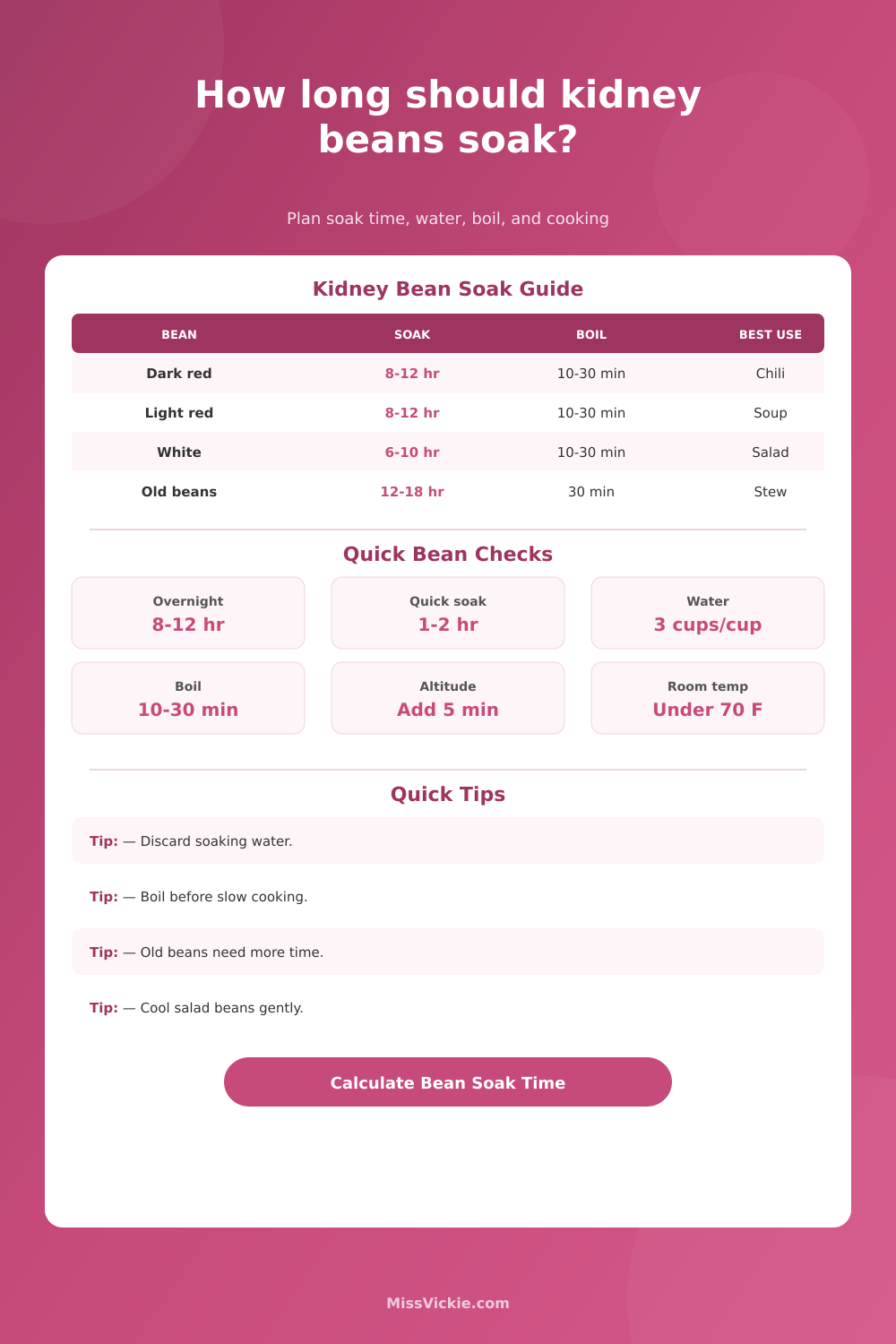
Kidney Bean Soaking Time Calculator
Estimate kidney bean soaking time, water volume, mandatory hard-boil safety timing, altitude adjustment, and cooking window for chili, salad, soup, stew, freezing, and meal prep.
🫘 Kidney Bean Presets
Choose a real kitchen scenario, then adjust dry weight, kidney bean type, age, soak method, water ratio, room temperature, altitude, safety boil, and final use.
⚖ Bean Batch Details
Dark red kidney beans soak plan
Use a full soak, fresh water, and a hard boil before simmering kidney beans until tender.
Timing Breakdown
Batch Breakdown
Step Plan
📌 Quick Kidney Bean Reference
📋 Soak Method Table
| Method | Typical Soak | Best For | Safety Note |
|---|---|---|---|
| Classic overnight | 8 to 12 hours | Most red and white kidney beans | Drain, rinse, then boil in fresh water. |
| Quick hot soak | Boil briefly, rest 1 to 2 hours | Same-day chili or soup | Still needs the full hard boil after soaking. |
| Salted brine soak | 6 to 10 hours | Creamier beans with fewer splits | Rinse well before fresh cooking water. |
| Extended refrigerated | 12 to 18 hours | Old beans or make-ahead prep | Use the refrigerator for long or warm-kitchen soaks. |
| No soak | 0 hours | Emergency cooking only | Boil first, then expect a much longer simmer. |
🫘 Kidney Bean Type And Age Table
| Bean Type | Soak Tendency | Cook Texture | Use Match |
|---|---|---|---|
| Dark red kidney | Standard 8 to 12 hours | Holds shape in chili | Chili, stew, red beans |
| Light red kidney | Standard 8 to 12 hours | Tender skin, creamy center | Soup, chili, rice bowls |
| White kidney or cannellini | Often ready in 6 to 10 hours | Creamy, more delicate skin | Salad, minestrone, mash |
| Large red or large white | Longer hydration helps | Big centers need even soaking | Stew, freezer prep, braise |
| Older pantry beans | Add 2 to 6 hours | May need extra simmering | Best in soup or stew |
🌡 Boil Safety And Altitude Table
| Condition | Hard Boil Target | Why It Matters | After Boil |
|---|---|---|---|
| Standard kitchen | 10 minutes minimum, 30 minutes cautious | Kidney bean lectin needs boiling heat, not just a simmer. | Simmer until fully tender. |
| Slow cooker recipe | Boil on stovetop first | Slow cookers may not reach a reliable rolling boil. | Add boiled beans to the cooker. |
| Above 3,000 ft | Add time to the hard boil | Water boils at a lower temperature as altitude rises. | Expect a longer tender simmer. |
| Very old beans | Use the cautious boil | Uneven hydration can leave firm centers. | Cook gently, then salt and acid later. |
| Canned kidney beans | Already commercially cooked | This calculator is for dry beans, not canned beans. | Rinse, heat, and use. |
For dry kidney beans, discard soaking water and boil in fresh water before slow cooking, simmering in chili, or cooling for salads.
🍲 Chili, Salad, Soup, And Stew Use Table
| Final Use | Target Texture | When To Salt Or Acid | Planning Note |
|---|---|---|---|
| Chili | Tender but intact | After the safety boil and partial tendering | Tomatoes can slow beans, so do not start them in acidic chili. |
| Cold salad | Fully tender, not splitting | Salt during simmer, acid after cooling slightly | Cool gently in cooking liquid for smoother skins. |
| Minestrone or soup | Creamy center with whole skin | Salt once beans begin to soften | White kidney beans work especially well. |
| Long stew | Very tender and sauce-friendly | Add acidic sauce after beans soften | Older beans are safer here than in salads. |
| Freezer beans | Just tender | Season lightly before packing | Freeze with cooking liquid to protect texture. |
🔍 Soak Method Comparison Grid
Most predictable for red kidney beans, especially when you need chili beans that hold shape.
Good for same-day cooking, but it saves calendar time rather than removing the boil requirement.
Useful for old beans, warm rooms, or meal prep that starts the night before.
Works in a pinch, but the beans need more water, more simmering, and the same hard boil.
💡 Kidney Bean Soaking Tips
This calculator estimates soaking and cooking windows for dry kidney beans. It is for kitchen planning; always discard soak water and cook beans fully before serving.
Did you know? When cooking with dried legumes. Such as kidney beans or other types of beans, you’re not sure how long they’ve been sitting on your pantry shelf. They may have been purchased recently in a sale, but then again maybe not…years ago. It’s a guessing game that usually ends with either leather-hard center or mushy skins.
Soaking dry beans is partly about logic and partly about science because both hydration and safety is factors. First, certain types of bean, including kidney beans, contain a type of anti-nutrient called lectin (phytohaemagglutinin), which requires very hot temperatures to destroy completly. Second, you cannot eliminate it with an instant soak. It involve separate steps and is more of a process than a lengthy cook.
Why Soaking and Boiling Beans Is Important
With factors such as your kitchen altitude and bean age built in, the calculator lays out these stages and calculates how much water (volume) to use based off dry weight. Then it guesses at how long they’ll take to get hot enough that the heat will kill off toxins, which is a key part of process before we can even think about flavor.
This is where many home cooks cut corners; it seems like overkill so they skip safety aspect. If the beans aren’t boiled first before being placed in slow cooker, their temperature won’t rise high enough to kill lectins. This is what makes the difference between a safe meal or one that’s going to make you sick. With the tool, you actualy have to confront whether you’re doing this part correctly or not, so you don’t go for tender yet undercook everything.
How old is your bean? Because as they age, they become less moist (and also has tougher cell walls). While a freshly-purchased bean will take on water and cook up tender uniformly, a three-year-old bean that’s been hanging out in your cupboard could be a dud regardless of soaking duration. To compensate for its altered structure, simply increase both the soak and simmer durations. The timer takes into account this age-related adjustment so you don’t wind up with some creamy cooked beans and others still rock-hard.
So, there you go: a bean-to-bowl cooking calculator to help you out!
Beans are very thirsty, but they also expand a lot when soaked in liquid. Too little water will result in some of the interior remaining dry while exterior splits open and wrinkles. Too much water will be wasted by leaching excess flavor from beans. The classic ratio creates a buffer zone where each bean gets plenty of water without watering down final soup stock.
Don’t use this soak water, the indigestible sugars will make you bloat. Throw the beans away and rinse them. Start again with fresh water to improve the texture and make them easier to digest.
There is another twist: altitude. Sea-level cooks probably haven’t even thought about this factor. Your water doesn’t boil quite as hot when you’re above sea level. That makes for less-efficient toxin-deactivating boiling. To offset this loss of thermal energy, you must boil longer. But how long? That’s what the tool considers. Are you visiting family in the mountains? Moving up to a new home? It is an easy error.
Not all beans reacts similarly to such treatments. Some beans (like dark red kidney) retain their form excellently and are therefore great choices for chilis (when structure is important). Other kinds (such as white cannellini) will break apart more readily, making those better suited to salads and other creamy soups. To avoid texture problems, select the right bean for each dish. Nobody wants broken-up bits in a salad when solid bite are called for. The chart on the page lists them clearly so you can pick the right bean for your dish without settling for something else.
Beans are all about biology: You need precise attention and patience to cook them successfully. This isn’t about hurrying dinner; it’s about taking time out to honor the legumes’ biology. Let the water do the work when they’re soaking, respect the heat when they’re boiling, and simmer them gently till they’re tender. With the timer off your mind, you can concentrate on technique and seasonings. When you learn their dance; soak, boil, simmer, you’ll never fear dry beans again. They become a strong base upon which to build meals with rich rewards for patient, careful cooking.
How you think about your pantry staples is what changes.