Bone Broth Simmer Time Calculator
Estimate simmer or pressure-cook time for chicken, beef, pork, turkey, lamb, fish, and mixed bones with roast level, vinegar amount, water ratio, collagen target, temperature, and planned reduction.
🥣 Bone Broth Presets
Pick the closest batch, then tune bone weight, pot type, roast level, acid, water ratio, collagen target, simmer temperature, and yield reduction.
⚖ Broth Batch Details
Bone broth plan
Your simmer time, water, acid, collagen, and finished yield estimate will appear here.
Time Breakdown
Yield Breakdown
Batch Schedule
🦴 Bone Type Yield Grid
⏱ Simmer Time Reference Table
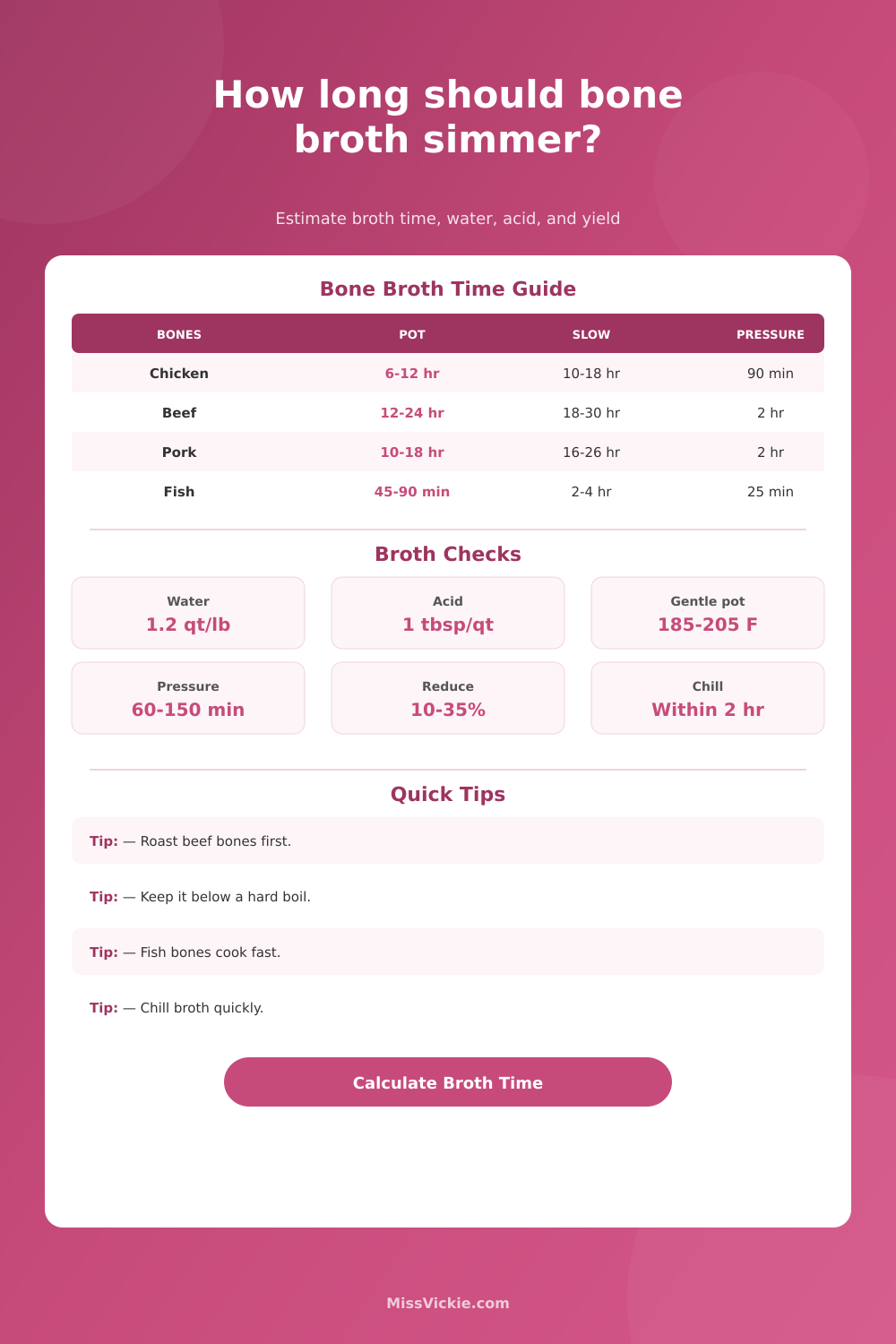
| Bone Type | Stockpot | Slow Cooker | Pressure Cooker | Best Use |
|---|---|---|---|---|
| Chicken carcass or wings | 6-12 hours | 10-18 hours | 75-100 minutes | Everyday broth, soups, sipping broth |
| Chicken feet or backs | 8-14 hours | 12-22 hours | 90-120 minutes | Gelatin-rich chicken broth |
| Turkey frame and necks | 8-16 hours | 14-22 hours | 90-120 minutes | Holiday carcass broth |
| Beef marrow and soup bones | 12-24 hours | 18-30 hours | 110-150 minutes | Deep roasted beef broth |
| Knuckles, joints, oxtail | 16-30 hours | 22-36 hours | 120-180 minutes | High-collagen gel broth |
| Fish frames and heads | 45-90 minutes | 2-4 hours | 20-35 minutes | Delicate seafood stock |
💧 Water, Acid, And Reduction Table
| Setting | Light Broth | Balanced Broth | Rich Broth | Calculator Effect |
|---|---|---|---|---|
| Water ratio | 1.6-2.0 qt per lb | 1.1-1.4 qt per lb | 0.8-1.0 qt per lb | Changes starting volume and concentration |
| Acid amount | 0.5 tbsp per qt | 1 tbsp per qt | 1.25 tbsp per qt | Flags low, balanced, or sharp acid |
| Reduction | 0-10% | 15-25% | 30-45% | Reduces final yield and strengthens body |
| Simmer temperature | 175-185 F | 185-205 F | 205-215 F | Adjusts speed, clarity, and evaporation |
| Gel target | Flavor-first | Everyday gel | Sauce body | Adds or removes extraction time |
🔥 Roasting And Temperature Table
| Roast Level | Flavor | Time Effect | Clarity Note | Use With |
|---|---|---|---|---|
| Raw bones | Clean and mild | Baseline | Skim foam early | Chicken, turkey, fish |
| Light roasted | Gentle savory depth | Slightly faster | Usually clear if simmered gently | Poultry and lamb |
| Deep roasted | Brown, round flavor | Baseline to slightly slower | Avoid boiling roasted bits | Beef, pork, lamb |
| Dark roast | Strong and toasty | Needs gentler heat | Can darken broth quickly | Marrow and soup bones |
| Cooked carcass | Leftover roast flavor | Shorter | May already contain salt | Chicken or turkey frames |
🧪 Collagen Target Table
| Target | Texture Goal | Best Bones | Time Direction | When To Stop |
|---|---|---|---|---|
| Fast stock | Flavor and cooking liquid | Carcass, fish, wings | Shortest | Aroma is full and bones look spent |
| Light sipping broth | Clear, drinkable body | Poultry frames, marrow | Short to medium | Broth tastes rounded but not sticky |
| Balanced everyday gel | Sets softly when cold | Mixed bones and joints | Medium | Small chilled spoon sample thickens |
| Rich gelatin body | Noticeable gel and mouthfeel | Knuckle, feet, trotters | Long | Cartilage softens and liquid coats spoon |
| Extra gel for sauces | Concentrated stock base | Feet, oxtail, joints | Longest | Yield is reduced and sample gels firmly |
📊 Method Comparison Grid
Best for skimming, adjusting evaporation, checking clarity, and building a classic gentle simmer.
Useful for overnight poultry or beef bones when you want steady low heat and low attention.
Extracts gelatin quickly, though the broth may taste less roasted than a long open simmer.
Reducing after straining concentrates body and flavor while lowering the final number of jars.
💡 Bone Broth Tips
This calculator estimates cooking time and yield for kitchen planning. Follow food-safe cooling, storage, and reheating practices, especially when making large batches.
When cooled, bone broth will turn into jelly. To test this pour a ladle into a small bowl. Does it wobble? Does it bounce back up? Good, you’ve pulled out some collagen. Was the broth still thin? Maybe you didn’t cook it long enough, maybe you used too much water, or maybe you didn’t use any bones that has structural proteins.
Extraction is chemistry of cooking. It’s about pulling things out. Knowing what you want to pull makes all the difference and let’s you control the process. So what’s the math? Enter some inputs on the calculator above, then calculate how long.
How to Make Good Bone Broth
Most people who do not care about cooking properly sees bone broth as something they can just forget about. They’re wrong: The variables are important, even if the person operating them isn’t.) The basic timing depends on the bone: poultry carcasses soften with less heat and acid than denser bones, such as beef knuckles. More collagen needs to be broken down.
Boiling harder won’t extract it any faster then the laws of physics allow. Boiling tends to work against you by mixing fats, which turns the broth cloudy and unpleasant when separated in soup. The process itself is different, depending on how you choose to cook it. A stockpot could take up to 20 hours for its gelatin to be released; a pressure cooker pushes steam through thick marrow quickly to force out gelatin in less than two.
While the pressure cooker is more efficient, a stockpot tends to develop more complex flavors during long, gentle simmering sessions. Using a slow cooker, meanwhile, means trading time for convenience and more flavor depth. In this case, enzymatic action happen slowly over several hours. Depending on what kind of heat you have (ambient vs. Pressurized), the device will help you know when to expect results within a reasonable window; not just tell you to come back sometime.
The most frequent error in home cooking is the water ratio. Too much water means what you create after many hours of simmering has no body at all. Too little water means you end up with more concentrated base, like a richer broth, or one where you will want to add some water to lighten it up, such as a lighter stock for thinning sauces.
To account for this, the calculator asks how much water you’d like to use per pound of bone. That way, if you prefer rich broth but you accidental use too high a water-to-bone ratio, you don’t wind up with soup water that’s just been flavored. Because acids also help leach minerals out of the bone matrix, this is a secondary ingredient, rather than a primary flavor-contributor. Usually a tablespoon of vinegar per quart is plenty to aid extraction without imparting a pickling-liquid flavor.
The last lever of control is reduction. Strain, then continue boiling to reduce it further if necessary. By doing so, you’ll concentrate both the body and flavors in the batch. You will also reduce amount of water in the resulting stock. It’s a good way to save a watery stock, just strain it into another pot and keep cooking until the stock is reduced enough to your liking.
Salts and other soluble proteins stays behind to give that mouthfeel. But it requires more time and energy. Save those resources: Get the initial ratio correct. Now take note of how much you get. That’s the expected yield factoring in evaporation throughout the cook (which you know happens), as well as any reduction planned post-cook.
But one nuance the recipe doesn’t capture is the savory complexity that roasting your bones before simmering can impart. That depth comes from the Maillard reaction. Deep brown flavors develops as proteins react with sugars to form flavor compounds that enrich the liquid. However, this requires a gentler simmer so the bitter notes don’t overpower. Caramelizing beef bones (say) means you want to go slow and steady to avoid burning the fond, the goal here is a clear broth. To match this roasted bone level, the tool recommends slightly longer simmer times for heavily browned bones.
Time’s up for crust dissolution… Making bone broth isn’t so much about following a strict timer as it is getting to know which nutrients are being extracted from the bones. Do you seek a thin broth that’s drinkable like tea, or one that has the consistency of Jell-O? Are you making a hearty sauce or just sipping throughout the day?
The formula is the same. And the combination of time plus temperature (and even ratio) will tell you how your final product comes out. If you plan for these factors before starting, then there’s no guessing game. Settle into your chair and enjoy the reward: a firm batch that holds together in the refrigerator, one spoonful at a time.