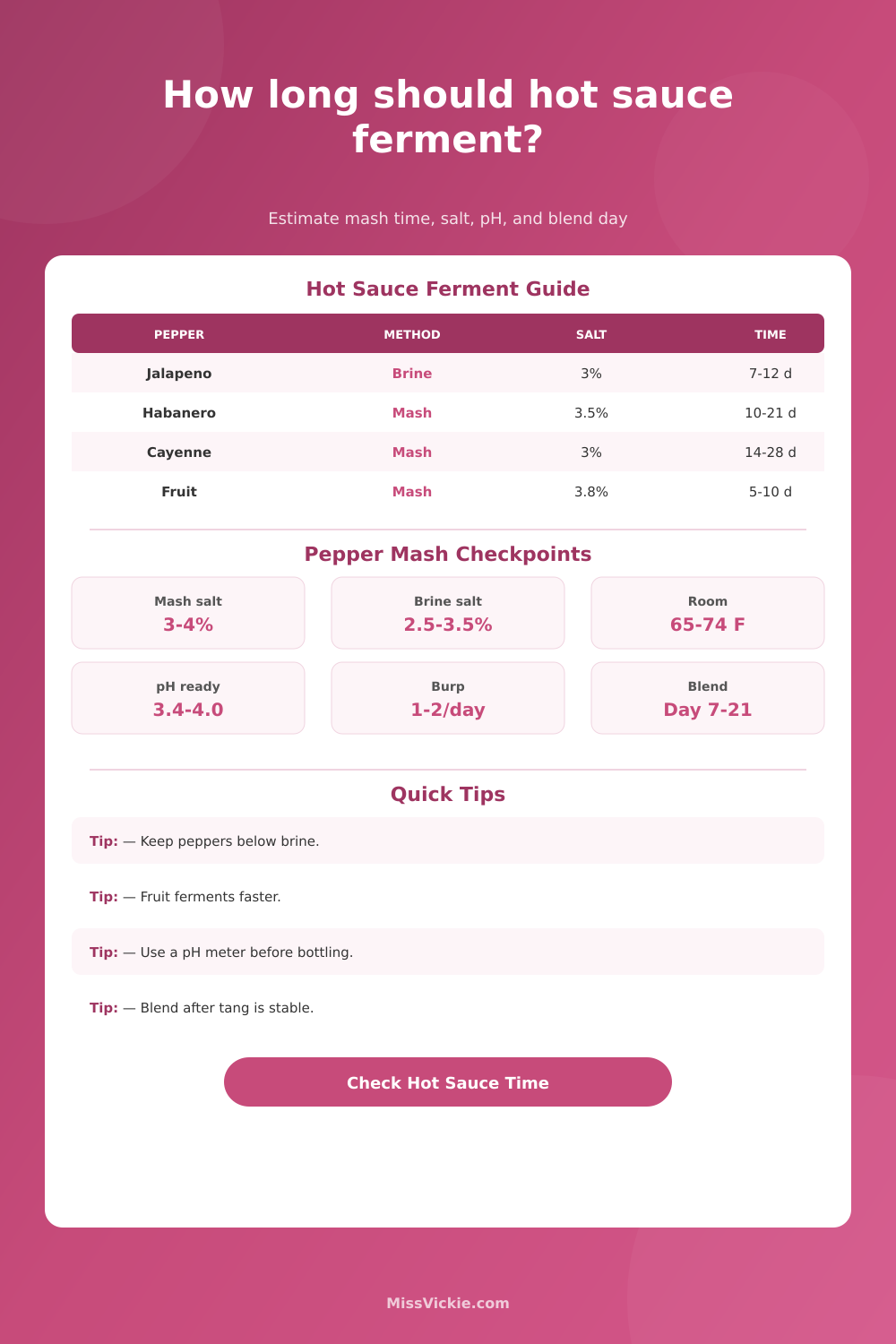
Hot Sauce Fermentation Time Calculator
Estimate pepper mash or brine fermentation time, salt level, sugar speed, pH readiness, burping rhythm, and blending day from the batch details that actually move hot sauce.
🌶Hot Sauce Presets
Pick a batch close to your pepper style, then adjust salt, fruit, room temperature, target tang, and venting plan.
⚖Fermentation Inputs
Your hot sauce fermentation plan
Adjust the batch inputs to estimate timing, pH readiness, burping, and blending day.
Batch Math
Ferment Drivers
Timing Schedule
🧂Quick Planning Numbers
🌶Pepper Fermentation Speed Table
| Pepper Type | Natural Ferment Speed | Typical Tang Window | pH Direction | Best Sauce Use |
|---|---|---|---|---|
| Jalapeno or serrano | Medium, often grassy early | 7-14 days | Usually 3.7-4.1 when ripe | Green table sauce, taco sauce |
| Fresno or red jalapeno | Medium-fast with good sugar | 10-18 days | Often 3.5-3.9 | All-purpose red hot sauce |
| Cayenne or tabasco | Medium and steady | 14-28 days | Often 3.4-3.8 | Thin Louisiana-style blends |
| Thai bird chile | Fast aroma, sharp heat | 10-21 days | Often 3.5-3.9 | Garlic chile sauce and vinegar finish |
| Habanero or Scotch bonnet | Fast when fruit is added | 7-21 days | Often 3.4-3.8 | Fruit hot sauce, Caribbean-style blends |
| Superhot peppers | Slower to taste balanced | 21-45 days | Often 3.5-4.0 | Small-batch concentrate or blended sauce |
| Mixed ripe peppers | Depends on sweet peppers | 10-24 days | Often 3.5-3.9 | House hot sauce and pepper blend bases |
| Smoked or roasted peppers | Slower if microbes were reduced | 14-35 days | Often 3.6-4.1 | Smoky sauce, barbecue-style hot sauce |
⚗Mash, Brine, And Salt Table
| Method | Salt Planning | Ferment Speed | Burping Need | Blending Note |
|---|---|---|---|---|
| Whole peppers in brine | 2.5-3.5% brine | Slowest because skin stays intact | Low to medium | Blend after peppers soften and brine is tangy |
| Chopped peppers in brine | 2.8-3.8% brine | Medium, more exposed flesh | Medium | Drain part of brine for thicker sauce |
| Coarse salted mash | 3.0-4.0% by mash weight | Reliable and active | Medium to high | Blend when aroma turns rounded, not just salty |
| Fine blended mash | 3.2-4.5% by mash weight | Fast start, fast gas | High in tight jars | Can separate, so stir only with clean tools |
| Vacuum bag mash | 3.0-4.0% by mash weight | Warm and even | Check bag swelling | Blend directly from bag if aroma is clean |
| Backslopped mash | 3.0-4.0% plus active brine | Fastest start | Medium to high | Shortens early lag but does not replace pH checks |
🌡Temperature, Fruit, And pH Table
| Factor | Low Range | Balanced Range | High Range | What It Changes |
|---|---|---|---|---|
| Room temperature | 55-64°F is slow | 65-74°F is steady | 75-82°F is fast | Warm rooms build acid faster but can soften flavor. |
| Salt percentage | Under 2.5% is quick | 3.0-4.0% is common | Above 4.5% is slow | More salt protects texture but delays sourness. |
| Fruit or sugar | 0-5% is pepper-forward | 6-15% is lively | 16%+ is very active | Sugar fuels gas and may drop pH sooner. |
| pH estimate | Above 4.2 needs caution | 3.6-4.0 is common ripe sauce | Below 3.5 is sharp | Use a meter before bottling or shelf-stable storage. |
| Blending day | Day 5-10 for quick sauce | Day 10-21 for table sauce | Day 21-45 for deep mash | Blend when tang, aroma, and pH all line up. |
⏱Burping And Blending Schedule Table
| Container Setup | First 3 Days | Active Middle Stage | Blend Readiness | Warning Sign |
|---|---|---|---|---|
| Airlock jar | Check water channel and weight | No manual burp unless blocked | Bubbles slow and aroma is tangy | Dry airlock, floating solids |
| Loose lid on tray | Check once daily | Press solids down with clean tool | Brine is sour and peppers soften | Surface drying or mold growth |
| Tight lid jar | Burp once or twice daily | Vent over sink if fruit-heavy | Blend after pressure slows | Bulging lid, leaking brine |
| Vacuum bag mash | Watch bag inflation | Burp or reseal if ballooned | Blend when bag swells then slows | Bag seams stressed or leaking |
| Fine fruit mash | Start checking at 12-24 hr | Expect fast bubbles and separation | Blend earlier for fresh fruit flavor | Alcohol aroma or harsh fizz |
📊Target Tang Comparison Grid
Fresh pepper flavor, light fizz, mild lactic tang, and a higher pH direction.
Balanced acidity, rounded pepper aroma, and the most common blending window.
More savory sourness, softer pepper bite, and better depth after blending.
Longer-aged character for tiny doses, barrel-style blends, or vinegar finishing.
💡Hot Sauce Fermentation Tips
This calculator estimates fermentation timing and pH direction for kitchen planning. Use clean equipment, keep solids under brine, discard batches with spoilage signs, and use measured acidity for shelf-stable canning.
First, get some fresh peppers from local market or garden. Put those peppers in a jar with some water and salt. Then you close that jar and hope it’ll ferment. It’s at this point that most home sauce makers stumble: either they rush things, pulling the plug before the lactic acid bacteria have done their work…or else they wait so long that instead of a vibrant sauce you end up with something mushy or overly sour.
How long will things take? It varies depending on the temperature, chemistry, and amount of available sugar. It is important to have a way of estimating when your window are going to open and close.
How to Make Hot Sauce with a Calculator
So how does it work? These factors is weighed in the calculator’s formula, which projects a timeline based off the type of pepper, room temperature, mash method, and salt percentage. You won’t have to guess: Is my seven-day ferment sufficient, or do I really need three weeks? The calculator knows a coarsely mashed pepper will ferment sooner then a whole pepper in brine. A break in the cell wall makes the sugars available faster for bacterial consumption. And it knows that heat matter: A hot day at 74 degrees Fahrenheit in your warm kitchen will move things along much faster than a cool cellar. Knowing what drives the fermentation process help you set your expectations beforehand (and then blend accordingly).
The key control valve in all this is salt. Salt prevents unwanted spoilage organisms from growing while allowing lactic acid bacteria to flourish. Go too high and you have a pickle; go too low and you’re on the road to rot-and-mold. A little under three or four percent of your mix will be plenty, which makes it safe territory. Three percent is good for a mash. You might want just below that for a brine.
The fruit makes things interesting (complex!) but also shifts timing. Carrots, pineapple, or mango add additional sugars, which fuel bacteria’s engines with enthusiasm. Expect to see some serious bubbling action in the first day or two if there’s fruit in the picture. That kind of action calls for an airlock or regular burping duty (or both!), so that nothing explodes. And keep in mind that because of this quick action, you’ll want to monitor pH earlier than you would a straight-up pepper mash.
There’s one other factor that quietly plays an important part: temperature. Warmth speeds up microbial action, which means the creation of acids. This is good for making your sauce faster in summertime, but it is not so great when it gets so warm that it dulls the subtle flavors. On the other hand, cool temperatures slows things down, which preserves those subtle aromas but means you will need to wait longer.
Depending on variety, some peppers take a little time (a week or two); others, like the superhots, may take even longer to soften their bitter burn. The tables on the page provides reference points for what to expect from each type of pepper depending on the situation. Having an idea about your particular pepper’s pace will help you set a reasonable blending date.
The last step is to blend. For safe storage and shelf life, the sauce will need to be processed once the pH level falls below 3.5. You should also make sure it has a tangy taste. Here’s where tasting comes in. From the calculator, you’ll have an idea of when it will be ready; then you’ll use your tongue. When it hits your mouth, does it seem like it’s reached its peak? Savory depth and clean, bright flavor are what you’re looking for. Mushy, over fermented peppers aren’t good either; color dulls, fresh aromas fade. The other end of the spectrum is under-fermented, meaning it tastes too green or plant-like. It’s part science, part art. Let the calculator help set up your timeline, then let your tastebuds take it from there.
At its heart, though, hot sauce-making is all about conversation. Between microbes and time. You provide the environment (sugar, salt, heat), then sit back while Nature takes over. By giving us a solid guide to follow, the calculator shows exactly what safety steps to take and when to do them. Now we can look ahead to know when to expect blend day, figure out when to schedule burps, and track how changes to temp or fruit might impact our batch. This approach gives us space to concentrate on the flavors that matter most. Use quality peppers, stick to your ratios, and allow the ferment to do its thing. What you’re left with? A bottle of sauce whose taste embodies care and patience, capable of delivering fire to your plate.
Actually, some people think they should of used more salt. You might want to avoid a luxurius texture if it gets too mushy. It is moddern science that helps us most. The recipe dissapears when you eat it all!