
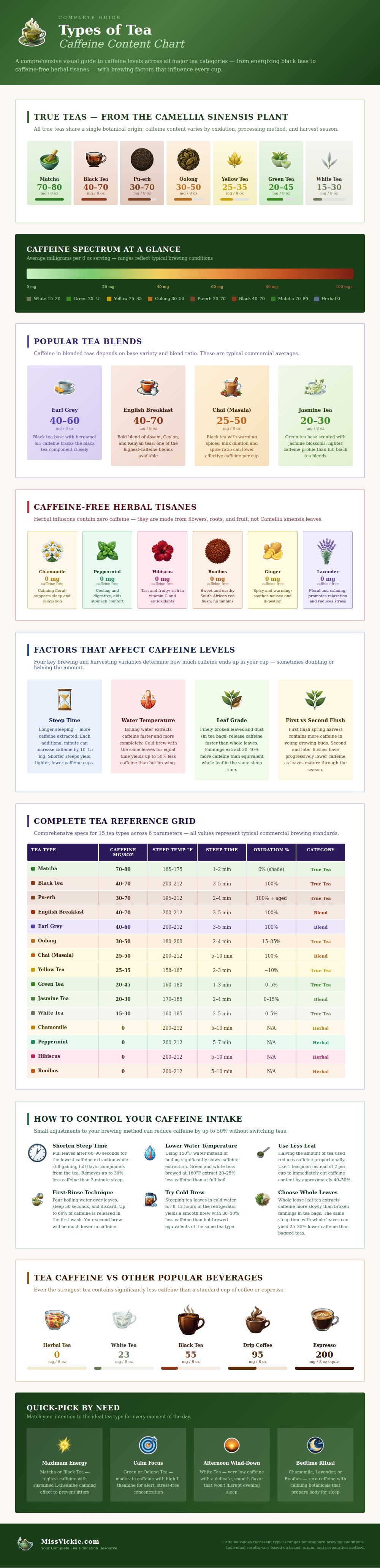
And if you think your morning cuppa doesn’t pack quite as big a caffeine punch than a coffee, well, maybe so, but then again maybe not. It all depends on brewing method, which plants is used, and how they’re processed. All of that can mean the difference between a jolt like coffee, or something a little more mellow.
Because white tea is generaly made from young buds that haven’t had time to store as much caffeine in them, it tend to be lower in the stuff than green tea. And matcha (which includes the entire ground-up leaf) will has even more, packing a powerful kick like its caffeinated cousin. Interestingly, the same leaves contains different levels of caffeine depending on how you brew them.
How to Control Caffeine in Your Tea
The hotter your water and the longer you let it steep, the more caffeine will leach out in the water, if you drop a bag of black tea into boiling water and leave it for five minutes, you are going to get nearly all the caffeine that leaf have to offer. If you want less, use cooler water or pull the leaves after just a minute. That’ll cut down its effects dramaticly. This is good to know if you’re nervous about getting too much caffeine but still want some alertness, since you can change the extraction process rather than switch drinks completely.
Broken leaves has more surface area exposed to water than whole leaf do, so even though broken pieces are used inside tea bags, they will still release caffeine at a higher rate. In addition, whole leaves takes longer to release their contents different than the broken pieces do. A quick rinse of a tea bag removes a lot of caffeine compared to a full steeping of loose leaves. For someone who is sensitive to stimulants, going with loose leaf give them more control over the strength and also makes it possible to make multiple infusion with gradually decreasing potency each time. This helps to soften the stimulant effect while not sacrificing on taste.
Herbal tea is an option if you want tea without caffeine (like rooibos, peppermint, and chamomile). Unlike true tea, which come from the Camellia sinensis plant, these are infusions of fruits, roots, and/or flowers (so no caffeine here). For a relaxing evening brew, that’s important; even though English Breakfast-type black teas blend together some non-caffeinated leaves, the base of the brew is still caffeinated. Going herbal takes all caffeine out of your evening regimen.
So it’s not about avoiding everything; it is about being intentional. If you prefer certain tea over others based off how you feel, then use them to match: Deep work? Try matcha (or other black tea) for its calming yet alert effect from L-theanine plus caffeine. Quiet reflection time? Try white tea or some herbal infusion instead, which won’t rev up your nervous system but will still offer soothing hydration.
When we pair our bodys biology with what we drink, everyday energy management becomes a skill, not just a routine activity. Get to know the leaf first; then choose precisely how much to consume.