Ham Smoking Time Calculator
Estimate smoking time for cured ham, spiral ham, country ham, fresh raw ham, and whole ham with bone style, smoker temperature, glaze timing, target internal temperature, rest, yield, and servings.
🍖 Ham Smoking Presets
Choose a real ham scenario, then adjust the weight, cure style, bone style, smoker temperature, glaze, target, rest, and portion size.
⚖ Ham Smoking Details
Ham smoking plan
Your ham timing and yield estimate will appear here.
Timing Breakdown
Yield And Serving Breakdown
Suggested Smoke Schedule
📊 Ham Plan Snapshot
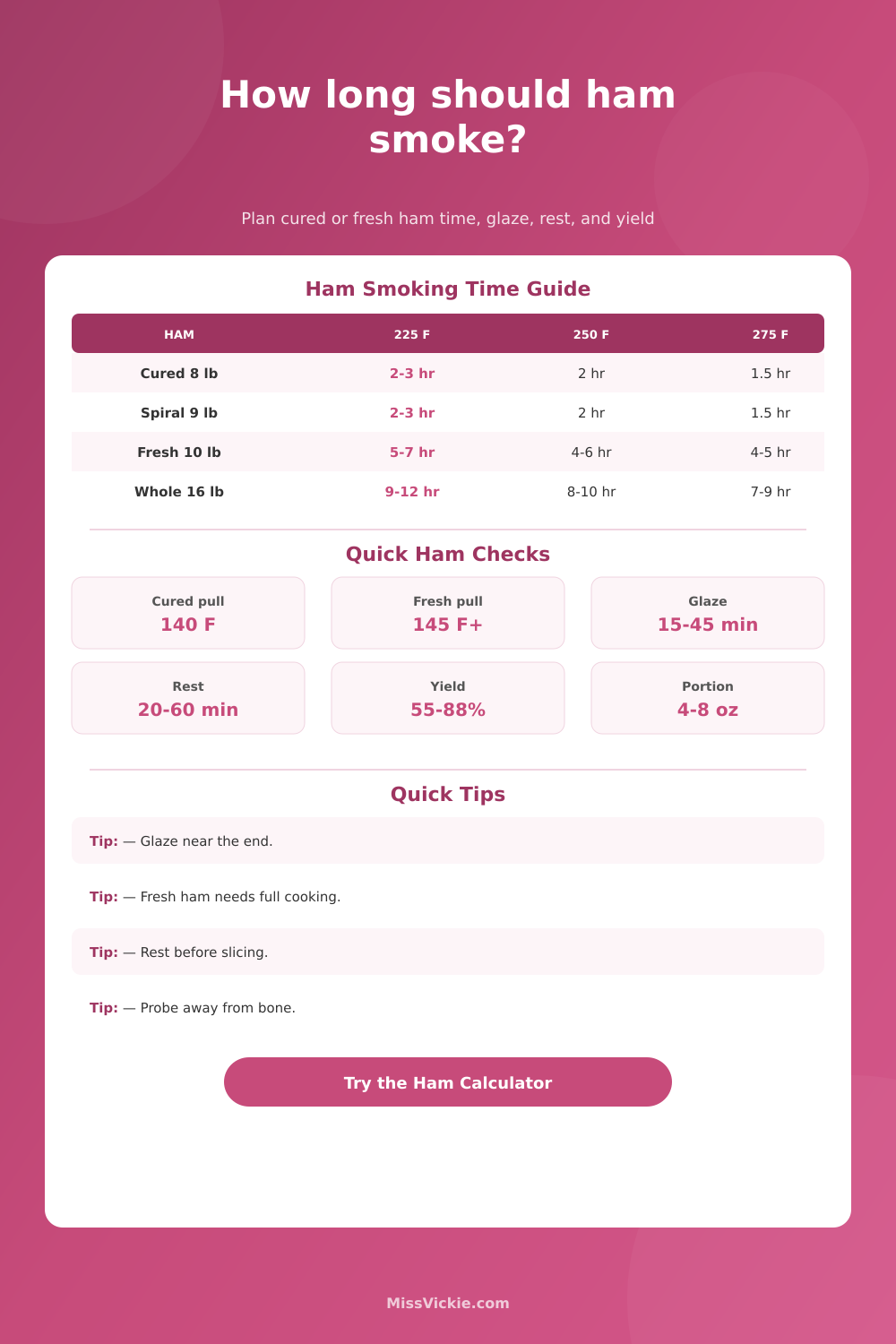
🌡 Smoking Time Reference
| Ham Type | Target Internal Temp | 225°F Smoker | 250°F Smoker | 275°F Smoker |
|---|---|---|---|---|
| Fully cooked cured half ham | Reheat to 140°F | 18 to 22 min per lb | 14 to 18 min per lb | 11 to 15 min per lb |
| Spiral sliced fully cooked ham | Reheat to 135°F to 140°F | 16 to 20 min per lb | 13 to 16 min per lb | 10 to 13 min per lb |
| Partially cooked cured ham | Cook to label direction or 145°F+ | 26 to 32 min per lb | 22 to 27 min per lb | 19 to 24 min per lb |
| Fresh raw ham roast | Cook to at least 145°F | 32 to 40 min per lb | 27 to 34 min per lb | 23 to 30 min per lb |
| Whole fresh bone-in ham | Cook to 145°F to 160°F | 34 to 44 min per lb | 29 to 37 min per lb | 25 to 32 min per lb |
| Fresh ham for pull-apart slices | Cook to 180°F to 190°F | 44 to 58 min per lb | 38 to 49 min per lb | 32 to 42 min per lb |
Use the calculator result as a planning window. Actual time changes with ham shape, starting temperature, smoker recovery, wind, and how often the lid opens.
🧂 Cure, Bone, And Yield Reference
| Ham Setup | Typical Finished Yield | Bone Or Trim Loss | Best Portion Use | Calculator Note |
|---|---|---|---|---|
| Fully cooked bone-in half ham | 72% to 80% | 12% to 18% | Holiday plates and leftovers | Smoke mostly reheats and adds bark to the exterior. |
| Boneless cured dinner ham | 84% to 90% | 0% to 4% | Clean sandwich slices | Fastest slicing yield, but the shape can heat unevenly if very thick. |
| Spiral sliced ham | 76% to 84% | 10% to 16% | Buffet slices | Open slices lose moisture, so the calculator slightly shortens cook time. |
| Country ham, soaked | 60% to 72% | 14% to 22% | Thin salty slices | Soaking and trimming change yield more than smoking time. |
| Fresh raw ham roast | 58% to 68% | 5% to 18% | Thick roast slices | Fresh ham shrinks more because it is cooked from raw. |
| Whole fresh bone-in ham | 52% to 62% | 18% to 26% | Large gatherings | Whole hams need the biggest schedule buffer. |
🍯 Glaze Timing Reference
| Glaze Method | When To Apply | Best Smoker Temp | Time Effect | Flavor And Texture |
|---|---|---|---|---|
| No glaze | Skip glaze step | 225°F to 300°F | No added time | Cleaner smoke flavor and firmer outer surface. |
| Late glaze | Final 20 to 30 minutes | 225°F to 275°F | Adds about 5 minutes | Glossy finish without burning sugar. |
| Layered glaze | Start 40 to 50 minutes before pull | 225°F to 260°F | Adds 10 to 15 minutes | Thicker lacquer with multiple brushed layers. |
| Early glaze | Last 75 to 90 minutes | 225°F to 245°F | Adds 15 to 20 minutes | Deep color, higher risk of dark or tacky sugar. |
| Savory mop | Every 30 to 45 minutes late | 225°F to 275°F | Adds 5 to 10 minutes | Moist salty exterior without a sweet shell. |
| Post-smoke set | After reaching target | Broiler or torch briefly | Outside smoker time | Useful when the ham is already hot enough. |
🍽 Serving And Yield Table
| Finished Portion | 4 lb Finished Ham | 6 lb Finished Ham | 8 lb Finished Ham | Best Use |
|---|---|---|---|---|
| 2.5 oz appetizer bites | 25 servings | 38 servings | 51 servings | Snack trays, brunch boards, tasting portions. |
| 3.5 oz sandwich slices | 18 servings | 27 servings | 36 servings | Rolls, sliders, and lunch plates. |
| 4 oz thin buffet slices | 16 servings | 24 servings | 32 servings | Buffets with several side dishes. |
| 5 oz meal prep portions | 12 servings | 19 servings | 25 servings | Lunch containers and leftovers. |
| 6 oz holiday plate | 10 servings | 16 servings | 21 servings | Main dish with potatoes, rolls, and vegetables. |
| 8 oz hearty main | 8 servings | 12 servings | 16 servings | Ham-focused dinners with lighter sides. |
🔥 Cured Vs Fresh Ham Comparison
Usually reheated to 140°F, so it needs smoke flavor and gentle warming more than long rendering.
Open slices absorb glaze well, but they also dry if the smoker runs too hot or too long.
It starts uncooked, so the calculator uses slower pork roast timing and a higher shrink allowance.
Soak, trim, and slice thin. Its yield varies because salt curing and trimming change the final meat weight.
💡 Ham Smoking Notes
The smoker is running in the backyard. The clock is checked. The ham is in there somewhere, probably still cold because it came out of the fridge. Do I have time for this? Should we get a pizza instead? Almost anyone who has smoked something for so long that they worry about the time wonders if they will actualy get dinner made.
Somehow smoking seems magical. But then you realize it is realy all about heat transfer and physics. The calculator above does away with the guessing part of all that. It tell you how long before internal temp reaches where you want it. In other words, it provide a realistic idea of when it will be done.
Why Use a Ham Smoking Calculator
You don’t have to know how to be math guy to use it. But knowing what each input means helps make the results accurate. Typically the single largest variable when it comes to ham is your starting point. If you’re using a smoked ham that’s been fully cured, most purchased hams come like this. You basically just need to add some smoke flavor to the exterior and reheat it slowly and safely. The goal is an internal temperature of approximately 140 degrees Fahrenheit.
However, if you begin with a fresh raw ham, things change completely: you’ll have to cook it longer at a higher temperature to both make sure it’s safe and tenderize meat enough to break down connective tissue. The tool takes these factors into account by slowing or speeding up how fast the ham cooks depending on its state (fresh/cured).
The other thing that affects heat penetration is bone structure of the meat. Insulation from bone slows the transfer of heat towards the inside of the cut. This is why it take longer for bone-in halves different than boneless roasts of equal weight. Since the calculator accounts for this, you don’t risk pulling ham prematurely.
Spiral sliced hams present another challenge because the pre-cut spirals increase heat penetration (good), but also promote easier moisture loss (bad). There’s a balancing act between dryness and speed. Push too hard on a spiral ham and you get leather, not dinner. The reference table on the page details all of this, making clear how bone structure impact your timeline.
Amateurs often mess up an otherwise great smoke with their glaze timing. Sugar burns at a much lower temperature then pork cooks. Brushing on a sweet glaze too early in the cook is going to make it blacken and bitter long before ham is cooked through. Ideally, you’ll wait until the last 20-30 minutes. That way the glaze can get glossy and sticky on the surface without burning.
That’s why the calculator has a specific window for when to do that part of the process. This depends on how long you estimate the whole cook will take. When to brush it on? The calculator tells you exactly when, right as you pull it off the grill.
It’s not optional: Resting is required. If you let hot meat sit without disturbing it, its juices will redistribute to the outer fibers. Cut into it right away? All that juice go onto the cutting board. The moisture and flavor are gone in a flash. Longer is better with larger cuts. Whole fresh ham could of require an hour or more under foil.
The tool also calculates resting time, so you know the wait is included in total time estimate.
The second practical matter is yield. Because there’s a lot of water weight loss as fresh ham cooks for such a long time, it shrinks like crazy. Cured hams are more stable. How much should I expect to get? That’ll tell you who you’re really feeding.
A ham requires time. It’s a slow reward; a meal worthy of the planning and patience required to smoke it. No more burnt on the outside, dry in the middle. No more flavorless ham that dissapears from the table before anyone notices. Juicy slices that require careful consideration. A meal where you know someone cared enough to make it.
And the calculator? The calculator doesn’t cook your ham. But it provides the plan to guide you home. Trust the process, follow the numbers, and enjoy the result.