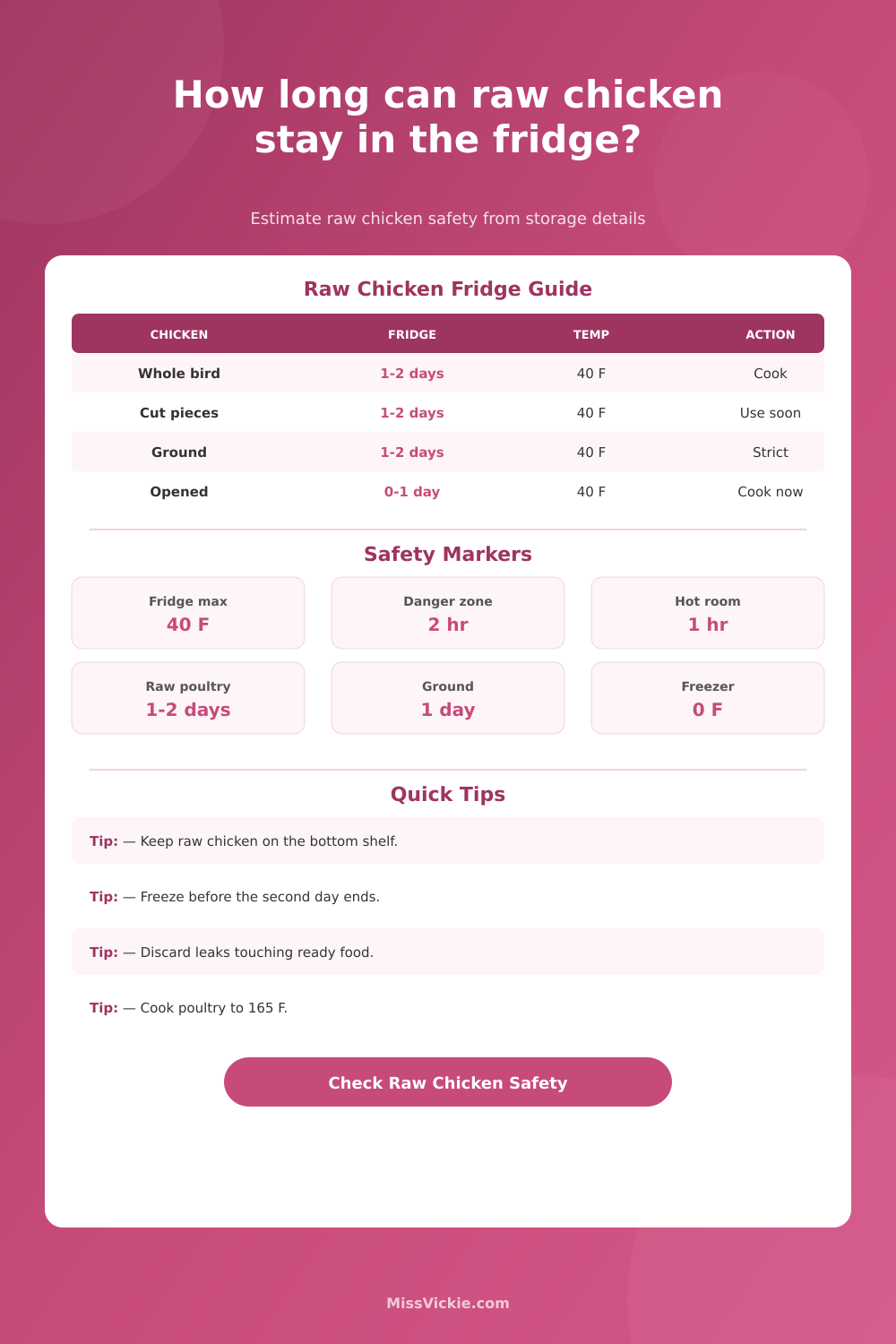
Raw Chicken Fridge Shelf Life Calculator
Estimate how much refrigerated time is left for raw chicken using the purchase date, cut type, package status, fridge temperature, temperature excursions, shelf placement, and eater risk level.
🍗 Raw Chicken Presets
Choose a common fridge situation, then adjust the purchase date, temperature, packaging, and safety factors for your exact chicken.
🧊 Storage Details
Storage Window
Enter your raw chicken details to estimate the safest next step.
Safety Window Breakdown
Input Summary
📌 Quick Safety Markers
📋 Raw Chicken Fridge Reference
| Raw Chicken Type | Base Fridge Window | Why It Changes | Best Action |
|---|---|---|---|
| Whole raw chicken | Up to 48 hours | Less cut surface, but thick packages must stay cold | Cook or freeze by day 2 |
| Breasts, thighs, drumsticks, wings | 36 to 48 hours | More exposed surfaces than a whole bird | Cook soon if opened |
| Ground chicken | 24 to 36 hours | Grinding spreads surface bacteria through the batch | Cook or freeze quickly |
| Giblets, liver, or offal | 24 hours | Small pieces and high moisture lose margin fast | Use same day when possible |
| Raw marinated chicken | 24 to 36 hours | Handling, salt, acid, and liquid increase quality changes | Cook promptly; never reuse marinade raw |
These windows are conservative estimates for a home refrigerator. Smell and appearance cannot prove raw chicken is safe.
🌡 Temperature Zone Table
| Temperature Reading | Zone | Calculator Effect | Food Safety Meaning |
|---|---|---|---|
| 32 to 34 F / 0 to 1 C | Very cold fridge | Small quality buffer | Good storage, but do not exceed the raw poultry date window |
| 35 to 40 F / 2 to 4 C | Target cold zone | Normal 1 to 2 day window | Recommended home refrigeration range for raw chicken |
| 41 to 43 F / 5 to 6 C | Marginal warm zone | Shortens the window | Cook sooner and correct the fridge setting |
| 44 to 45 F / 7 C | Too warm | High risk pressure | Use only if very fresh and otherwise cleanly stored |
| Above 45 F / above 7 C | Unsafe storage flag | Discard warning | Raw poultry should not be held in a warm refrigerator |
📦 Packaging and Opening Table
| Package Situation | Storage Effect | Cross-Contact Concern | Practical Rule |
|---|---|---|---|
| Factory sealed tray | Normal window | Moderate if juices stay contained | Keep on a rimmed pan below ready-to-eat food |
| Vacuum sealed | Quality holds better while unopened | Low leak risk if seams are intact | Still cook or freeze within the raw poultry window |
| Butcher paper | Slightly shorter | Higher leak risk than sealed trays | Place in a clean bag or pan immediately |
| Opened and rewrapped | Shorter window | Handling and air exposure increase risk | Cook within 24 hours when possible |
| Leaky or dripping | Discard or cook now if otherwise fresh | High risk to shelves and nearby foods | Sanitize contact surfaces and discard contaminated foods |
⏱ Age and Action Table
| Age in Fridge | Sealed Pieces | Opened or Repacked | Ground or Giblets |
|---|---|---|---|
| Under 24 hours | Usually in the best cook window | Cook soon if handled cleanly | Cook or freeze today |
| 24 to 36 hours | Still inside the common raw poultry window | Use today; avoid another overnight hold | Strict use-or-discard check |
| 36 to 48 hours | Cook or freeze now | Discard if any warm time or odor exists | Usually past the conservative window |
| Over 48 hours | Discard for safety | Discard for safety | Discard for safety |
🧾 Storage Scenario Comparison
Fresh sealed chicken, bottom shelf pan, fridge at 40 F or colder, no warm ride or package leak.
Opened, butcher-wrapped, repacked, marinated, close-date, or stored near a warmer fridge spot.
Ground chicken, giblets, higher-risk eaters, thawed chicken, or an uncertain purchase timeline.
Sour odor, sticky slime, fridge above 45 F, outage over 4 hours, or raw juices on ready food.
💡 Raw Chicken Storage Tips
Panic: You grab a pack of chicken breasts from fridge; they’re coming up on their sell-by date. Here’s the truth: That date stamped onto the package isn’t some kind of hard-and-fast rule of science about when food will become dangerous at your house. It’s actualy more like an inventory tool for stores.
How long did that chicken sit in your car? Does your fridge run supercold, or does it hum along at 40 degrees, basically letting things get warm all day? Most kitchen errors arises from the disconnect between those two worlds: biology vs. Commercial dating.
How to Keep Raw Chicken Safe
You enter the variables, when did you buy it? Is it open or still in the package? What’s the fridge temp? If you’re sick, do you have a weak immune system? How long was it outside of the fridge, warming up? Then you click calculate. The result is a custom safety window, which is typically more cautious than what labels say. Because even a couple of degrees difference in fridge temp can double bacteria levels, raw chicken isn’t forgiving. A two-day safe zone becomes unsafe after one day.
Safety margin vary greatly depending on the cut. For example, ground chicken has much more surface area exposed to air compared to bone-in thighs or a whole bird. Bacteria is mixed throughout the meat instead of staying only on the surface. In other words, it will spoil quicker and present a greater risk. The calculator contains reference tables demonstrating this difference. It tells us that we have until 24 hours before our ground poultry need to be either cooked or frozen. If stored cold enough, we can stretch it up to 48 hours for a sealed whole bird.
When your freezer gets stuffed and you’re not sure where to start, knowing about these structural differences help you make a smart decision. Make sure items are leak-proof. Many people ignore this, but leaking packages can expose everything inside to cross contamination. Campylobacter and Salmonella lurks in raw chicken juice. Moving it into an unsealed container (or even if the package itself leaks) reduces your fridge’s safety. The calculator considers whether the food is contained, since raw juices dripping onto other items pose a hazard which cannot be corrected by later cooking. For example, keep raw poultry in a rimmed pan on very bottom shelf so nothing else gets contaminated. If there are any signs of leakage, clean the area right away.
The last test, aroma and feel, isn’t perfect: some bad bacteria doesn’t smell like anything until too late; others stink while remaining benign. Your sense of smell have limited safety buffers, which narrow rapidly at high temperatures inside your fridge. You’d trust that if the meat appeared grayish (except for expected variations in color) or felt slimy, you toss it out, no questions asked. When you’re not sure, follow your gut, not an algorithm: Sensory clues trump all equations.
Raw chicken is fragile, and I treat it as such: Don’t assume it’s safe just because it smells okay. If you’re at all unsure about whether raw meat is good or bad. Like you would of question a gallon of milk or block of cheddar if it smelled funny, it’s best to assume it isn’t safe to eat. There are some foods whose expiration date is flexible (a week old milk is still drinkable but maybe won’t be so creamy). But for raw poultry, it goes from fresh to dangerous fast.
When you learn to use the calculator to check your storage conditions and practice strict containment measures, cooking with confidence becomes part of your routine instead of something that causes meal-planning anxiety. That’s good for your family and for yourself.