
It’s a familiar scene: You walk into a wine shop intending to purchase a bottle for a celebration. On display, you notice seven different bottles of sparkling wine sitting next to each other. In the glass, they all appear identical. All labels look equally fancy. However, one coats your tongue in sweet richness; another taste like lemon water with attitude. Welcome to the great confusion of bubbly.
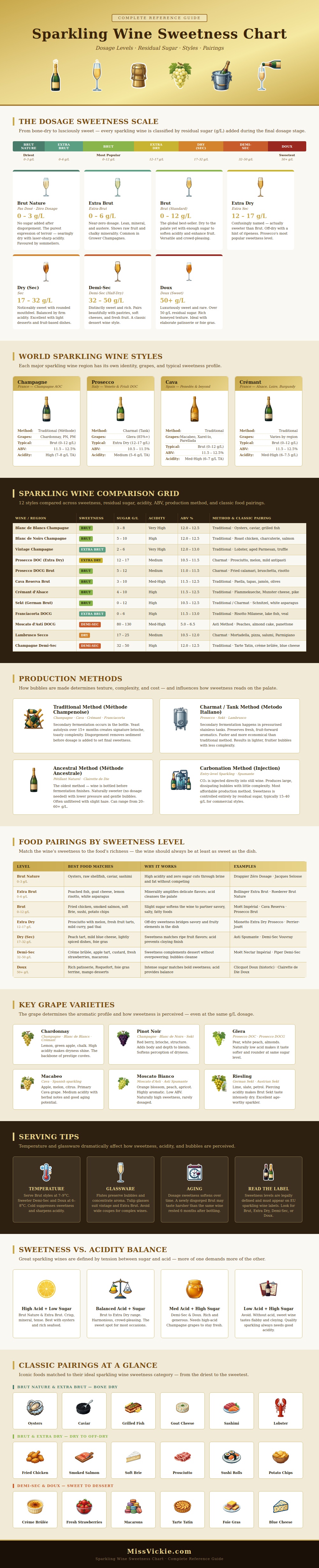
Most shoppers presume that sweet means cloying and dry means bone dry. What most shoppers don’t understand is that the industry define sweetness levels using a very specific French vocabulary that feels counterintuitive to today’s English speaker. This chart breaks it down, showing exactly how residual sugar translate into taste (because what your palate expects is a certain balance, one that labels frequenty hide).
Understanding Sparkling Wine Sweetness
And this leads me into largest beginner’s trap: The Extra Dry bottle. According to logic, right? Drier then Brut, no? Wrong. In fact, Extra Dry wines contains more sugar than regular Brut wine. Why is that? The name comes from a past era in wine history, when the nineteenth century winemakers seeks a way to explain a certain style that was fruitier and softer than previous acidic and harsh vintages.
Now, that extra couple of grams of sugar result in a rounder mouthfeel. And while that seems like a small thing, it transforms the whole experience of eating the wine alongside food. That little bit of sweetness help balance the acid and salt, so if you’re snacking on some smoked salmon or french fries, you want that little bit of sweetness. And so Brut, which finds a happy middle ground by cutting through fatty foods with its acidity without tasting too sterile, becomes the world’s best seller.
Further along this range, you will find Extra Brut and Brut Nature styles. For those who think that winemakers shouldn’t mess around with their wine, these are for you. There is even less than a splash of sugar added, so it is a very dry wine that highlights raw fruit character and mineral notes. These wines are beloved by sommeliers as they showcase terroir at its purist. But they may come across as austere to more casual wine drinkers. High acidity require food to help the flavors stand out. A glass of Brut Nature alongside some fresh sashimi or delicate oysters is a perfect pair. The wine matches the freshness and saltiness of fish while also bringing new texture and tension. It is less sweet and has more tension and texture.
At the far end of the spectrum are the Doux and Demi-Sec wines. These are clearly sweet, thick wines meant to be paired with rich foods, much like dessert wines. But these aren’t failed attempts at fermentation. They are on purpose. The sweetness isn’t overpowering because the acidity is equally as high so the wine doesn’t feel cloying or flabby.
That’s what makes pairing sparkling wine tricky (and also why it’s such a good idea). Nothing pairs better with a pungent blue cheese or a rich Crème Brûlée than something that can match their strength. Serve a rich pasty with a dry Brut and not only will the wine taste bitter, but the dessert will taste even sweeter in comparison. So try a sweet Demi-Sec instead. They’ll both rise above the other.
The styles can also be a result of production. Traditional method sparkling wines (like Cava or Champagne) has complex flavors of toast and brioche from the second fermentation in-bottle, which weighs down the dryness. In contrast, tank-fermented wines (Charmat method such as Prosecco) retain their fresh fruit aromas and make the subtle sweetness of an Extra Dry feel lighter and more approachable. That’s why knowing the difference will help you decide not only by cost but based off context. It is like knowing a milestone anniversary deserves a more complex wine, whereas a weekend brunch requires something easy and fruity.
And that’s really the key to deciphering a sparkling wine label: It’s not so much about learning numbers but about intention. They tell you how much sugar was added to offset the grape’s inherent acidity. Match it to what you want and your food. Are you looking for a crisp snap like zero dosage? A luscious finish of a dessert style? Whatever it is, find the harmony.
When you begin to view those French words as clues instead of codes, suddenly the whole world of sparkling wine are revealed. No longer do you guess; now you choose. And with that change of perspective, each pour becomes an intentional addition to your celebration, or meal. What was once just a glass of bubbles becomes a thoughtful part of the experience.