
When you’re standing in front of seafood counter, it can feel like trying to solve a puzzle while time run out. There’s fresh shellfish and fillets before your eyes, and if you don’t understand mercury content or sustainability rating, you probably pick whatever sounds best; or you opt for something familiar. Rarely do people get details on where their fish is sourced, and when they do, it’s usually in vague language from the industry itself.
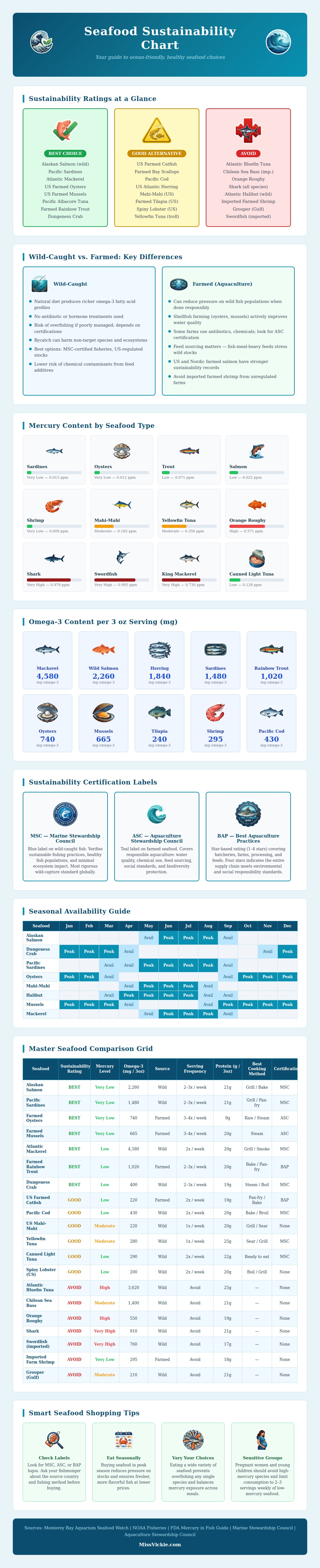
To make your decision easier, the guide categorize seafood into three levels. Best choices (top level) include Pacific sardines and wild Alaskan salmon, which are nutritious, well-managed species that you can consume regularly without compromising ocean health. It demonstrate that if we keep fishing practices in check, seafood can indeed be sustainable.
How to Choose Healthy Seafood
These are good alternatives: items you should of look up the country of origin for before making them a staple part of your diet, including Pacific cod and US farmed catfish. Not all farmed seafood are created equal. Some types of seafood farming, like oyster farming, improve the environment through nutrient filtration off the water. Shellfish farming may be more environmentally friendly then open ocean fishing. If you see the ASC or MSC logo on farmed products, that’s a sign they is held to certain labor and ecological standards.
Some types is off limits entirely. Red symbols indicate that a food item has a hidden cost. These costs include a high risk of exposure to mercury, destructive fishing methods, or being overfished. Imported farmed shrimp, Atlantic bluefin tuna and shark fall into this category. You won’t find them on the guide.
Young children and pregnant women is most at risk from mercury as it has a harmful impact on brain development. Because mercury tends to build up up the food chain, lower level, smaller fish such as sardines will be lower in contamination compared to larger predatory fish such as swordfish. Because shellfish stay at the bottom of the food chain, they accumulate far less toxin than large predators.
Don’t avoid seafood altogether if you want to eat healthily. Just vary the types of fish you serve. It’s better for your body, it also doesn’t put pressure on individual stocks of fish.
You can shop smarter by shopping seasonally to get the best price at the peak time for freshness, which means you get a better-tasting product (think: Dungeness crab in winter; Alaskan salmon in June). That means less energy-intensive shipping of frozen imports that has been off-seasoned. And it’s helping local fishermen catch their own fish to their own sustainable limits rather than depending on an international industrial operation.
Being aware and balanced is key. There’s no need to become a marine biologist in order to make more informed decisions. Substitute one meal of high-mercury fish each week with lower-mercury choices such as mussels or trout. When possible, look for labeling that features certification logos. Speak with your fishmonger and ask about their source.
Individual small actions can accumulate through multiple shopper. Your purchases are votes for the kind of ocean you wish to support. Next time you’re at the market, you’ll know what to buy.