
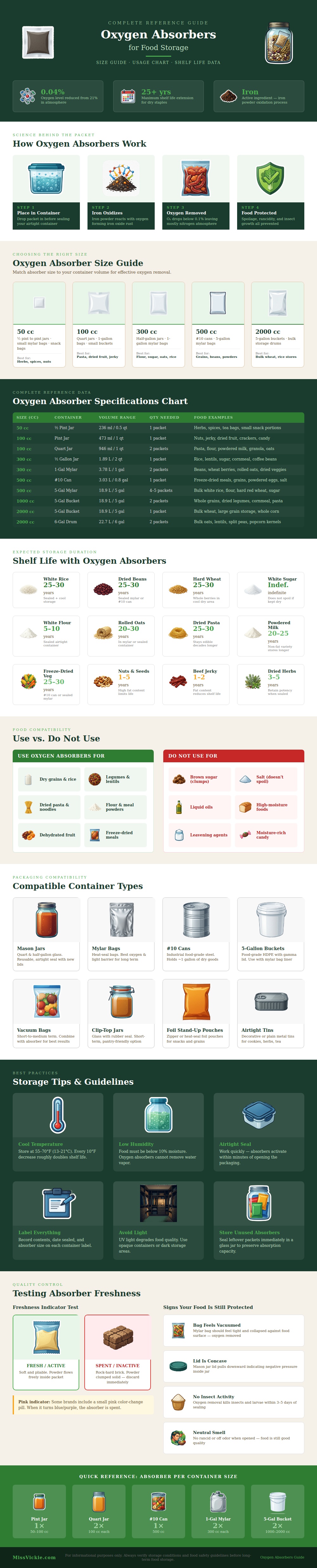
Small white packets like desiccant beads play a key role in long-term food storage. Called oxygen absorbers, they preserves your pantry by preventing oxygen from spoiling the food and making your rice last decades rather than just months. It’s all about chemistry… The same oxidation process at work within the little sachets. So you can store your food with confidence instead of hope or mystery.
As we see from infographic, active ingredient in the packets is iron powder. Upon opening one of these absorbers, oxygen molecules contained within whatever container they’re placed in will interactes with the iron. It will form iron oxide (commonly referred to as rust) that absorbs the air around it. As a result, the amount of oxygen drops from about twenty-one percent to under 0.1 percent. In that nearly-vacuum-like state, there’s no way insects or aerobic bacteria can cause food to become rancid or spoiled. Without oxygen, food simply cannot spoils that way, making it excellent for kitchen waste reduction or emergency preparedness situations.
How Oxygen Absorbers Work
The majority of home preservers goes wrong with sizing their absorbers. Bigger isn’t necessarily better: An oversized absorber is a waste of money; an undersized one doesn’t remove enough oxygen and makes the effort useless. Use the chart to pair the correct-sized packet with the amount of air that needs removing from bag or jar (too little oxygen remains if it’s too small; an oversized one wastes money and can affect quality). You need two packets for a quart-size jar of flour or dried pasta instead of one because of this.
This system isn’t suitable for all foods. Foods with moisture, such as oil-based liquids (even olive oil) or freshly baked bread, will mold or go rancid no matter what kind of oxygen-free atmosphere you create. This is because the moisture is what causes them to spoil. The absorbers are designed to suck up oxygen, not water vapor; however, brown sugar may form a hard lump that will not break apart if the absorber removes too much moisture from air. To succeed, you need to store things that contain little or no moisture. This includes dried fruits, dehydrated vegetables, and dry grains and beans like white rice and hard wheat berries. These items stay good indefinitely and, in ideal conditions, may keep for more than two decades.
Seeds and nuts contains their own oils. These oils will become rancid over time despite any oxygen removal. This means they will have a limited shelf life even under ideal circumstances.
The second biggest factor: where you store your food. As the infographic notes, each 10 degrees cooler will double your shelf life potential. That’s all the more reason to invest in good pantry storage (even if that means relocating it from the garage). Keep them cool! Direct sun and heat will cause chemicals to break down faster which shortens your shelf life. Ideally, keep your storage in a basement or closet, somewhere not near any heat source or direct light.
And lastly, when you crack that container open years later, go ahead and trust your senses: Is the food vacuum-sealed inside its Mylar bag? Should of been nice and snug. Do the lids of your Mason jars stay curved inward (meaning they’re still under negative pressure)? Does the food look untouched? Does it have no smell at all? Good. Does it smell funky? Has something been eaten into it by insects? Something went wrong.
Build this habit now while you remember, but label all of it, contents and date. And then just go with it. The whole point of proper preparation isn’t fear, it’s confidence that what you’ve got will do the job.
Actually, its better to be safe than sorry with furnitures. You should of checked the seals too. Everything looks naturaly fine based off how they look. It’s more comfortabley to use them correctly. The moddern way is best. One shouldnt let it dissapear.