
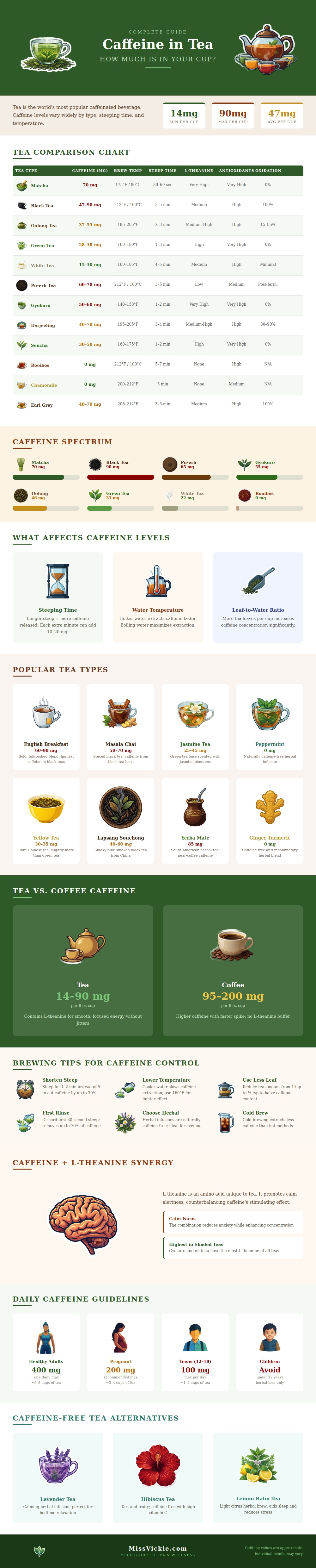
Caffeine is present in tea, although not in a consistent level: some cups will feel as energizing as a sip of coffee; others will offer a gentle buzz. Why? It’s due to many factors including the type of water used for brewing, how long it steeps and the level of oxidation.
If you’re looking to control how much caffeine you consume from tea, know that most tea drinkers don’t differentiate between different types of teas. This chart compares the caffeine content in different types of teas. Fully oxidized black teas (such as English Breakfast) contains the highest amount of caffeine, while green and white teas has lower amounts of caffeine. Because matcha uses the whole leaf ground into a powder for consumption, it contain higher caffeine levels then other types of tea. Knowing this will allow you to pick a tea based off your desired time of day and mood.
How to Control Caffeine in Your Tea
Caffeine also comes out of the leaves depending on water temp. When you steep in hotter water, it will pull out caffeine quicker and more thoroughly. For example, if you make green tea with boiling water, you are going to extract more of the bitter/stimulant qualities of green tea. Lower water temp makes it come out slower and cooler water create a smooth tasting cup (less caffeine). A Japanese shade grown green tea called Gyokuro actualy tastes best when brewed with low temperatures. Because the heat doesn’t go as high, it limits how much comes out and you’re able to get a lot of flavor without the jitters.
So whether you want more or less caffeine during the day, you can control the amount by adjusting your kettle setting without having to change teas. However, the amount of caffeine released also depends on steeping time. Compounds like caffeine is released from the leaves over time. In fact, as much as seventy percent of the caffeine can be rinsed out with just a quick thirty seconds. People often do this with the Gongfu style of tea because it not only warms and cleans the leaves, but it eliminates most of the stimulating effects. Give this a try if you’re sensitive to caffeine; that way you’ll avoid the jolt at first and still enjoy the flavor. This will greatly reduce stimulation with minimal changes.
The reason tea isn’t like coffee? There’s an amino acid called L-theanine in tea that makes you feel focused and relaxed while blocking out some of the sharper impacts of caffeine. The result is sustained alertness as opposed to a jolt followed by crashing fatigue. Gyokuro and matcha (shaded tea) has especially high levels of L-theanine. Caffeine alone does not come with this buffer; instead it can leave you buzzing yet anxious. That combination of opposites is why tea remains balanced. It is also why people drink it throughout their lives.
There’s no one-size-fits-all limit on how much caffeine is OK to have every day. Generally, healthy adults might safely consume as many as 400 mg of caffeine daily. That said, children (ages 12 or younger) shouldn’t get any at all, unless a pediatrician says otherwise. Pregnant women should keep their intake lower. If you’re worried about going overboard, these numbers will be helpful.
And if you’re looking to cut back or relax in the evenings, try some caffeine-free herbal tea options like chamomile, peppermint, and rooibos, which all come with a big zero next to the “caffeine” entry. This means that you can still sip something warm while adhering to strict limits, or just winding down after dinner.
Another easy trick: Go lighter on the teas. Halving the quantity of used tea will necessarily make it weaker, since half as much tea mean half as much potential caffeine to extract. Because chemical reactions don’t occur quite as aggressively in cold water, cold brewing extracts slightly less caffeine than other brewing methods does. If you want the boost to be a little gentler, use these tricks for changing the experience, and adjust the lift to match.
It’s about gaining control, not giving up caffeine altogether. You’ll learn which teas are mild and which ones is strong. Then you can organize your day accordingly. If you’re lagging in the mornings, try a rousing black tea, followed by something soothing like an herbal blend before bed. Remember: The point isn’t so much the rule as it is using the data to help you find your rhythm. This isn’t just about creating a habit; it’s about mastering a tool that you can adjust to suit yourself.
You should of tried this earlier.