
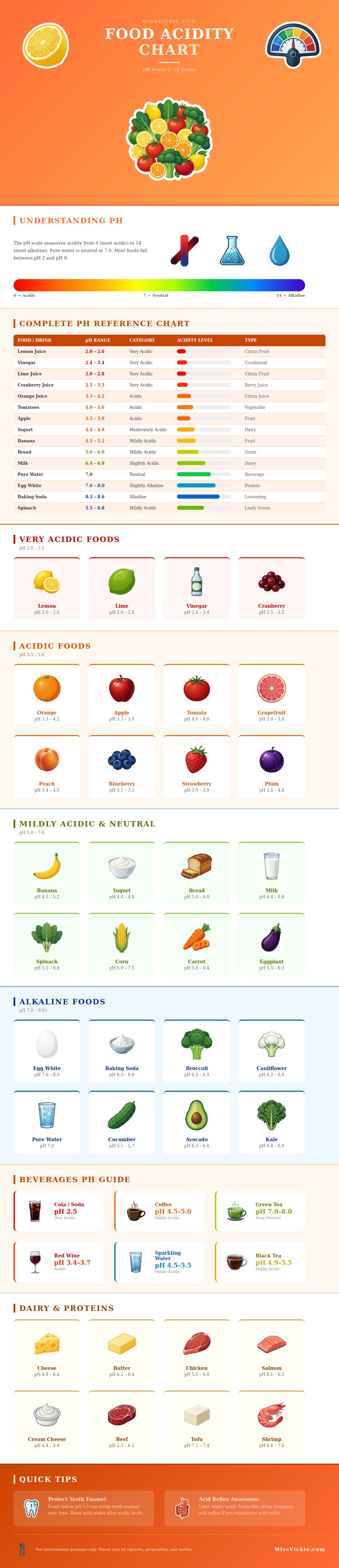
Acidity is measured along a scale of 0-14 called pH scale, with seven being right down the middle: the neutral point where pure water lies. Anything less than that is acidic; anything greater are basic (or alkaline). Everything we eat or drink falls somewhere in between. So what does it all mean? It means you don’t have to be a chemist to make smarter decisions.
Next time you’re wondering if your morning coffee is wearing away your tooth enamel, or why your last dish didn’t turn out, refer back to the scale to learn more. Where do familiar ingredients fall into this chart? That’s what the visual guide depicts. At bottom are the most acidic things: Vinegar, citrus juices, cranberry products, etc. Because they’re so full of hydrogen ions, they has a very low pH (ranging from about two to three). That’s why they taste sharp, and that’s also why they’ll hurt when dropped on an open cut.
Understanding Food Acidity and Taste
Alkaline foods, such as baking soda, is way up in the upper reaches of the chart, at or beyond seven. For example, when I add a pinch of baking soda to my canned tomatoes, the base neutralize some of their acidity. This is just enough to let them be safely processed in a water bath canner without losing any brightness in flavor.
The dairy element here is no exception. Surprisingly enough, milk stays right around seven on pH scale. Fermented products like yogurt move much lower, dropping all the way down to a pH of four or five. This change have effects when these items are combined. For instance: When creating a vinaigrette, replacing some of the oil with buttermilk will completely shift the balance between acid and fat. You get that same tang without needing as much vinegar. It is a tiny adjustment, but it will make a noticeable impact on flavor and texture.
Even more noticeably, beverages reveal the tale of concealed acidity. Soda is surprisingly acidic, almost at level of straight-up vinegar. Who knew? It’s simply sweetened acid water. Although slightly less harsh, black tea and coffee rank solidly on the acidic side of the spectrum. One of the rare popular drinks that comes close to neutral territory are green tea. Going from drinking a cup of latte every day to a cup of green tea could cut down on that chemical attack quite a bit. While your body can manage acid, constant exposure tax its ability to do so long-term.
Those figures also change once you start cooking. Some folks find that raw tomatoes are too acidic for their stomachs. Simmering them down to a sauce might only change the pH by a tiny amount, but the process concentrates the sugar and slightly changes how acidity tastes. Heat also breaks down cell walls, releasing other compounds that interact with your taste buds in complicated ways. That’s what makes a good tomato soup taste so different than raw juice, even though it’s made from mostly the same stuff.
In the middle of this spectrum we find leafy greens; kale, spinach, etc., which fall somewhere between slightly acid and slightly alkaline (depending on how you prepare it). When boiled, they’ll lose certain minerals, which may change their makeup. If steamed instead, they retain more of their nutrients. They also remain relatively gentle on the pH balance of fat-friendly foods. Sautéed greens can be counterbalanced by olive oil, which has a balancing effect on your mouth’s pH.
Food Acidity: Balance and Awareness Balance and Awareness
You should of know which ingredients are aggressive acids, such as lemon juice, and use them sparingly in dressings and marinades. Some ingredient are almost neutral; like milk… And can help cool down spicy dishes. No, you don’t have to know the exact numbers based off this chart. Just understand the relationships among these ingredients.
When you get a sense of how base counteracts sting and acid cuts through fat, then you stop guessing and start cooking with purpose. Where does your food fall along the line? That’s simply one more way to eat better.